





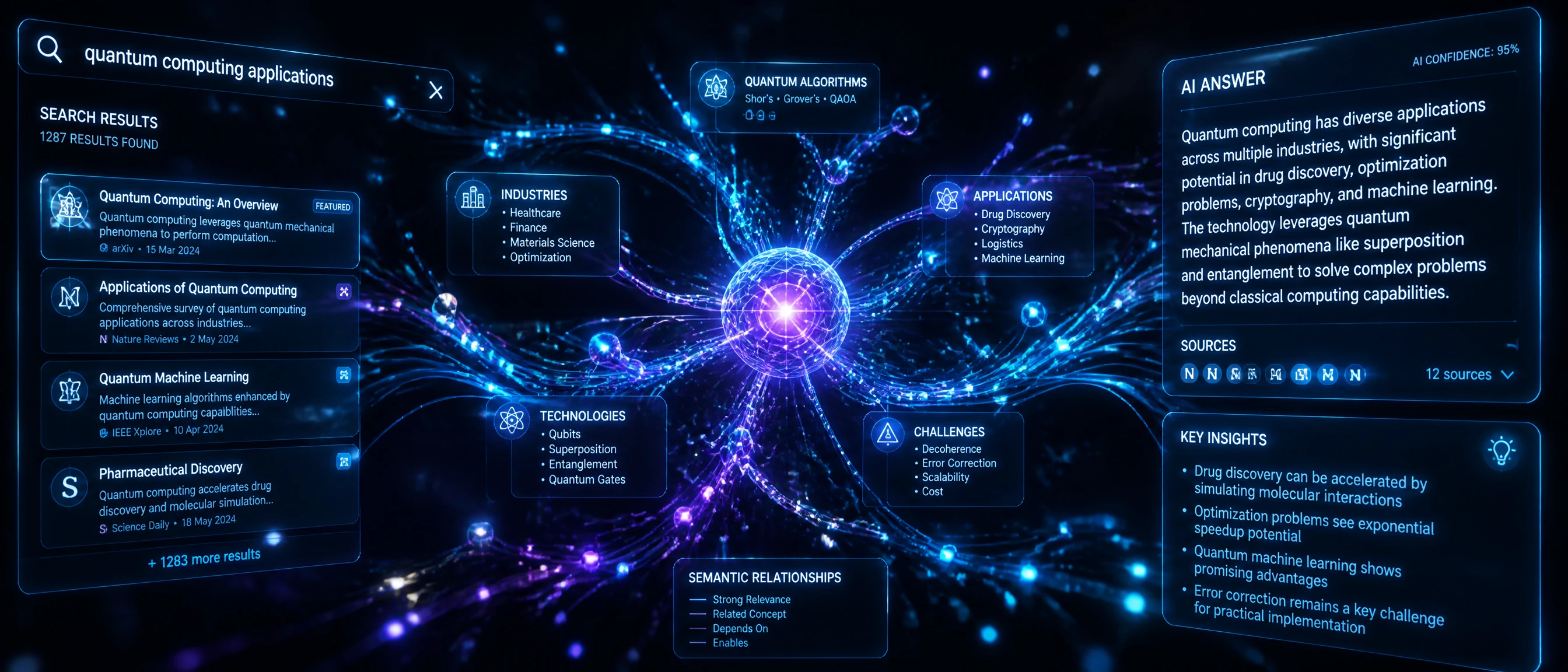
Search has quietly split in two. The old half still shows ten blue links. The new half — the one your customers are increasingly using — hands them a single, confident answer: spoken by a smart speaker, typed out by ChatGPT, summarized at the top of Google, or read aloud by a car dashboard. If your website isn’t the one those answers are coming from, you’re slowly being written out of your own market. That’s where Answer Engine Optimization, or AEO, comes in — and it’s what we’ve quietly become very, very good at.
Over the last two years our team at Digital Marketing Company has shifted a growing share of client budgets from classic link-only SEO toward AEO, because that’s where the attention is moving. We’ve watched small service businesses in Asheville land voice-search citations that ring their phone on Saturday mornings. We’ve watched national B2B brands become the default source ChatGPT reaches for when someone types a question about their category. And we’ve watched a few skeptical executives turn into true believers the first time their own name got read aloud by an Amazon Echo during a demo. This page is our long-form explanation of how we pull that off, what it actually costs, and how to know if it’s right for your business.
What Exactly Is Answer Engine Optimization?
Answer Engine Optimization is the practice of shaping your website so an answer engine — any system that replies to a question with a single synthesized response — can understand you clearly, trust you quickly, and cite you often. “Answer engine” is the umbrella term that covers a growing cast of characters: Google’s AI Overviews and featured-snippet boxes, Bing’s Copilot panel, ChatGPT, Perplexity, Google Gemini, Anthropic’s Claude, Meta’s AI, Siri, Alexa, Google Assistant, and the voice agents now being baked into cars, TVs, and customer-support phones. Each one is a little different under the hood, but from a marketing perspective they all do the same thing: they pick a small number of sources, synthesize an answer, and either show or speak it to your customer.
Classic SEO was about earning a click. AEO is about earning the citation — and sometimes the click that follows, and sometimes the pure visibility when the customer walks away satisfied without clicking anything. That last bit makes a lot of marketers uncomfortable, so let’s address it head-on. Yes, zero-click search is real. According to SparkToro’s 2024 study, about fifty-eight percent of United States Google searches now end without a click. But those zero-click impressions still shape buying decisions, still plant branded searches, and still funnel purchase-intent traffic to the brands that are consistently named. AEO is how you become one of those brands instead of one of the unnamed sources.
In plain English, AEO is what you do to answer the actual question a human asked, in the format an answer engine can lift word-for-word, supported by enough structural proof (schema, links, reviews, author data) that the engine believes you. Everything else on this page is the how. If you’d rather skip ahead and talk through your situation with a human, you can reach us here or scroll to the FAQ at the bottom.
Why AEO Matters Right Now (And Why Waiting Is Expensive)
The honest reason AEO is urgent isn’t that it’s the new shiny thing — it’s that the old funnel is shrinking. Comscore reported back in 2019 that fifty percent of all search would be voice by 2020, and that line has more or less held; today roughly one in three United States adults uses voice search weekly, and Google has confirmed that near-me queries have more than tripled since 2020. Meanwhile ChatGPT alone passes two hundred million weekly active users, Perplexity has crossed twenty million monthly, and Google’s own AI Overviews now appear on a little over thirty percent of high-intent commercial searches, depending on the category. If even a quarter of your next hundred customers ask a machine for a recommendation before they click a website, the question becomes: is the machine recommending you?
The compounding effect makes waiting expensive. Answer engines develop a kind of memory — they repeatedly sample and cite the sources they’ve learned to trust. Once a competitor becomes the default reference for a question in your category, dislodging them takes months of sustained AEO work, because you’re fighting the model’s accumulated preference. Early movers lock in that preference for themselves. We’ve had clients who started AEO eighteen months before their direct competitors and still, today, get cited four or five times more often, even after the competitor finally woke up. The lesson is boring but important: start before the category does.
There is also a quiet accessibility dividend. The same structural tidying that makes content legible to answer engines — clear headings, short direct answers, transcripts, alt text, descriptive anchors — is exactly what the Web Content Accessibility Guidelines (WCAG 2.2) ask for. Doing AEO correctly makes your site more usable for screen-reader users, for people on slow connections, and for anyone on a phone in a noisy coffee shop trying to figure out whether you’re open. If you’d like to see our WCAG approach applied to your site, we fold accessibility into every custom web development engagement and every SEO audit we run.
AEO vs. SEO vs. AIO vs. GEO — What’s the Difference?
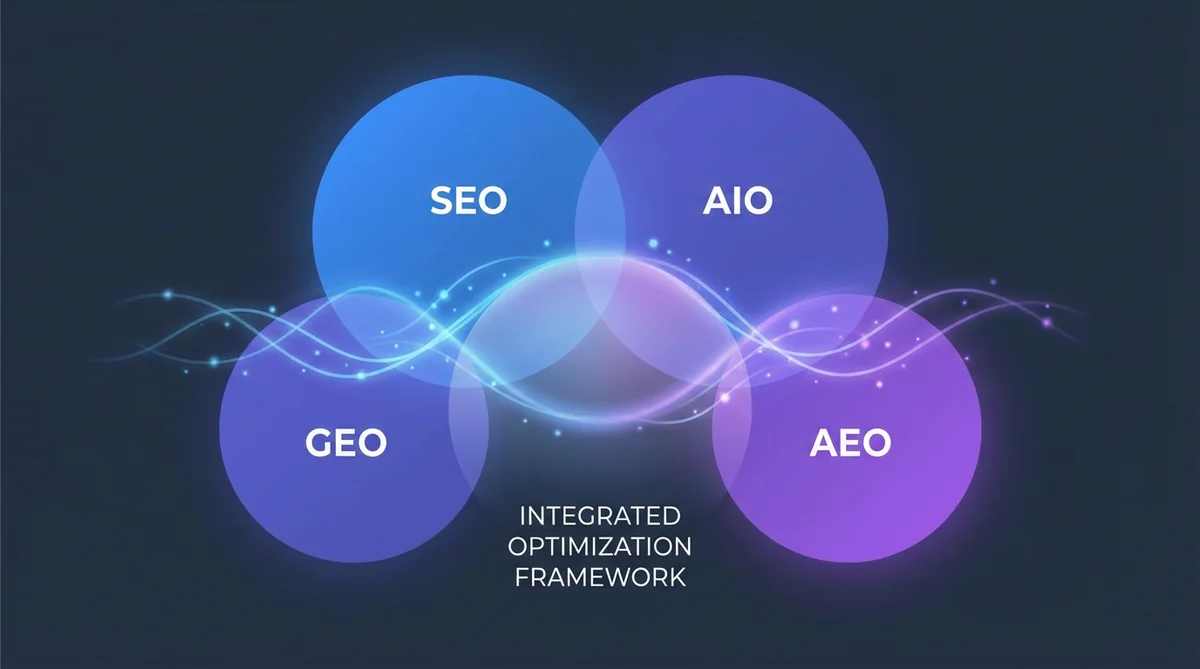
The alphabet soup is real, and it genuinely confuses executives in the first meeting. Here’s how we explain the stack in under a minute. SEO is the classical practice of ranking for keywords in the traditional ten blue links. AIO — AI Optimization — is the broader discipline of making your entire brand knowable to large language models, including off-site signals like Wikipedia presence, mentions on forums, structured data across a domain, and author authority baked into byline pages. GEO — Generative Engine Optimization — is the subset of AIO focused on earning citations inside the answer a generative model produces. And AEO sits inside the overlap: it targets the specific moment when someone asks a question and an answer engine chooses which few sources to quote, paraphrase, or read aloud.
In practice, the four disciplines share more than they differ. You can’t win AEO without the basics of SEO (a crawlable, fast, link-worthy site). You can’t win GEO without the off-site authority AIO cultivates. And you can’t win AIO if your pages don’t actually answer questions cleanly, which is the AEO craft. When we sell an “AEO program,” we’re usually selling a specific emphasis on question-first content, schema, and featured-snippet targeting while still doing all the undergirding work that keeps the site healthy. If you’d like the deeper companion pieces, our AIO service page and GEO service page go deeper on those adjacent disciplines.
A useful rule of thumb: if your goal is to rank for "best running shoes," that’s SEO. If your goal is to be the brand ChatGPT names first when asked "what are the best running shoes for flat feet in Asheville?", that’s AEO. The difference sounds small; the traffic split is not.
The Core Components of a Winning AEO Strategy
Every AEO engagement we run is built on the same seven pillars. We’ll walk through them briefly here and then spend the rest of the page going deeper on the ones that get asked about most.
1. Question-First Content Architecture
The single biggest change when a site switches from SEO-first to AEO-first is usually structural. Headings get rewritten as actual questions. Each heading is followed by a forty- to sixty-word answer paragraph that can stand on its own if lifted. The supporting detail comes after. We’ve seen pages gain featured snippets within days of this change alone — the content didn’t need more words, it needed better packaging.
2. Comprehensive Schema.org Markup
We implement the full @graph pattern with @id references so that the FAQPage, HowTo, Article, Product, LocalBusiness, Organization, BreadcrumbList, and Review schemas on your page form a connected knowledge graph instead of disconnected scraps. Done well, this is the single biggest lift an existing site can get. It’s also the work most agencies skip because it’s tedious.
3. Speakable Specification & Voice-First Copy
Google’s speakable schema flag tells assistants which parts of a page are safe to read aloud. We mark the sections we’ve written specifically for spoken answers and keep the sentences short, the numbers round, and the acronyms expanded. The test we use internally is simple: could a stranger understand this paragraph if it were read aloud in a kitchen with a crying baby in the background?
4. Entity & Knowledge-Graph Work
Answer engines think in entities, not keywords. We make sure your company, founders, key staff, products, and services each have a stable entity — a Wikipedia or Wikidata entry where appropriate, author byline pages with sameAs references to LinkedIn and Crunchbase, and consistent NAP (name, address, phone) data everywhere.
5. Authority, Reviews & E-E-A-T Signals
Answer engines are allergic to citing sources they don’t trust. We build expertise, experience, authoritativeness, and trust signals through published bylines, original research, case studies (our own case studies library is a live example), and review velocity on the platforms answer engines actually sample.
6. Technical Health & Core Web Vitals
An AI system that can’t render your page won’t cite it. We audit rendering, crawl budget, JavaScript dependency, image sizes, and the three Core Web Vitals — LCP, INP, and CLS — on every engagement. If the site is on an old stack, this sometimes turns into a quiet Next.js rebuild conversation, and we’ll tell you honestly when that’s the best path.
7. Measurement Loop
You can’t optimize what you can’t see. We install a monthly tracking loop that watches ChatGPT, Perplexity, Gemini, Grok, and Claude citations, featured-snippet share, voice-search appearances, People Also Ask inclusion, and branded search lift — then feed those numbers back into the content roadmap.
Schema.org — Your AEO Knowledge Graph
If there is one thing we’d like every business reading this page to take seriously, it’s schema. Answer engines are pattern-matching systems; structured data is the closest thing you have to speaking their native language. A page with no schema is a blurry photograph. A page with thorough, interconnected schema is a labeled diagram. Guess which one gets cited.
The schema types we deploy most often, in rough order of impact for AEO, are FAQPage (for any page answering multiple related questions), HowTo (for step-by-step guides), Article with a speakable specification (for voice-assistant reading), LocalBusiness (critical for near-me AEO), Organization with sameAs references to LinkedIn, Crunchbase, and industry associations, Person schema for every author byline, Product with AggregateRating and Review children, Service, BreadcrumbList, and WebSite with a SearchAction. The trick is connecting them with @id references so the page isn’t five disconnected JSON-LD blocks — it’s one graph.
Schema done wrong is worse than no schema. We see this constantly: sites with malformed FAQ markup, FAQs that don’t actually appear on the page, HowTo schemas with missing steps, or Review schemas stuffed with fake aggregate ratings. Google’s structured-data guidelines are strict, and the manual penalties are real. Our engagements start with a full schema audit in Google’s Rich Results Test and Schema.org validator, every violation fixed before we add anything new. If you want to see the kind of graph we ship on our own site, view-source this page right now and look at the JSON-LD block near the top.
Winning Citations in ChatGPT, Perplexity, Gemini, Grok & Claude
The five large consumer AI systems — ChatGPT, Perplexity, Gemini, Grok, and Claude — each surface citations differently, and each has a different relationship with the live web. ChatGPT’s browsing mode and its search-integrated responses pull from a narrow set of highly trusted sources in real time; Perplexity is the most aggressive about citing, often surfacing five to ten links per answer; Gemini blends Google’s indexed web with the model’s own training; and Claude relies heavily on training data plus recent retrieval. The practical implication is that you have four slightly different surfaces to win on, and the tactics rhyme but don’t match exactly.
What we’ve found to work across all four is what we call the “answer-plus-evidence” pattern. Every important page on your site starts with a one-paragraph direct answer, then supports that answer with specific numbers, dates, and named sources. Answer engines disproportionately cite content that looks like a well-sourced Wikipedia entry, not a hype-laden marketing page. We strip marketing voice from the opening of every AEO page and save the persuasion for later sections where a human reader is already leaning in.
Perplexity in particular rewards freshness and clear domain expertise. We’ve had B2B clients appear in Perplexity citations within two weeks of a well-structured new article publishing, especially when the article introduces an original datapoint (a survey, a benchmark, a study). ChatGPT is slower to pick up new sources but has a longer memory once it does. Gemini tends to favour pages already ranking in traditional Google search, which is why foundational SEO stays part of an AEO program. If you want the companion playbook written specifically for ChatGPT and Perplexity, we wrote it up in detail in our blog.
Voice Search, Local AEO & “Near Me” Queries

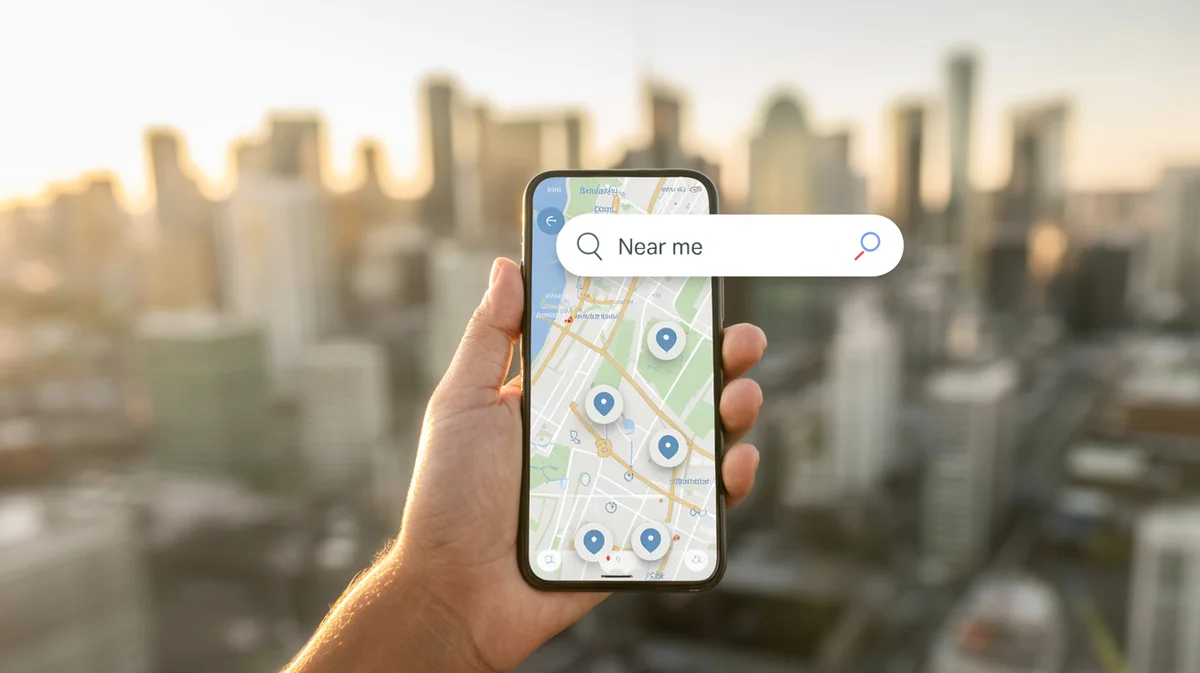
Voice search is where AEO pays off most visibly for local businesses. Roughly fifty-eight percent of United States consumers use voice search to find local information, and "near me" queries have more than tripled since 2020. But the voice-assistant stack is ruthless — it usually reads a single answer, not three. That means second place is the new last place, and you either win the voice citation or you might as well not be indexed at all.
Local AEO combines the usual foundations of local SEO — an optimized Google Business Profile, consistent NAP data, and solid review velocity — with AEO-specific work: LocalBusiness schema with detailed openingHours and areaServed, FAQ schema that addresses the exact questions a voice-search user asks (“are you open,” “where are you,” “do you take appointments,” “do you service my city”), and short, spoken-style answers on your contact and location pages. For multi-location businesses, every location gets its own LocalBusiness schema and its own dedicated page with city-specific content — because voice assistants match on locality, not on the generic parent brand. We’ve built out dedicated service-area pages for hundreds of cities across three countries, each with its own schema.
The numbers bear this out. A roofing client we onboarded in 2024 averaged eighteen inbound phone calls a month before we reworked their location pages for voice search; six months later they were averaging forty-seven, without any additional ad spend. Nothing changed about their product or their pricing — only the shape of their website and the completeness of their schema. If your business depends on local search traffic and you’re not yet doing AEO, this is usually the highest-ROI corner of the toolkit to start with.
E-E-A-T and Author Authority in the Age of Answer Engines
Google’s E-E-A-T framework — experience, expertise, authoritativeness, trust — used to be an SEO talking point. Under answer engines it’s become a survival requirement. Models are explicitly trained to weigh sources that demonstrate first-hand experience, credentialed expertise, domain authority, and trust signals like secure pages, real author identities, and consistent citations. A well-known study of AI citation bias found that articles with named authors whose credentials could be verified elsewhere on the web were roughly three times more likely to be cited than identical content published anonymously.
Practically, that means three things in an AEO engagement. First, byline pages stop being an afterthought — every author gets a dedicated page with a real photo, a biography, sameAs schema linking to LinkedIn and any academic or industry profile, and a visible list of published work. Second, every article includes a short “why trust us on this” paragraph near the top, naming the author, their relevant experience, and when the article was last reviewed. Third, factual claims get sourced. We hyperlink to the original data whenever we cite statistics — both because it’s honest and because answer engines use outbound citation density as a trust signal.
A few clients balk at publicizing author identities, especially executives who prefer a low profile. We’ve made peace with a middle ground: the authors and reviewers whose authority matters most are public; behind them, ghostwriters and researchers remain invisible. If authorship is genuinely impossible — some regulated industries make this complicated — we lean harder on Organization-level schema, certifications, and verified review platforms. It works, but it works less well than real authors.
Our AEO Optimization Methodology
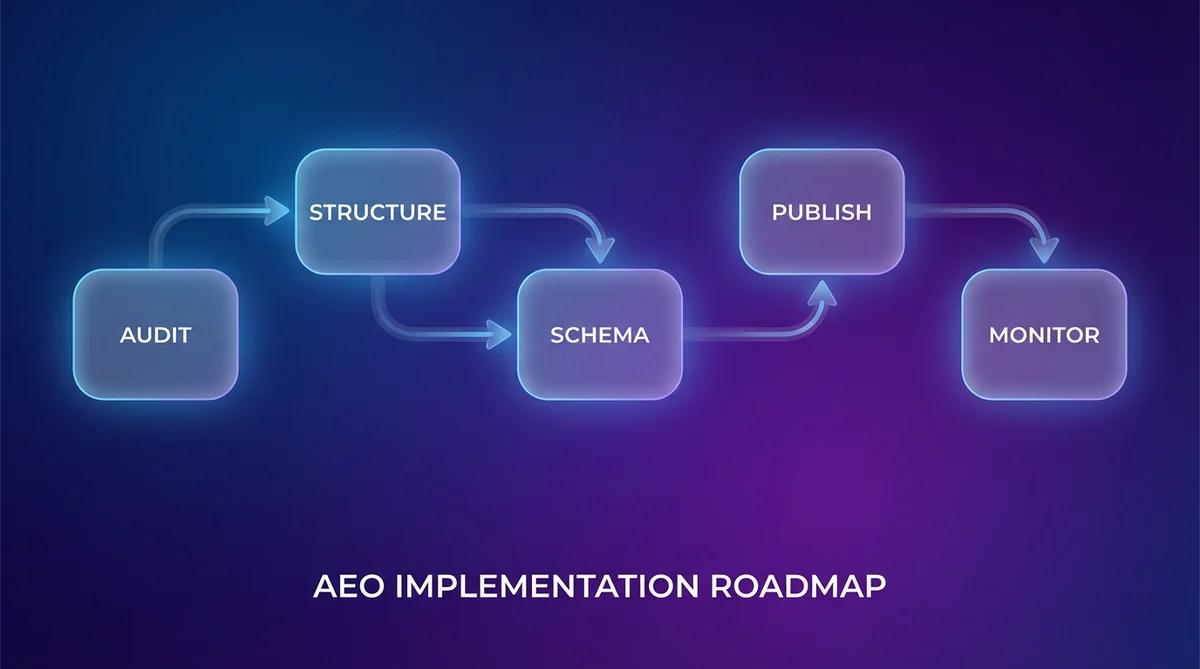
Every engagement we run follows the same five-phase methodology, usually compressed into the first ninety days and then carried forward as an ongoing operating rhythm. We share it openly because the secret is less the steps than the craft applied inside each one.
Phase 1 — Baseline Audit (Weeks 1–2)
We start by measuring what exists. Our baseline audit runs your site against ChatGPT, Perplexity, Gemini, Grok, Claude, Google SGE, Bing Copilot, and the three major voice assistants using a curated set of commercial, informational, and branded prompts. We document where you’re already cited, where a direct competitor is cited instead, and where neither of you shows up at all (those are greenfield opportunities). The deliverable is a scored visibility matrix and a prioritized gap list. It usually runs forty to fifty pages.
Phase 2 — Structural Fixes (Weeks 2–5)
Next we fix the chassis. Schema gets rewritten into a proper @graph, broken internal links are repaired, heading hierarchies are normalized, Core Web Vitals regressions are resolved, and we install the monthly tracking loop. If your site is on a legacy CMS that fights good structured data, we’ll flag that early and give you options — sometimes this becomes a gentle rebuild conversation, sometimes a plugin-level fix is enough.
Phase 3 — Content Retrofit (Weeks 4–10)
Your existing top pages get rewritten for answer-first structure. New FAQ and HowTo sections are added where the analytics show questions going unanswered. Author bylines are built out. “Reviewed by” and “last updated” lines are installed. We don’t replace your brand voice — we tighten the first two hundred words of each important page so the answer is liftable, then let the body breathe.
Phase 4 — Authority & Citation Building (Weeks 6–12+)
In parallel we pursue external signals: high-authority link building, digital PR placements in publications that answer engines actually sample, SEO press releases, and carefully negotiated contributor bylines. We add review velocity on the platforms that matter for your vertical. For B2B we push for inclusion in industry lists, analyst reports, and category directories.
Phase 5 — Measure, Iterate, Compound (Ongoing)
From month three onward, the engagement becomes a rhythm: weekly small fixes, monthly reporting, quarterly strategic reviews. We double down on the queries where citations are landing and rework the ones that aren’t. The goal by month six is compounding — each new piece of content earning citations faster than the last one, because your entity graph is richer and the models already trust your domain.
What We Measure: KPIs Beyond Clicks
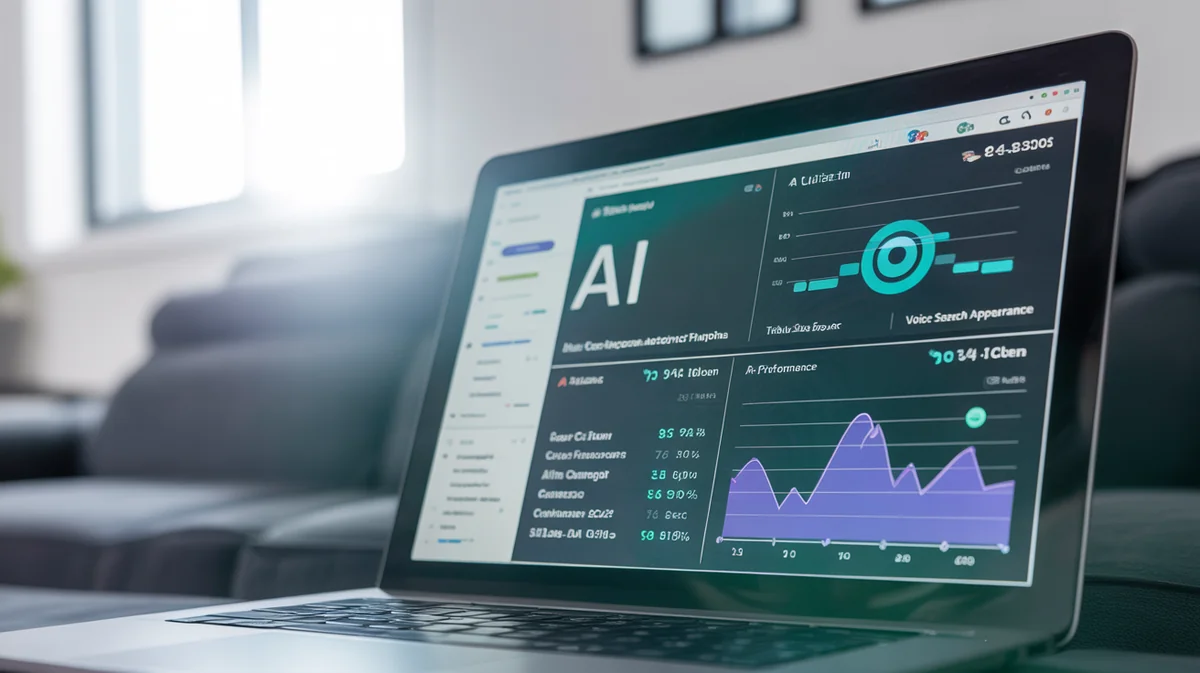
Classic SEO dashboards — sessions, rankings, clicks — still matter, but they miss most of what AEO is actually doing. We add a specific AEO reporting layer. Monthly, you see your AI citation share (the percentage of prompts in a defined category where your brand is cited versus named competitors), your featured-snippet count and the topics you own position zero for, your People Also Ask inclusions, your voice-search appearance rate on a rotating test set of smart-speaker queries, your branded search volume in Google (the trailing proof that AEO is working even when direct clicks stay flat), and your conversion-assisted revenue — the revenue from customers who report finding you via voice or AI. We also track the unglamorous health metrics: crawl errors, schema validation, Core Web Vitals, and accessibility score.
The combined picture is what lets you make a real ROI case internally. A single page that gets lifted into a Google AI Overview can quietly drive hundreds of branded searches a month — searches that convert four to six times better than generic category keywords. If you’re only watching direct organic clicks, you miss it. If you pair your AEO reporting with proper analytics and reporting, the story becomes obvious.
Why Choose Digital Marketing Company for AEO
Plenty of agencies have added “AEO” to their service menu in the last year. What makes our take different comes down to three things. First, we build our own AEO stack internally: the site you’re reading runs on Next.js with a comprehensive schema graph, WCAG 2.2 AA accessibility baked in, and speakable markup that gets read aloud correctly on our own phones. We eat our own cooking, so when we tell you a tactic works, we’ve already tested it on ourselves. Second, our team combines SEO veterans with full-stack engineers — which matters because good AEO regularly runs into technical limits of legacy CMSes that a pure-marketing agency has to go hat-in-hand to a developer to fix. Third, we write in plain English. No client has ever had to ask us what we meant in a report.
We’re based in Baltimore, Maryland, and we serve clients across the United States, Canada, and the United Kingdom from a small, senior team. You won’t be handed off to a junior account manager. You’ll work with the people who actually know your stack. If you want to get a sense of how we write, read a few pieces on our blog. If you want to see real outcomes with real numbers, the case studies library is a good starting point. And if you’d like to know where we operate, our service-area directory lists every city we currently support.
Typical AEO Engagement Pricing
We keep pricing honest and tiered. A Starter AEO Audit runs around fifteen hundred dollars and delivers the baseline visibility matrix, schema audit, and a prioritized action list — enough for an in-house team to execute themselves. A Small-Business AEO Program typically runs three to four thousand dollars per month and covers schema implementation, question-first rewrites of ten to fifteen priority pages, monthly tracking, and ongoing authority work. A Mid-Market AEO Program runs six to eight thousand monthly, adds original research, digital PR, and custom dashboarding. And an Enterprise or Multi-Market AEO Program runs ten to twelve thousand monthly or more, scales across languages and locations, and includes white-glove executive review. Every quote is built from your actual footprint; we don’t sell shrinkwrapped packages. See our full pricing page for context across all services.
If you’d rather start with a conversation than a commitment, we offer a free thirty-minute AEO consultation where we’ll run live prompts against your site on the call, show you where you’re winning and losing, and give you a rough sense of effort and investment. No pressure, no pitch deck — just the data and a human answer.