







Your Starter List for Link Building
Below is a starter list of websites that are important for creating backlinks — you can use these to build links yourself, but fair warning: it takes a lot of time to do manually.
We've built a proprietary software program that creates backlinks from the top 5,000 websites ranked by Google PageRank and Moz Domain Authority — specifically sites that have do-follow links where you can post a backlink to your website.
When you subscribe to our link building service, we can get started right away and run our software to create a certain number of high-quality backlinks on a monthly basis, based on your subscription level.
Get Started with Link Building310
Total Sites
258
Do-Follow Links
52
No-Follow (Branding)
14
Categories
Showing 25 of 310 sites
Click column headers to sort
| # | Site | Category | DA | PA | Monthly Traffic | Follow |
|---|---|---|---|---|---|---|
| 1 | YouTubewww.youtube.com | Social Network | 100 | 100 | 34B | No-Follow |
| 2 | Google Business Profilebusiness.google.com | Business Directory | 100 | 98 | 4.2B | Do-Follow |
| 3 | Apple Maps Connectmapsconnect.apple.com | Business Directory | 100 | 78 | 1.8M | Do-Follow |
| 4 | LinkedInwww.linkedin.com | Social Network | 99 | 98 | 1.7B | No-Follow |
| 5 | Blogger (Blogspot)www.blogger.com | Web 2.0 | 99 | 95 | 180M | Do-Follow |
| 6 | Sites.Google.comsites.google.com | Web 2.0 | 97 | 94 | 85M | Do-Follow |
| 7 | Facebookwww.facebook.com | Social Network | 96 | 95 | 17B | No-Follow |
| 8 |  Instagramwww.instagram.com | Social Network | 96 | 95 | 6.7B | No-Follow |
| 9 | VK (VKontakte)vk.com | Social Network | 96 | 94 | 650M | No-Follow |
| 10 | Vimeovimeo.com | Social Network | 96 | 94 | 210M | No-Follow |
| 11 | GitHubgithub.com | Profile Creation | 96 | 95 | 420M | Do-Follow |
| 12 | Adobe Stockstock.adobe.com | Profile Creation | 96 | 93 | 28M | Do-Follow |
| 13 | Weiboweibo.com | Social Network | 95 | 93 | 510M | No-Follow |
| 14 | Mediummedium.com | Profile Creation | 95 | 93 | 250M | Do-Follow |
| 15 | SlideSharewww.slideshare.net | Profile Creation | 95 | 93 | 68M | Do-Follow |
| 16 | Salesforce (Trailblazer)trailblazer.salesforce.com | Profile Creation | 95 | 88 | 58M | Do-Follow |
| 17 | Forbes Councilscouncils.forbes.com | Guest Posting | 95 | 88 | 180M | Do-Follow |
| 18 | Business Insider (Contributor)www.businessinsider.com | Guest Posting | 95 | 93 | 310M | Do-Follow |
| 19 | X (Twitter)www.x.com | Social Network | 94 | 93 | 6.1B | No-Follow |
| 20 | Pinterestwww.pinterest.com | Social Network | 94 | 93 | 1.1B | No-Follow |
| 21 |  Gravatargravatar.com | Profile Creation | 94 | 91 | 18M | Do-Follow |
| 22 | Scribdwww.scribd.com | Profile Creation | 94 | 92 | 130M | Do-Follow |
| 23 | Archive.orgarchive.org | Profile Creation | 94 | 93 | 210M | Do-Follow |
| 24 | Udemywww.udemy.com | Profile Creation | 94 | 92 | 250M | Do-Follow |
| 25 | Change.orgwww.change.org | Profile Creation | 94 | 91 | 48M | Do-Follow |
Page 1 of 13
Legend
DA = Domain Authority (Moz) · PA = Page Authority · Traffic estimates via SimilarWeb/Ahrefs · Data as of April 2026
Every website owner, digital marketer, and business leader eventually confronts the same pivotal question: How do I attract high-quality backlinks to my website? In the ever-evolving landscape of search engine optimization, backlinks remain one of the most powerful ranking signals. They are the digital equivalent of word-of-mouth endorsements—when a reputable website links to yours, it tells Google and other search engines that your content is valuable, trustworthy, and authoritative.
This comprehensive guide explores every facet of link building—from the foundational science behind Google PageRank and Moz Domain Authority to the dozens of creative, ethical strategies you can deploy to earn backlinks naturally. Whether you run a small local business, a large enterprise, or a nonprofit organization, the principles outlined here will help you build a robust backlink profile that drives sustained organic growth.
At Digital Marketing Co., we specialize in transforming online visibility through strategic link building campaigns. This article distills our expertise into an actionable blueprint you can start implementing today.

What Are Backlinks and Why Do They Matter?
A backlink (also called an "inbound link" or "incoming link") is a hyperlink on one website that points to a page on another website. When Website A links to Website B, that link is a backlink for Website B. Search engines interpret these links as votes of confidence—each backlink tells Google that another website considers your content worth referencing.
Not all backlinks are created equal. A link from a high-authority news publication like the New York Times carries significantly more weight than a link from a newly created blog with no readership. The quality, relevance, and context of a backlink determine how much value it passes to your site.
Do-Follow vs. No-Follow Links
There are two primary types of backlinks:
- Do-follow links: These pass "link equity" (sometimes called "link juice") from the linking page to yours. They directly influence your search rankings and are the most valuable type of backlink.
- No-follow links: These include a
rel="nofollow"attribute that tells search engines not to pass link equity. While they do not directly boost rankings, no-follow links from high-traffic platforms (like social media, Wikipedia, or Reddit) still drive referral traffic, brand awareness, and can indirectly lead to do-follow links.
A healthy backlink profile includes a natural mix of both do-follow and no-follow links. An exclusively do-follow profile can appear manipulative to search engines, while no-follow links from authoritative platforms add diversity and credibility. Our link building service builds balanced profiles that maximize both ranking power and referral traffic.
The History of Google PageRank: How It All Began

The story of backlinks as a ranking factor begins at Stanford University in 1996, when two PhD students—Larry Page and Sergey Brin—developed an algorithm that would change the internet forever. They named it PageRank, a double entendre referencing both "web pages" and Larry Page's surname.
The Stanford Research Project (1996–1998)
Before PageRank, search engines primarily ranked results based on on-page factors like keyword frequency. This was easily manipulated—spammers could stuff pages with keywords and dominate results. Page and Brin hypothesized that the link structure of the web contained far richer information about page quality than the content alone.
Their insight drew from academic citation analysis, pioneered by Eugene Garfield in the 1950s. In academia, the value of a research paper is partly determined by how many other papers cite it—and how important those citing papers are. Page and Brin applied this same principle to the web: a page is important if important pages link to it.
They also credited Massimo Marchiori's Hyper Search and Robin Li's RankDex (1996), which explored similar link-based ranking concepts. Jon Kleinberg's HITS algorithm (1998) further advanced the field with its "hub and authority" framework.
In 1998, Page, Brin, Rajeev Motwani, and Terry Winograd published the seminal paper "The Anatomy of a Large-Scale Hypertextual Web Search Engine," which introduced both PageRank and the Google search engine prototype to the world.
The Patent and Commercialization
Stanford University was assigned the PageRank patent (granted in 2001, now expired). Google received an exclusive license in exchange for 1.8 million shares of stock—which Stanford later sold for approximately $336 million. This remains one of the most lucrative university technology transfers in history.
The Google Toolbar Era (2000–2016)
For over a decade, webmasters could see a simplified version of PageRank through the Google Toolbar, which displayed a score from 0 to 10 for any webpage. This "Toolbar PageRank" became the gold standard for evaluating link quality. SEO professionals obsessed over it, link sellers priced their inventory by it, and entire business models were built around it.
Google discontinued public PageRank updates in 2013 and officially removed the Toolbar PageRank feature in 2016. The company's stated reason was that the public metric was being abused—it had become a currency for link trading rather than a genuine quality signal.
PageRank Today: Still Alive Behind the Scenes
Despite the removal of the public score, PageRank is very much alive inside Google's ranking system. Leaked documents from 2024 confirmed that multiple PageRank variants—including "RawPagerank," "PageRank2," and a "Nearest Seed" version for understanding document clusters—remain active ranking signals. Google engineer Gary Illyes confirmed in 2017 that PageRank is one of "hundreds of signals" used in ranking.
The algorithm has evolved from the original "Random Surfer" model to a more sophisticated "Reasonable Surfer" model, which assigns different weights to links based on their placement and context. A link embedded within the main content of a page carries more weight than a footer or sidebar link because a "reasonable surfer" is more likely to click it.
How PageRank Is Calculated: The Mathematics
Understanding the PageRank formula helps you appreciate why not all backlinks are equal and why link quality trumps quantity.
The Core Formula
The PageRank of a page A is calculated as:
PR(A) = (1 - d) / N + d × [PR(B)/L(B) + PR(C)/L(C) + PR(D)/L(D) + ...]
Where:
- PR(A) = The PageRank of page A (the page you are calculating for)
- d = The damping factor (typically 0.85), representing the probability that a random surfer continues clicking links rather than jumping to a random page
- N = The total number of pages on the web
- PR(B), PR(C), PR(D) = The PageRank values of pages that link to page A
- L(B), L(C), L(D) = The total number of outbound links on each of those linking pages
What This Formula Tells Us
Several critical SEO insights emerge from this formula:
- Links from high-PageRank pages are more valuable. If a page with PR(B) = 0.9 links to you, it passes more authority than a page with PR(B) = 0.01.
- Pages that link to fewer other sites pass more value per link. If a page has only 5 outbound links, each link receives 1/5th of its PageRank. If it has 500 outbound links, each receives 1/500th—dramatically less.
- The calculation is iterative. PageRank starts with an even distribution and recalculates repeatedly until values stabilize. This means the entire web's link graph is interconnected.
- The damping factor prevents manipulation. The 0.85 damping factor means that approximately 15% of a surfer's probability is redistributed randomly, preventing closed link loops from accumulating infinite PageRank.
The Random Surfer Model
PageRank can also be understood through the "random surfer" metaphor. Imagine a person who starts on a random webpage and keeps clicking links. At each page, there is an 85% chance (the damping factor) they click a link on that page, and a 15% chance they get bored and jump to a completely random page. The PageRank of any given page is the probability that this random surfer ends up on that page at any given moment.
This elegant model explains why pages with many high-quality incoming links have high PageRank—they are pages where random surfers are most likely to end up. Effective link building strategies aim to make your pages the destination where more and more surfers arrive.
Modern Enhancements to PageRank
Google's current implementation incorporates additional factors beyond the original formula:
- Time decay factor (D): Reduces the weight of links from older, potentially outdated pages
- Freshness signal (F): Gives more weight to links from recently updated content
- Trustworthiness score (T): Higher weighting for links from verified, authoritative domains (seeds of trust)
- Personalization preferences (P): Accounts for user browsing history and behavioral patterns
The History of Domain Authority: Moz's Answer to PageRank
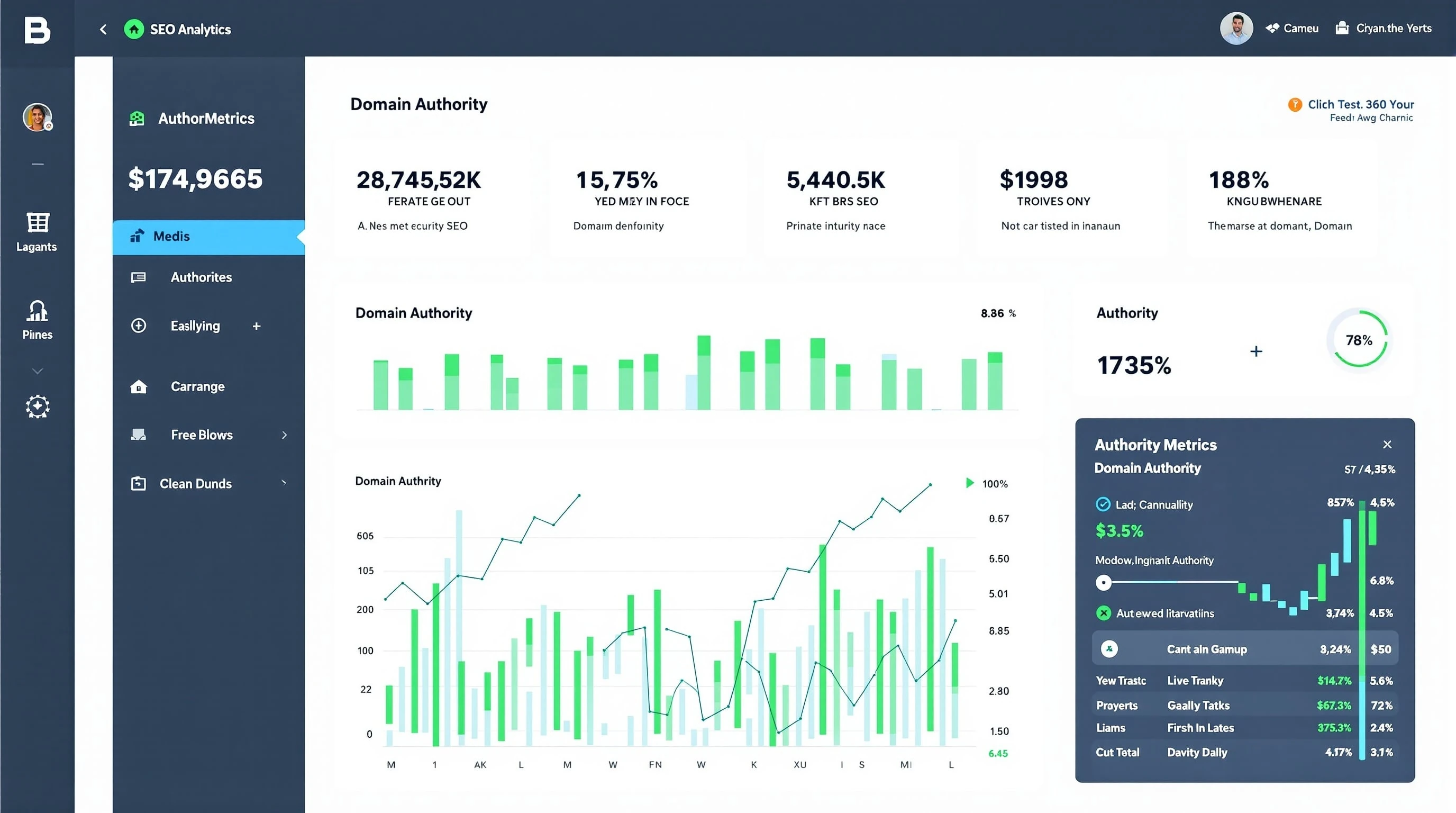
When Google removed public PageRank, the SEO industry needed a replacement metric. Moz (formerly SEOMoz), founded by Rand Fishkin and Gillian Muessig in 2004, stepped into the void with Domain Authority (DA)—a proprietary metric that has become the industry standard for evaluating website authority.
The Origin of Domain Authority
Moz introduced Domain Authority as part of its Link Explorer (formerly Open Site Explorer) toolset. The metric was designed to predict how well a website would perform in search engine results pages (SERPs), providing SEO professionals with a comparable, standardized score when public PageRank data was no longer available.
Initially, DA relied heavily on Moz's own MozRank (a link popularity metric) and MozTrust (a metric measuring proximity to trusted seed sites in the link graph). Over time, the calculation has been refined significantly.
DA 2.0: The 2019 Overhaul
In March 2019, Moz released Domain Authority 2.0, a major update that replaced the linear model with a machine learning algorithm trained against actual Google search results. This update incorporated spam detection, link quality assessment, and dozens of additional signals to better predict ranking potential. The new model significantly improved DA's correlation with actual search rankings.
How Domain Authority Is Calculated
Moz's Domain Authority is calculated using a proprietary machine learning model that evaluates numerous factors. While the exact algorithm is not publicly disclosed, Moz has shared the primary components:
Key Factors in DA Calculation
- Linking Root Domains: The number of unique domains linking to your website. This is the single most influential factor. Moz treats 100 links from one website as a single linking root domain—diversity matters more than volume.
- Total Number of Backlinks: The overall count of individual links pointing to your domain, though this carries less weight than linking root domains.
- Link Quality: The authority and relevance of linking domains. A link from a DA-90 website passes more predictive value than one from a DA-10 site.
- MozRank and MozTrust: Internal Moz metrics measuring link popularity and trustworthiness, respectively.
- Spam Score: Moz's assessment of how "spammy" a site's backlink profile appears. High spam scores suppress DA.
- Machine Learning Correlation: The algorithm is trained to find the best fit that correlates with actual Google rankings across thousands of search results.
The Logarithmic Scale
DA operates on a logarithmic scale from 1 to 100. This means increasing your DA from 10 to 20 is significantly easier than increasing it from 70 to 80. New websites typically start at DA 1. Established mega-sites like Facebook, Wikipedia, and Google.com occupy the top of the scale, making it mathematically more difficult for smaller sites to reach the highest scores.
DA Is a Relative Metric
A critical point many people misunderstand: DA is relative, not absolute. Even if your backlink profile remains unchanged, your DA can decrease if competitors improve their link profiles. Conversely, when Moz updates its web index (which happens regularly), scores across the entire web can shift. This is why short-term DA fluctuations are normal and should not cause alarm.
Domain Authority is also not a Google ranking factor—Google does not use Moz's DA in its algorithm. Rather, DA is a predictive metric that estimates how well a site is likely to rank based on factors that correlate with Google's known ranking signals. It is best used as a competitive benchmarking tool to compare your site against competitors and track your SEO progress over time.
Page Authority: The Page-Level Equivalent
Alongside Domain Authority, Moz also calculates Page Authority (PA), which predicts the ranking strength of a single page rather than an entire domain. PA uses similar factors but scoped to the individual URL's backlink profile. While DA gives you the big picture, PA helps you understand which specific pages on your site (or a competitor's site) are strongest.
How to Attract Backlinks: Comprehensive Strategies
Now that you understand why backlinks matter, let's explore how to get them. The strategies below are organized with services Digital Marketing Co. can execute for you listed first, followed by tactics you can implement independently. For a full overview of our professional link building services, visit our dedicated service page.
Professional Link Building Services (What We Offer)
The following strategies represent the core of our link building service offerings. Each requires specialized expertise, established relationships, and professional tools that make outsourcing to an experienced agency the most efficient path to results.
1. Original Research and Data-Driven Content
Original research is the most powerful link magnet in modern SEO. When you publish unique data that no one else has—survey results, industry benchmarks, longitudinal studies, or proprietary analytics—other websites need to cite you as the source. AI cannot replicate genuine new data, making original research increasingly valuable in 2026.
Our content marketing team designs and executes research campaigns, including survey creation, data analysis, report design, and promotion. Examples include industry "State of" reports, benchmark studies, and trend analyses that generate sustained backlinks for months or years after publication.
2. Infographic and Visual Content Creation

Infographics remain one of the most shared and linked-to content formats on the web. A well-designed infographic distills complex data into a visually compelling narrative that other websites embed (with a link back to you). The "guestographic" technique—creating custom infographics tailored for another site's audience—is particularly effective.
Our creative team at Digital Marketing Co. produces professional infographics, animated explainer graphics, interactive data visualizations, and chart-based content optimized for social sharing and editorial embedding. We handle everything from data research to design to outreach.
3. Video Content Production
Video is the fastest-growing content format, and high-quality video content earns backlinks from blogs, news sites, and resource pages that embed or reference your videos. Tutorials, explainer videos, thought leadership interviews, case study walkthroughs, and webinar recordings all serve as powerful link magnets.
We produce professional video content aligned with your link building goals—from scripting and filming to editing and distribution across YouTube, Vimeo, and your website.
4. Guest Posting and Editorial Outreach

Guest posting, when done correctly, remains one of the most reliable link building techniques. The key is contributing genuinely valuable, deeply researched content to relevant, high-authority publications—not mass-producing generic articles for link farms.
Our outreach team maintains relationships with editors at hundreds of niche-specific publications. We pitch original, data-driven articles that provide genuine value to their audiences, earning contextual do-follow links within well-crafted editorial content. Every guest post undergoes the same quality standards as content we publish on our own site.
5. Digital PR and Media Coverage
Earning editorial mentions and links from authoritative news publications, industry magazines, and high-traffic media sites is the pinnacle of link building. Digital PR campaigns combine newsjacking, expert commentary, original research, and strategic pitching to get your brand covered by journalists.
Our digital PR team responds to journalist queries on platforms like HARO (Help a Reporter Out), Connectively, and Qwoted, providing timely expert quotes that earn DA-80+ backlinks. We also craft SEO-optimized press releases for distribution through major wire services, generating coverage on Yahoo Finance, MarketWatch, Bloomberg, and dozens of other outlets.
6. Broken Link Building
This technique involves finding broken (404) outbound links on relevant websites, creating content that matches what the broken link originally pointed to (but better), and contacting the webmaster to suggest your content as a replacement. It is a win-win: the webmaster fixes a broken user experience, and you earn a backlink.
Our team uses enterprise tools like Ahrefs and Screaming Frog to systematically identify broken link opportunities at scale, then executes personalized outreach to convert them into live backlinks.
7. Resource Page Link Acquisition
Many websites maintain "resource pages"—curated lists of helpful tools, guides, and references for their audience (e.g., "Best SEO Tools 2026," "Digital Marketing Learning Resources"). Getting your content included on these pages provides highly relevant, editorially chosen backlinks.
We identify resource pages in your niche, evaluate their authority and relevance, and craft personalized pitches to earn inclusion.
8. Skyscraper Content Campaigns
The Skyscraper Technique, pioneered by Brian Dean, involves three steps: (1) find content in your niche that has attracted many backlinks, (2) create a significantly better version with more depth, updated data, better visuals, and unique insights, (3) reach out to everyone who linked to the original and suggest your superior version.
Our content team specializes in producing comprehensive, authoritative content that genuinely surpasses existing top-ranking pieces—not just in length, but in depth, accuracy, and visual quality.
9. Interactive Tools and Calculators
Free tools provide ongoing utility that static content cannot match. ROI calculators, assessment quizzes, comparison engines, and diagnostic tools earn sustained backlinks because they offer unique, interactive value. Websites link to useful tools far more readily than to yet another blog post.
Our web application development team builds custom interactive tools, SaaS platforms, client portals, and data visualizations designed to attract links in your specific niche—from mortgage calculators for real estate firms to carbon footprint estimators for sustainability brands.
10. Competitor Backlink Analysis and Replication
Analyzing your competitors' backlink profiles reveals exactly where they are earning links—and where you can too. By identifying "link gaps" (sites linking to multiple competitors but not to you), we uncover low-hanging-fruit opportunities and high-value targets.
Using enterprise tools like Ahrefs, Semrush, and Moz Pro, our SEO team conducts thorough competitive audits that form the strategic foundation of every link building campaign.
11. Case Study Content and Thought Leadership
Published case studies that demonstrate real, measurable results attract links from industry blogs, news sites, and other businesses seeking evidence-based insights. Thought leadership articles positioning your brand as an industry authority earn editorial citations across the web.
12. Unlinked Brand Mention Conversion
Studies show that a large percentage of online brand mentions are unlinked—meaning someone referenced your company but did not include a hyperlink. Our team monitors brand mentions using Google Alerts and Ahrefs Alerts, then reaches out to convert unlinked mentions into live backlinks. This is often the highest-conversion outreach tactic because the site already recognizes your brand.
13. Link-Worthy Content Strategy and Promotion

The foundation of all link building is content worth linking to. Our content strategists identify topics with high link potential using backlink gap analysis, trending topic research, and search intent mapping. We then create comprehensive, authoritative content optimized not just for rankings but specifically for link acquisition—and promote it through targeted outreach, social amplification, and email campaigns.
14. Local Link Building Campaigns
For businesses targeting specific geographic markets, local link building is essential. We build links from local chambers of commerce, business associations, news publications, community organizations, university resource pages, and event sponsors. Our service area pages detail the specific markets we serve across the English-speaking world.
15. Anchor Text Strategy and Link Profile Optimization
Modern link building requires careful anchor text management. Google's algorithm detects and penalizes unnatural anchor text patterns—particularly over-optimized exact-match keyword anchors. We build diverse anchor text profiles using branded anchors, natural phrases, partial keyword matches, and naked URLs that appear organic to search engines.
DIY Link Building Strategies (What You Can Do Yourself)
The following strategies are effective but can be executed without professional agency support. They require time and consistency but do not necessarily demand specialized tools or industry relationships.
16. Create Comprehensive How-To Guides
Exhaustive, step-by-step guides that thoroughly answer a question attract natural backlinks over time. When your guide becomes the definitive resource on a topic, bloggers and journalists will link to it rather than recreating the content themselves.
17. Publish "Listicle" Content
List-based articles ("50 Best Tools for..." or "25 Tips to...") are inherently linkable. They are easy to scan, share, and reference. Creating comprehensive, well-researched lists in your industry is a reliable way to attract organic backlinks.
18. Leverage Business Directories
Submit your website to high-quality, relevant business directories—both general ones (Google Business Profile, Yelp, BBB) and niche-specific directories in your industry. While directory links carry less weight individually, they build your foundational backlink profile and support local SEO. Our link building service page features a comprehensive database of 300+ vetted backlink sites you can submit to.
19. Participate in Industry Forums and Communities
Providing genuine, helpful answers in industry forums, Reddit communities, Quora, and Stack Exchange can earn you recognition and occasional backlinks. The key is adding value—not dropping links. Build your reputation as an expert, and the links will follow.
20. Alumni and University Connections
Check if your alma mater maintains an alumni business directory. University websites often have very high domain authority (DA 70-90+), making .edu backlinks extremely valuable. If you've donated, sponsored events, or lectured at universities, explore opportunities for links from their websites.
21. Chamber of Commerce and Professional Associations
Joining your local chamber of commerce or relevant professional associations typically includes a member listing with a backlink to your website. These are legitimate, authoritative links that also drive referral traffic.
22. Sponsor Local Events, Charities, and Sports Teams
Event sponsorships often earn links from event pages, nonprofit websites, community calendars, and press coverage. Sponsoring a local charity race, school event, or business conference can yield multiple high-quality backlinks along with positive brand exposure.
23. Create a Free Tool or Resource
Even a simple, useful tool—a checklist PDF, a template spreadsheet, a browser extension, or a calculator—can attract backlinks from people who find it valuable. Open-source projects and free resources tend to accumulate links naturally over time.
24. Leverage Social Media for Link Discovery
While social media links are typically no-follow, active social media engagement increases content visibility, which leads to discovery by bloggers, journalists, and webmasters who may link to your content from their own sites.
25. Podcast Guest Appearances
Appearing as a guest on industry podcasts typically earns a backlink from the episode's show notes page. Podcast hosts want interesting guests with expertise, and you get both a backlink and exposure to their audience. As podcasting continues to grow, this remains an underutilized link building tactic.
26. Crowdsourced Expert Roundups
Contributing expert quotes to roundup articles ("We asked 20 SEO experts for their top tip...") earns you a mention and typically a backlink. You can also create your own expert roundup posts, which incentivize all participants to share and link to the final piece.
27. Fix Grammar and Spelling on Other Sites
Finding errors on authoritative websites and politely notifying the webmaster is a legitimate (if unconventional) way to initiate a relationship. While the correction itself does not earn a link, the relationship you build may lead to future link opportunities.
28. Offer Testimonials and Reviews
Many SaaS companies, service providers, and tool developers feature customer testimonials on their websites—often with a link to the testimonial author's website. If you use a product you genuinely recommend, offering a testimonial can earn you a backlink from their site.
29. Repurpose Content Across Formats
Transform your best blog posts into SlideShare presentations, YouTube videos, podcast episodes, downloadable PDFs, and email newsletter content. Each format creates new opportunities for links from different platforms and audiences.
30. Comment Thoughtfully on Industry Blogs
Blog comments are typically no-follow, but thoughtful, substantive comments build your visibility within a community. Over time, blog authors and regular readers notice your contributions, which can lead to guest posting invitations, mentions, and do-follow backlinks.
31. Create "Shoulder Niche" Content
If your industry is perceived as "boring" (e.g., insurance, accounting, industrial supplies), create content on tangential but more engaging topics that still connect to your core audience. A plumbing company might create a viral infographic about "The Most Expensive Water Damage Disasters in History"—content that earns links because it is interesting, even though the core business is practical plumbing services.
32. Leverage Job Postings and Career Pages
If you post jobs on university career boards or industry job sites, these listings often include a link to your company website. Hiring pages on .edu domains provide particularly valuable backlinks.
33. Email Signatures
Including a link to your latest content piece (not just your homepage) in your email signature generates passive traffic and occasional links as recipients share or reference the content.
Measuring Link Building Success
Effective link building requires ongoing measurement. Our analytics and reporting services track the metrics that matter most:
- Referring domains: The number of unique websites linking to yours (more important than total backlinks)
- Domain Authority trend: Track gradual DA increases over time as an indicator of growing authority
- Keyword rankings: Link building should correlate with improvements in target keyword positions
- Referral traffic: High-quality links drive engaged visitors directly to your site
- Link velocity: The rate at which you acquire new backlinks—steady, natural growth is healthiest
- Conversion impact: Ultimately, link building should contribute to business goals—leads, sales, and revenue
Link Building Mistakes to Avoid
Just as important as knowing what to do is knowing what not to do. These practices can result in Google penalties that devastate your rankings:
- Buying links: Purchasing backlinks violates Google's guidelines. Paid links must use
rel="nofollow"orrel="sponsored"attributes and do not pass ranking authority. - Private Blog Networks (PBNs): Networks of sites created solely to link to each other are easily detected by Google's SpamBrain AI and result in manual penalties.
- Link exchanges and reciprocal schemes: "I'll link to you if you link to me" arrangements at scale are a recognized link scheme.
- Over-optimized anchor text: Using the exact target keyword as anchor text too frequently appears manipulative and triggers algorithmic penalties.
- Irrelevant links: Links from sites with no topical connection to yours provide minimal value and may signal spam.
- Ignoring link maintenance: Backlinks break over time as pages are removed or URLs change. Monitor and recover lost links regularly.
Link Building Timeline: What to Expect
Link building is a long-term investment, not a quick fix. Here is a realistic timeline:
- Months 1–3: Foundation building—directory submissions, local citations, initial outreach. Expect 5–15 quality links.
- Months 3–6: Guest posting, broken link building, and content campaigns begin generating results. Expect 15–30 quality links and initial ranking improvements.
- Months 6–12+: Digital PR, original research, and comprehensive content assets generate sustained, ongoing links. Expect 30–100+ quality links annually with significant ranking improvements.
The effects compound over time—each new backlink strengthens your domain, making subsequent content more likely to rank and attract additional organic links. This flywheel effect is why consistency matters more than short-term intensity.
Ready to Build Your Backlink Profile?
Link building is the cornerstone of off-page SEO, and it directly determines your website's ability to compete in organic search. Whether you are starting from scratch or looking to scale an existing link building program, Digital Marketing Co. has the expertise, relationships, and proven processes to deliver measurable results.
Explore our comprehensive link building services to see our full database of 300+ vetted backlink sites, or contact us today for a free link building audit and strategy consultation. Our team will analyze your current backlink profile, identify your biggest opportunities, and create a customized plan to grow your Domain Authority, improve your search rankings, and drive organic traffic that converts.
For businesses looking to maximize their SEO investment, link building works best as part of an integrated digital marketing strategy. Pair it with our SEO services for on-page optimization, our content marketing for link-worthy content creation, and our analytics services for data-driven performance tracking.