








Before You Sign That Loan:
Read This First.
This article exists because we have seen too many entrepreneurs destroy their businesses before they even launch — by borrowing money at interest rates that would make a loan shark blush. If you are building a web application, launching an online business, or growing your digital presence, how you fund it matters as much as what you build.
The Smartest Ways to Fund Your Web Application
Building a web application is one of the best investments you can make in the digital economy. But the way you raise capital to build it can either set you up for generational wealth — or trap you in a cycle of debt that bankrupts you before your first customer signs up.
Here are the proven, sustainable paths to raising the capital you need:
1. Sell Equity — Give Up a Slice, Not Your Future
The gold standard for startup financing. Selling 10–25% of your company to an investor means no monthly payments, no interest, and no risk of bankruptcy from debt service. Your investor succeeds only when you succeed. Angel investors typically invest $25,000–$500,000 in early-stage companies. Platforms like AngelList, SeedInvest, and Republic connect founders with accredited investors. Even selling 20% of a company that becomes worth $5 million means you still hold $4 million in equity — versus owing $50,000 at 400% APR, which balloons to $200,000+ and forces you to close your doors.
2. Friends and Family — The Original Angel Round
According to the Kauffman Foundation, friends and family provide more startup capital than all VC firms combined. The key: treat it professionally. Use a convertible note or SAFE (Simple Agreement for Future Equity) with clear terms. Have a lawyer draft the agreement (a few hundred dollars). This protects both you and your relationships. Typical amounts: $5,000–$150,000.
3. SBA Microloans — Government-Backed, Reasonable Rates
The Small Business Administration offers microloans up to $50,000 at 8–13% APR — compare that to the 400–900% charged by predatory lenders in our database below. SBA Community Advantage loans go up to $350,000. The application process takes longer, but the terms won't destroy your business. Visit sba.gov to find participating lenders.
4. Revenue-Based Financing — Pay as You Earn
If you already have some revenue, revenue-based financing (RBF) lets you repay as a fixed percentage of monthly income (typically 2–8%). No fixed monthly payments — if you have a slow month, you pay less. Companies like Clearco, Pipe, and Lighter Capital offer RBF with typical effective costs of 6–15%. This is especially ideal for SaaS and e-commerce businesses.
5. Crowdfunding — Let Your Future Customers Fund You
Platforms like Kickstarter, Indiegogo, and GoFundMe let you raise capital without giving up equity or taking on debt. Equity crowdfunding platforms like Wefunder and StartEngine let you sell small equity stakes to everyday investors. Some campaigns raise $50,000–$1,000,000+ while simultaneously validating market demand for your product.
6. Small Business Grants — Free Money (Yes, Really)
Federal, state, and private grants exist specifically for entrepreneurs. The SBA lists grants at grants.gov. Programs like SBIR/STTR (for tech companies), Amber Grant (for women entrepreneurs), and state-level economic development grants can provide $5,000–$250,000 with no repayment required. The only cost is your time to apply.
7. Bootstrap + Strategic Agency Partnership
At Digital Marketing Co., we build custom web applications at a fraction of typical agency costs — often saving our clients 60–87% compared to traditional development shops. This means you need less capital to launch. We can structure milestone-based payment plans that align with your revenue timeline. This is the smartest way to preserve your equity while still getting a world-class web application.
What NOT to Do: The Predatory Lending Trap
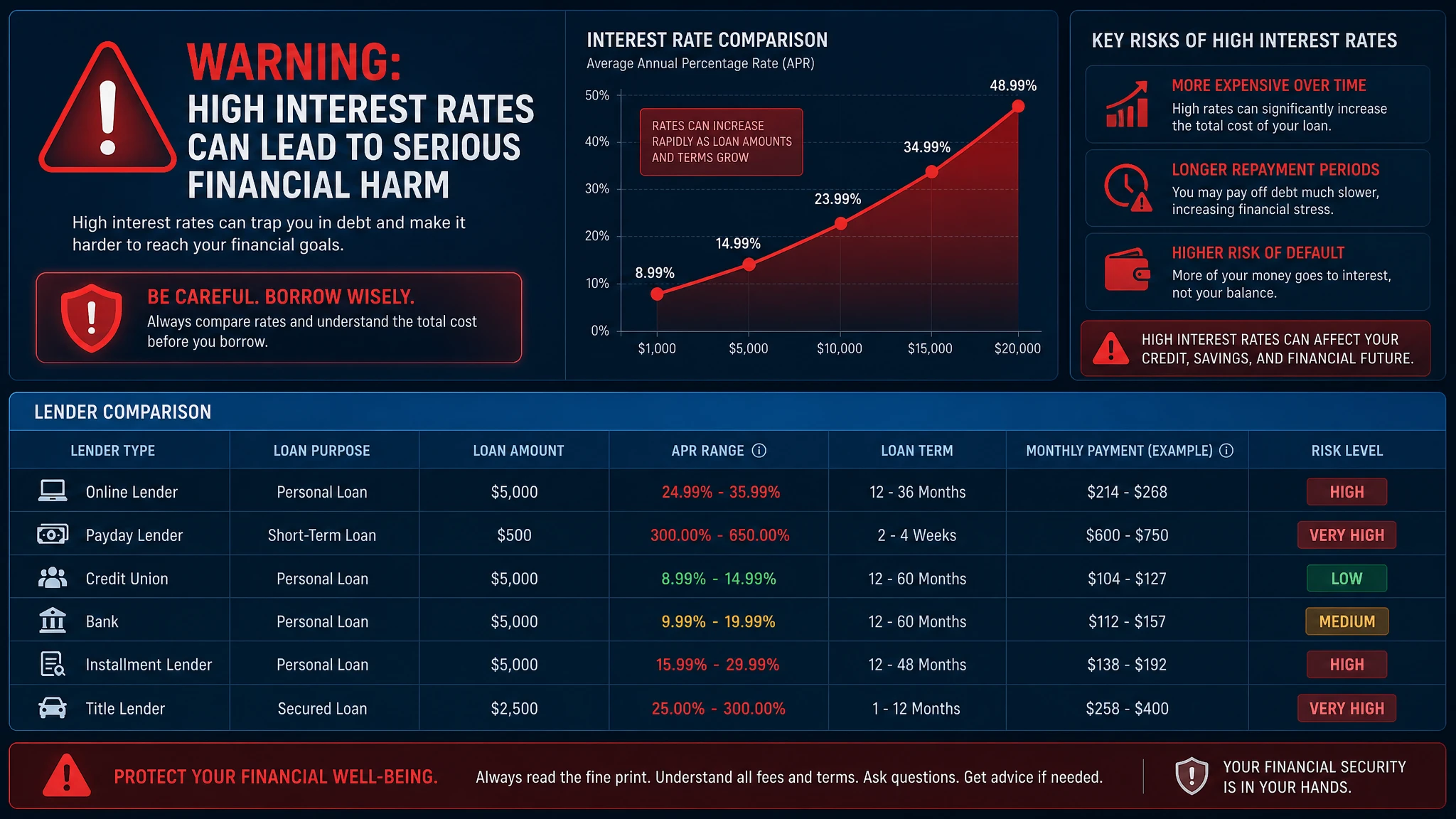
Now for the warning. Below, we have compiled what we believe to be the most comprehensive publicly available database of documented predatory lenders operating in the United States. These entities charge interest rates ranging from 36% to over 900% effective APR — rates that can turn a $5,000 loan into a $50,000 debt through fees, rollovers, and compound interest.
🚨 How Fast Predatory Loans Destroy Businesses
Consider this scenario: You borrow $10,000 to build your web application from a tribal lender at 600% APR.
- Month 1: You owe $15,000 (fees + first month interest)
- Month 3: You owe $22,500 (missed a payment — rollover fees applied)
- Month 6: You owe $38,000 (more rollovers, late fees, collection costs)
- Month 12: You owe $70,000+ and your web app hasn't even launched yet
That same $10,000 from an SBA microloan at 10% APR would cost you $10,500 after 6 months. The difference is $60,000+ and your entire business.
Why These Lenders Are So Dangerous
The lenders in our database use several strategies to trap borrowers:
- Tribal sovereign immunity: Many operate through Native American tribal entities to claim exemption from state usury laws and consumer protections. When states try to enforce rate caps, these lenders argue they are sovereign nations exempt from state jurisdiction.
- Rent-a-bank partnerships: Companies like OppFi, Personify Financial, and EasyPay Finance partner with state-chartered banks (FinWise Bank, TAB Bank, Capital Community Bank, First Electronic Bank) to "export" the bank's home-state rates nationwide, bypassing stricter state caps — a practice the NCLC calls the "rent-a-bank" scheme.
- Fee structures that obscure true costs: Origination fees, service fees, rollover fees, and late payment penalties can push the effective APR far above the stated rate. A loan advertised at "only 199%" might have an effective cost of 350%+ when all fees are included.
- Automatic payment structures: Many require direct access to your bank account, automatically withdrawing payments before you can pay rent or utilities.
- Debt cycle design: Products are deliberately structured so that minimum payments barely cover interest, keeping borrowers trapped for months or years.
Resources for Reporting Predatory Lenders
If you or someone you know has been victimized by any lender in this database, here are the agencies that can help:
- Consumer Financial Protection Bureau (CFPB): File a complaint at consumerfinance.gov/complaint
- Your State Attorney General: Most state AGs have consumer protection divisions that handle predatory lending complaints
- National Consumer Law Center (NCLC): Research and advocacy at nclc.org
- Federal Trade Commission (FTC): Report at reportfraud.ftc.gov
Predatory Lender Database
Interactive table of 107 documented high-cost lenders, sorted by maximum effective APR. Click any column header to sort. Click any row to view leadership.
Data compiled from NCLC rent-a-bank watch lists (2026), CFPB complaint databases, Finder.com, ProPublica investigations, and state AG enforcement actions. Rates are effective APR including fees and rollovers. This is not financial advice.
Showing 107 of 107 lenders
Key Takeaways for Entrepreneurs
- Never borrow above 36% APR to fund a business. The Military Lending Act established 36% as the predatory threshold — if it's too dangerous for soldiers, it's too dangerous for your startup.
- Equity is cheaper than predatory debt. Selling 20% of your company to an investor costs you nothing until your company is worth something. A 600% APR loan costs you everything immediately.
- The CFPB is your ally. Check any lender against the CFPB complaint database before signing anything. File complaints if you encounter abusive practices.
- Work with agencies that reduce your capital needs. At Digital Marketing Co., we build enterprise-grade web applications at costs 60–87% below market rate, meaning you need significantly less startup capital.
- If it sounds too easy, it's a trap. "Guaranteed approval" and "no credit check" are red flags — legitimate lenders always evaluate risk.
💡 Build Smart, Fund Smart
Ready to build your web application the right way? Request a free proposal from Digital Marketing Co. and discover how much capital you can save by working with a team that delivers enterprise results at startup-friendly prices. Your competitors are building. Don't let a predatory loan be the reason you never launch.