








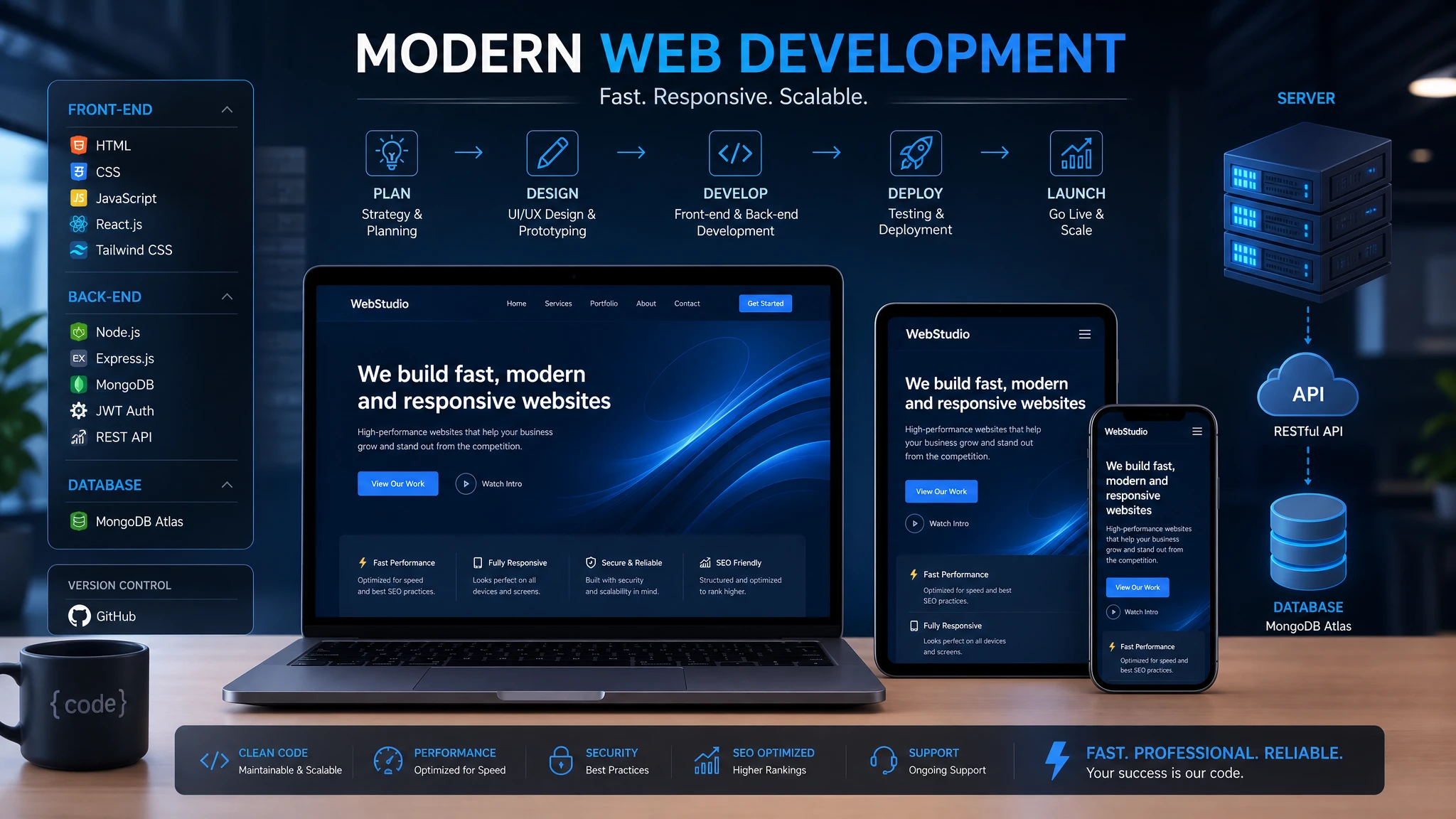
Web Development in the Context of Digital Marketing
Web development for digital marketing is the practice of building and optimizing websites that serve as high-performance marketing assets. Beyond basic functionality, marketing-focused web development prioritizes page speed, search engine accessibility, conversion optimization, user experience, and technical SEO foundations that enable all other digital marketing efforts to succeed.
Research from Google's Web.dev demonstrates that a 1-second improvement in page load time can increase conversions by up to 27%. The Nielsen Norman Group further reports that users form first impressions of websites in 50 milliseconds, making performance and visual quality critical business factors.
Core Web Vitals & Performance
Google's Core Web Vitals are the technical benchmarks that directly impact both search rankings and user experience:
- Largest Contentful Paint (LCP): Measures loading performance. Target: under 2.5 seconds. Optimize through image compression (WebP/AVIF), lazy loading, efficient server response, CDN usage, and critical CSS inlining.
- Interaction to Next Paint (INP): Measures responsiveness. Target: under 200ms. Optimize through JavaScript minimization, code splitting, efficient event handlers, and web worker utilization for heavy processing.
- Cumulative Layout Shift (CLS): Measures visual stability. Target: under 0.1. Optimize through explicit image dimensions, font display optimization (font-display: swap), reserving space for dynamic content, and avoiding layout-shifting ad injections.
Responsive Design & Mobile Optimization
With Google's mobile-first indexing, the mobile version of your website is the primary version for ranking purposes. Modern responsive design goes beyond fluid grids to include: mobile-optimized navigation patterns (hamburger menus, bottom navigation), touch-friendly interactive elements (minimum 44px tap targets), optimized media loading for mobile networks, and progressive enhancement strategies.
Conversion-Focused Development
Marketing-optimized web development prioritizes conversion through: clear visual hierarchy that guides users toward calls to action, form optimization (progressive profiling, inline validation, autofill support), trust signals prominently placed near conversion points, A/B testing infrastructure, and page-specific landing page development for campaign traffic. Research from Boston Consulting Group indicates that conversion-optimized websites generate 2-3x more leads than standard informational sites.
Technical SEO Foundations
Web development directly enables technical SEO through: semantic HTML structure (proper heading hierarchy, landmark elements), clean URL architecture, XML sitemap generation, canonical URL management, robots.txt configuration, structured data implementation (JSON-LD), hreflang for multilingual sites, and efficient internal linking structures.
Security & Trust
Web security is both a ranking factor and a trust signal. Essential security measures include SSL/TLS (HTTPS), Content Security Policy headers, input sanitization, regular dependency updates, and compliance with data protection regulations. The OWASP Foundation provides comprehensive guidelines for web application security that should inform all marketing website development.
Modern Development Stack
The modern marketing website stack typically includes: a headless CMS or modern framework for content management, static site generation or server-side rendering for performance, CDN distribution for global performance, analytics integration (GA4, GSC), A/B testing tools, and marketing automation integration. The choice of technology stack should prioritize performance, maintainability, and marketing flexibility.