







OmniReality
The Future of Interactive Multidimensional Holographic Video Reality
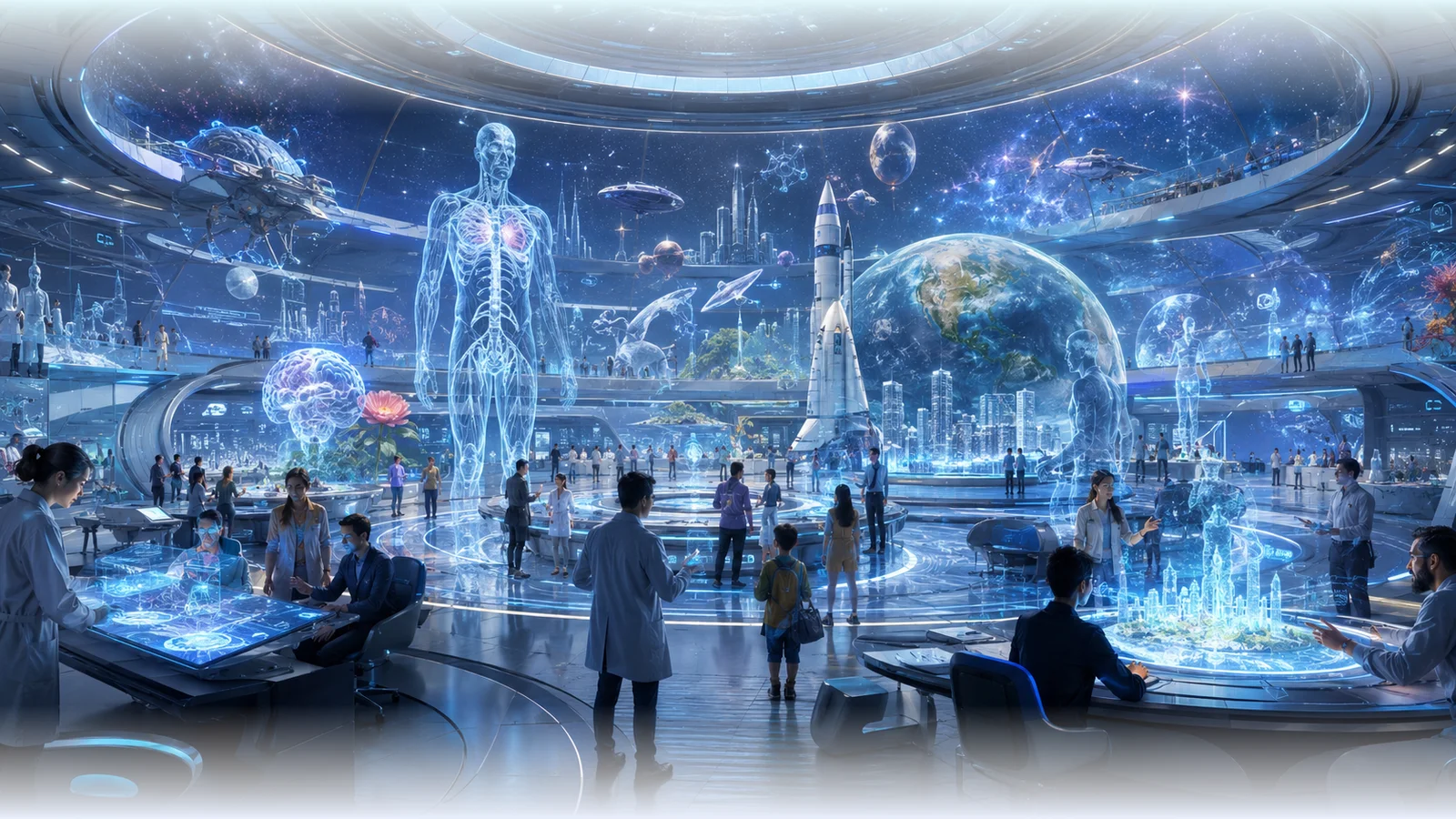
OmniReality reimagines recorded reality itself. Where ordinary video freezes a single camera’s viewpoint and throws away the physics of light, OmniReality preserves the full wavefront — amplitude and optical phase — and treats every object, light source, living perceiver, vehicle, and moment of time as explicit, addressable state.
This canonical edition consolidates years of work into a single disciplined specification: 39 sections that move from the foundational holographic state vector, through the deduplicated world core, to embodiment, chrono-navigation, mutable physics, social co-presence, spatial advertising, and global deployment.
Every section carries an explicit epistemic status — from established technology through proposed architecture, evidence-informed reconstruction, and speculative research concept — so the reader can always separate what is demonstrable today from what is forward-looking design.
— Michael Aaron Loftus
Editorial and Scientific Scope
This canonical edition is presented in two movements. Part I lays out the visionary architecture of OmniReality across 39 disciplined sections — the conceptual narrative and its visualizations, each carrying an explicit epistemic status. Part II then gathers the complete formal treatment: 35 canonical equations, each followed by a table of its symbols, units, and roles, concluding with the final dimensional summations. The architecture unifies 22 persistent structured runtime classes and 5 recorded observation-vector classes into 27 unique structured class types, with a deduplicated world core that prevents any coordinate from being counted twice. The taxonomy, master variable glossary, and Chicago-style bibliography follow as appendices. Forward-looking capabilities are presented as research directions, never as shipping products.
Epistemic Status Legend
The Visionary Architecture
The conceptual narrative of OmniReality, section by section, illustrated throughout. Each section that carries a formal treatment links to its equation in Part II.
The Foundational HVR16 State
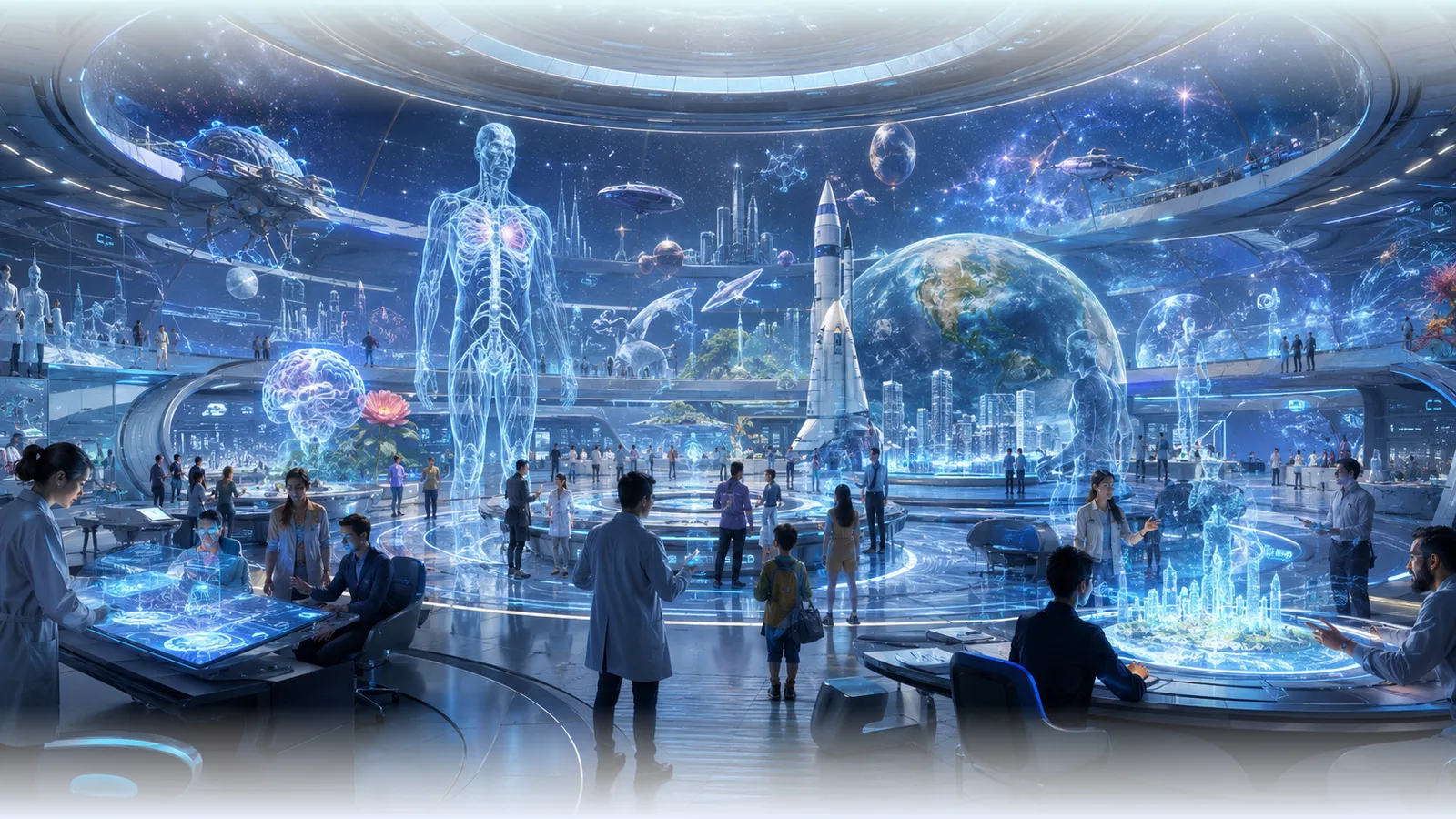
Proposed architectureThe original model encoded a spatial sample, scene time, color, transparency, viewer rotation, viewer translation, zoom, and optical phase. The optical phase term was the crucial sixteenth coordinate that turned a conventional voxel-like representation into a wavefront-aware holographic state.
This vector remains historically important and useful for explaining the origin of the model. In the final OmniReality accounting, however, viewer rotation, translation, and zoom are treated as aliases of the full perceiver state rather than being counted a second time. This refactoring is the central anti-duplication rule used throughout the canonical edition.
Deduplicated World Core and Fixed Anchor
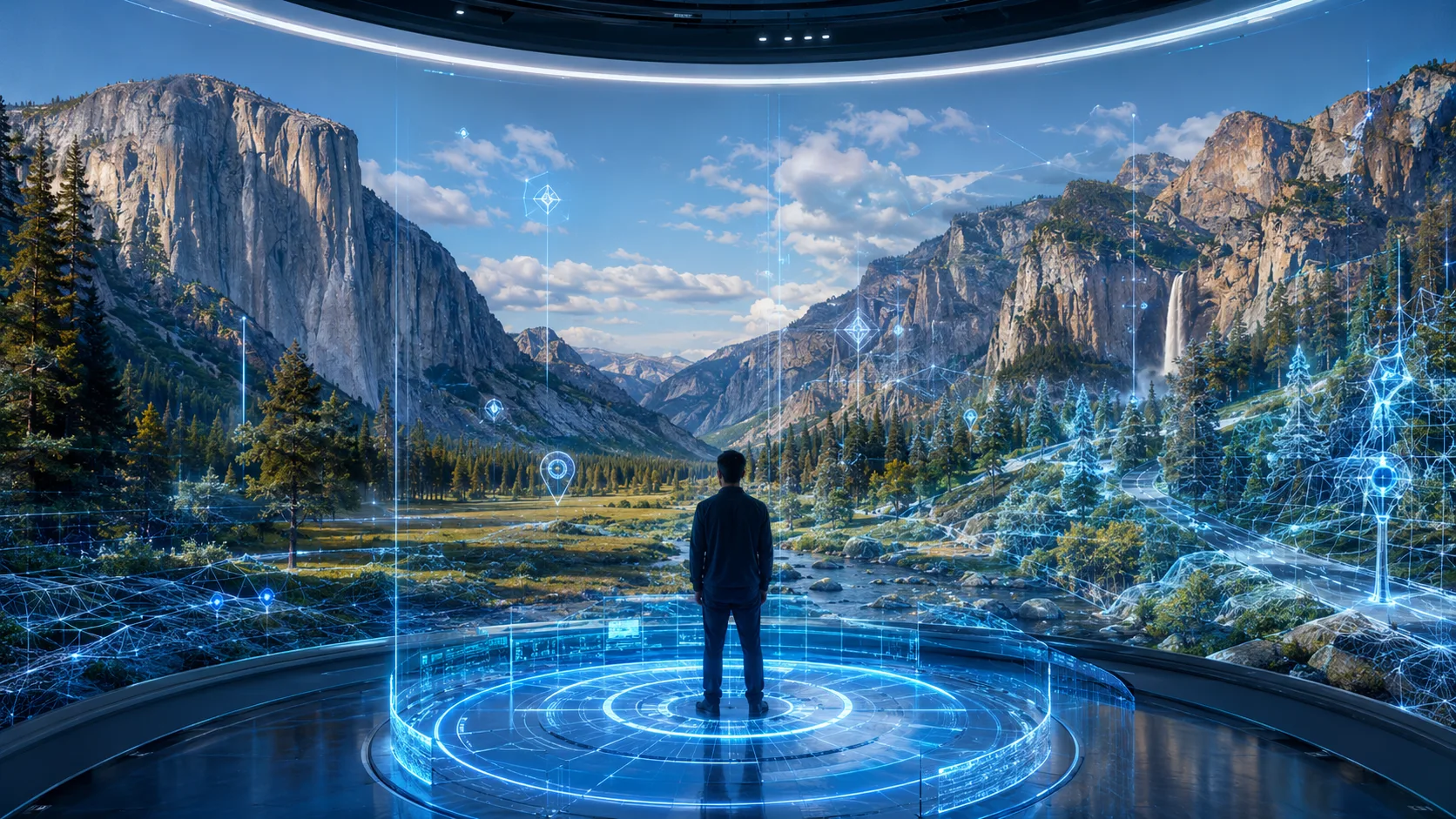
Proposed architectureEarlier editions used a 25-scalar “core” that combined HVR16 with a nine-scalar anchored-world block. Once the perceiver model became explicit, that convention risked double-counting orientation and translational viewpoint state. The final formulation therefore separates the world into a nine-scalar photonic scene sample and a nine-scalar world-anchor block, for an 18-scalar shared core.
This is not a loss of capability. It is a cleaner ontology: the world owns scene position, time, appearance, phase, anchor position, anchor orientation, and scale; the perceiver owns eyes, body pose, kinematics, gaze, senses, cognition, and agency.
Wavefront Reconstruction and Eye-Specific Perspective
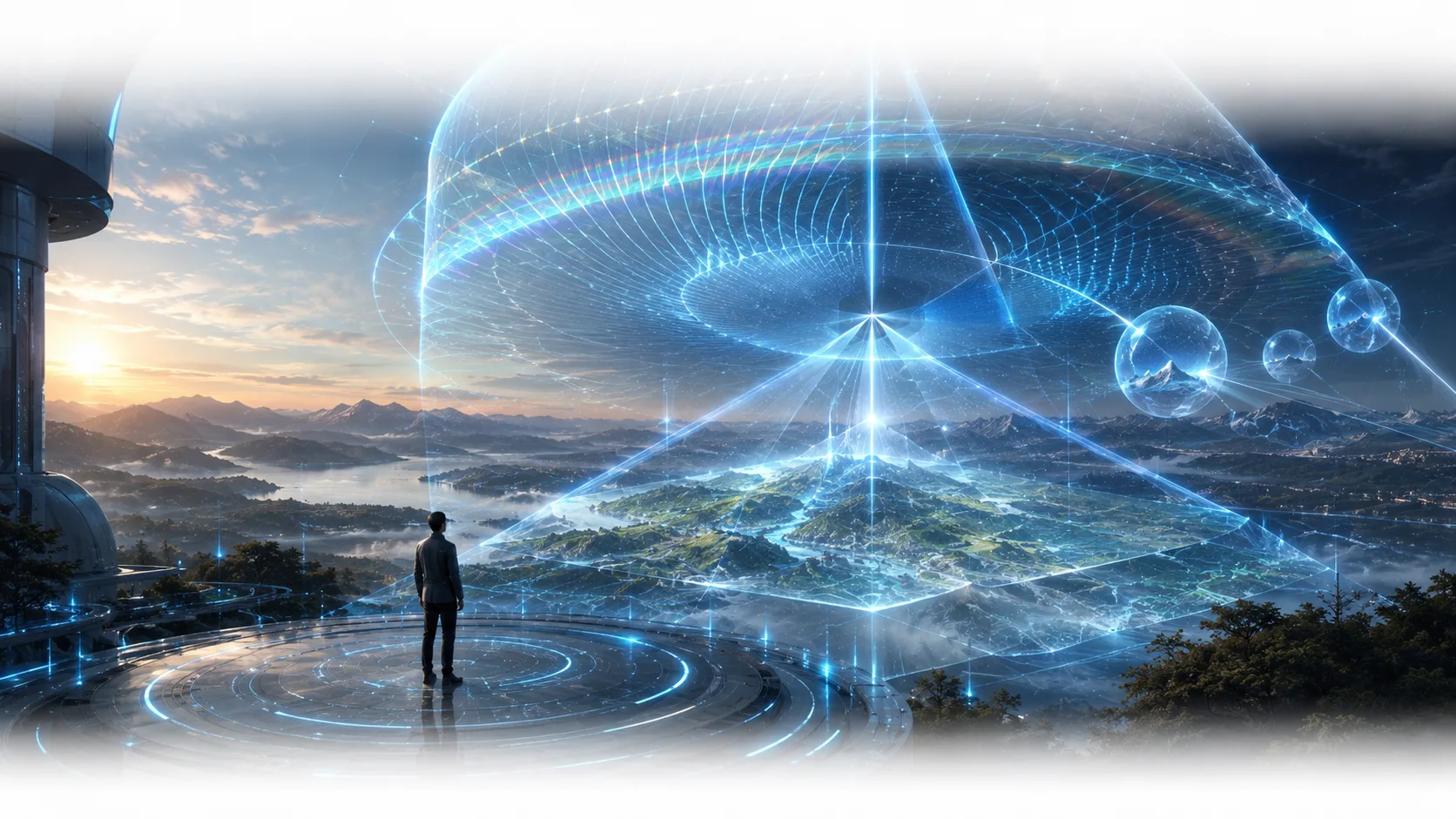
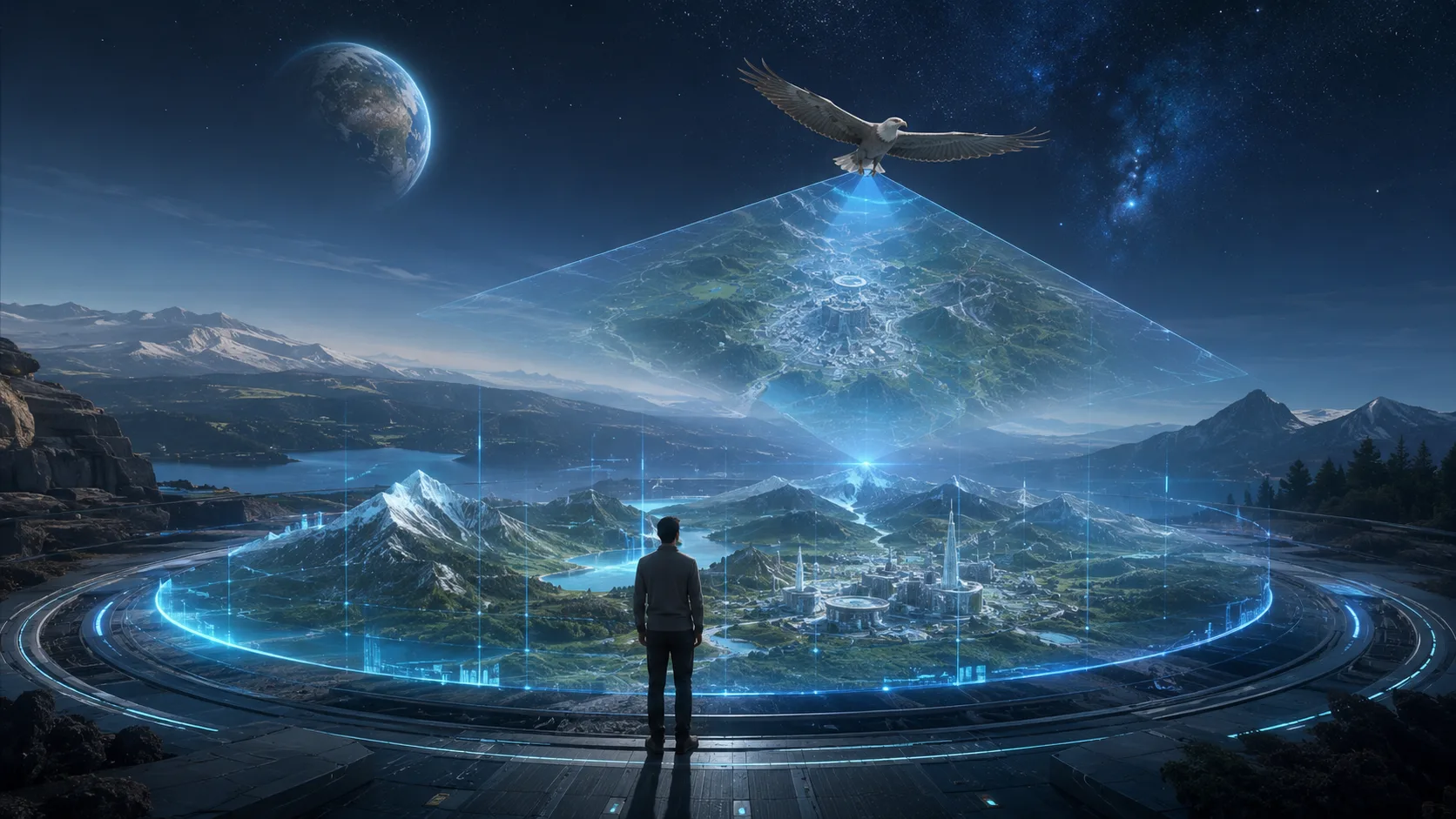
Proposed architectureHyperrealistic holographic immersion depends on viewpoint-dependent reconstruction. The same world point must be transformed into the active eye or camera frame so parallax, perspective, and wavefront structure remain consistent as the perceiver moves. OpenXR’s explicit concept of tracked spaces provides an important software analogue for dynamically locating views inside a world coordinate system.
In a true wavefront interpretation, amplitude and phase are coupled as a complex optical field. This is the mathematical bridge between scene geometry and interference-aware display.
Complex Optical Field and Intensity
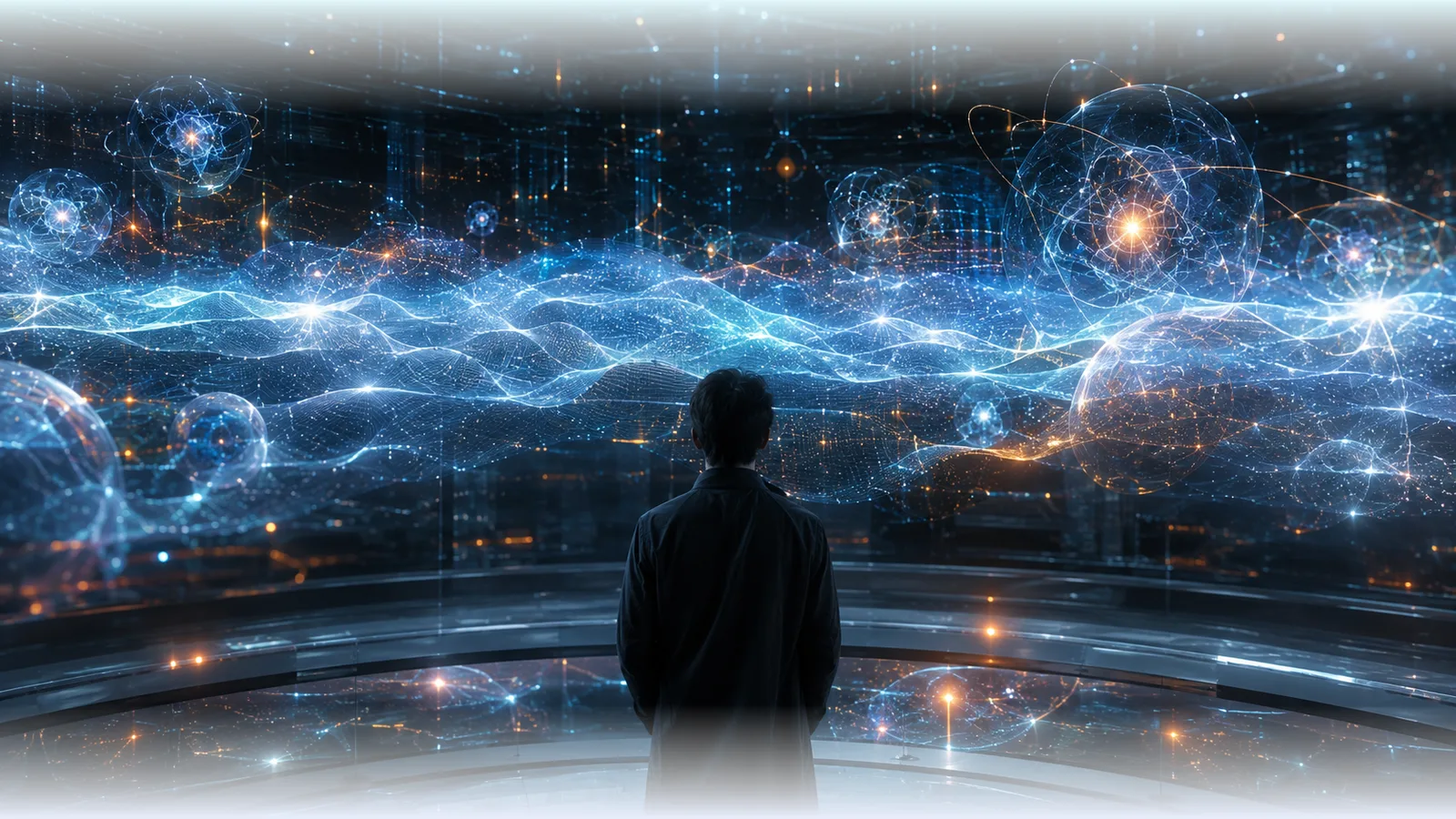
Established technologyThe optical field is represented compactly by complex amplitude. The visible intensity follows from the squared magnitude, but retaining phase allows the model to preserve information that ordinary RGB video discards. This is one reason OmniReality is conceived as a richer data structure than a conventional video stream.
View the formal equation (Eq. 4)Volumetric Transport, Transparency, and Light Sources
Established technologyEach light source contributes position, color, transparency or gating, and directional brightness. A source therefore contributes eleven canonical scalar dimensions. This permits spotlights, projectors, suns, moons, screens, luminous objects, and moving emitters to participate in the same rendering logic.
The volumetric color seen along a ray is an integral of local radiance weighted by accumulated transmittance. The result is compatible with smoke, fog, translucent matter, underwater scenes, atmospheric glow, and other effects required for convincing immersion.
View the formal equation (Eq. 5)Acoustic Fields and Synchronized Spatial Audio
Established technologyThe auditory layer is spatial and time-indexed. Multiple sources may interfere, move, reflect, and be heard differently by different perceivers. In environments without an atmospheric pressure medium - for example exterior space - audio must instead come from interiors, communications channels, or scientifically justified sonification rather than fictional vacuum sound.
View the formal equation (Eq. 6)The Six-Channel Perceptual Interface
Speculative research conceptThe original visual medium was expanded to model sight, hearing, touch, smell, taste, and a sixth abstract channel for cognitive imagery. The first five channels map directly to familiar sensory modalities. The sixth is retained as a speculative interface variable for dream-like or thought-adjacent experiential content; this document does not present direct electromagnetic induction of complex thought as an established present-day capability.
Every sensory event can additionally be associated with a world-space or body-space target vector. That makes a sensation part of the geometry of the world: touch belongs to a location on the body, odor belongs to an air volume, sound belongs to a direction and field, and a visual event belongs to the active eye-space projection.
Manipulable Objects: From Watching to Doing
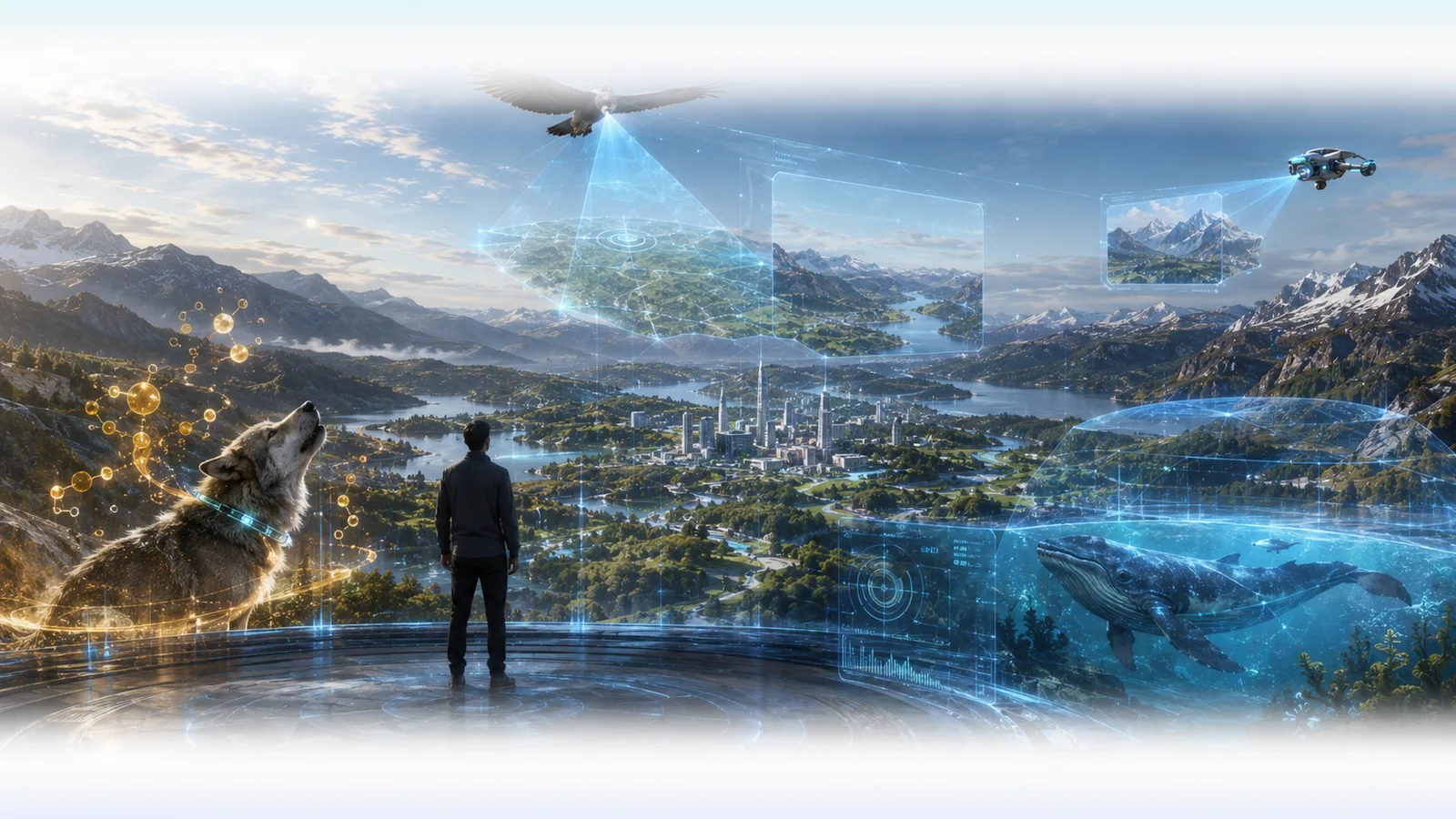
Proposed architectureA world becomes interactive only when selected scene elements can diverge from the prerecorded path. Each manipulable object therefore owns a transform, velocity, physical properties, contact state, forces, torques, constraints, and user-input state. Doors can hinge, drawers can slide, tools can snap into sockets, and objects can be carried away from their original recorded trajectories.
Rigid-Body Dynamics, Contact, and Constraints
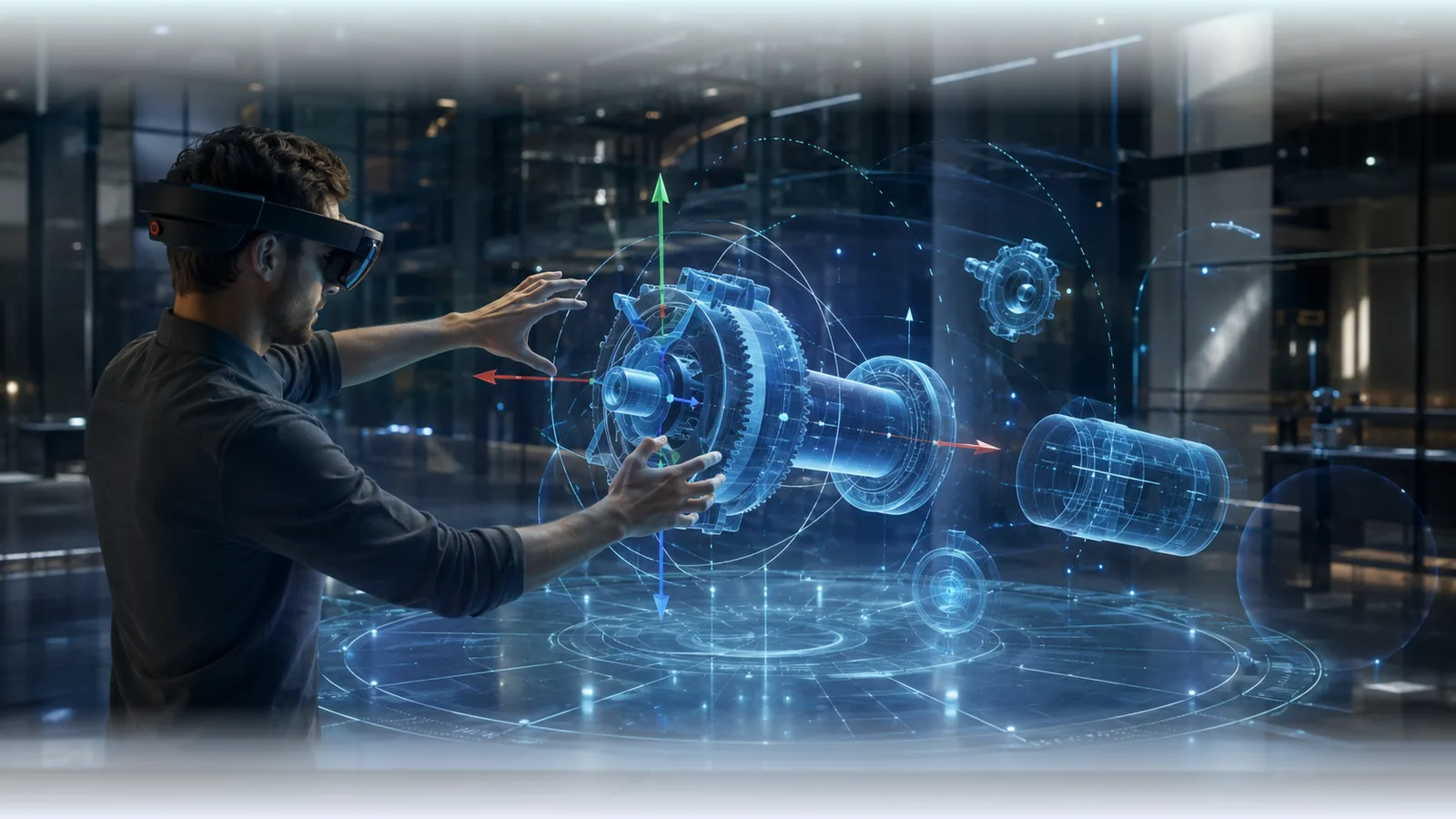
Established technologyForce and torque evolve the state of a released or thrown object. Contacts introduce stiffness, damping, normal direction, friction, and collision response. Semantic constraints preserve the difference between a door, a drawer, a wheel, a robotic arm, and a freely floating object.
View the formal equation (Eq. 9)Object-State Update and Dimensionality
Proposed architectureThe canonical object base contains 51 scalar components. Generalized joint coordinates add three dimensions each - coordinate, lower limit, and upper limit - while direct manipulation inputs add a variable user-input block.
View the formal equation (Eq. 10)Unlimited Living Perceivers
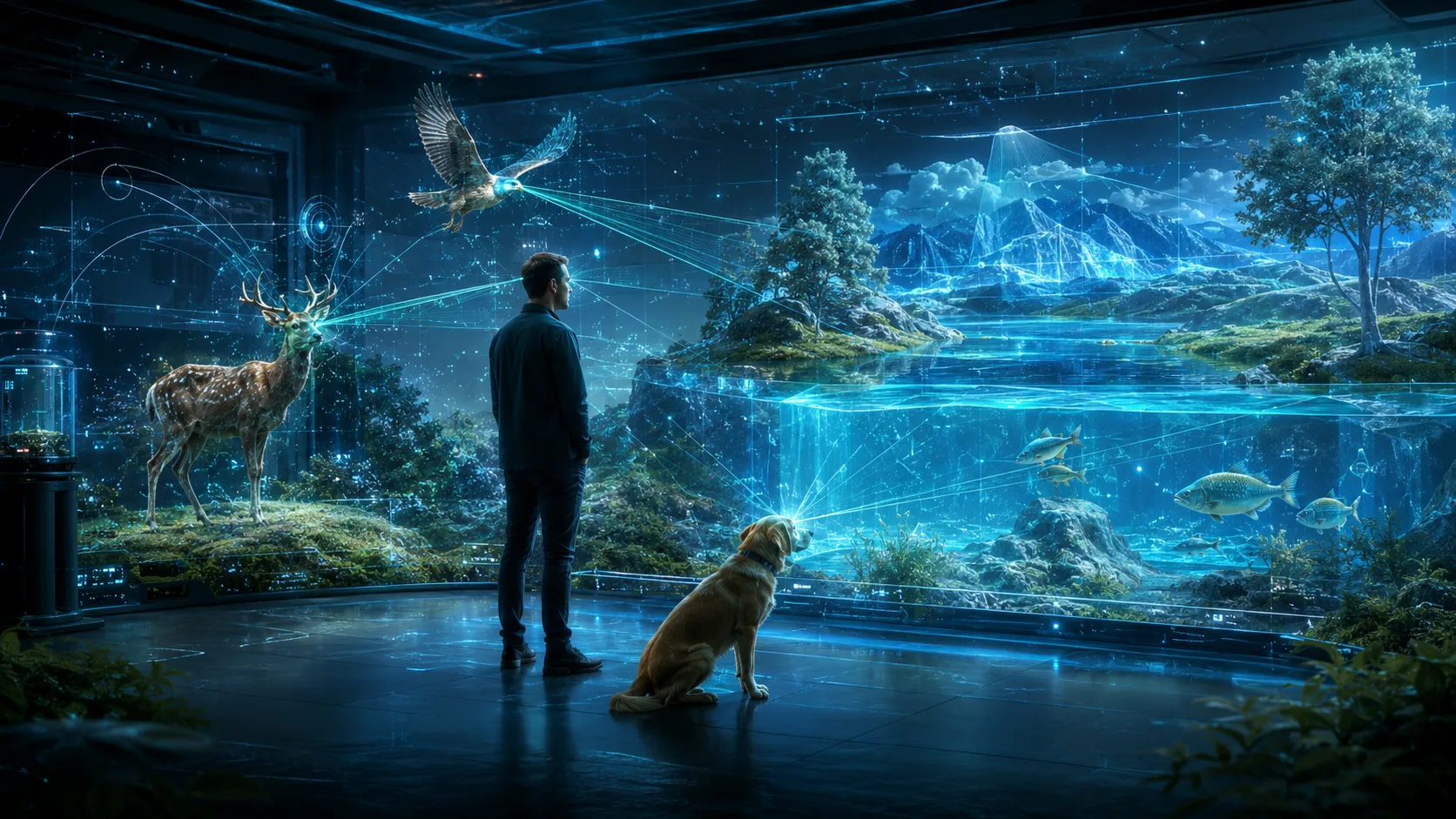
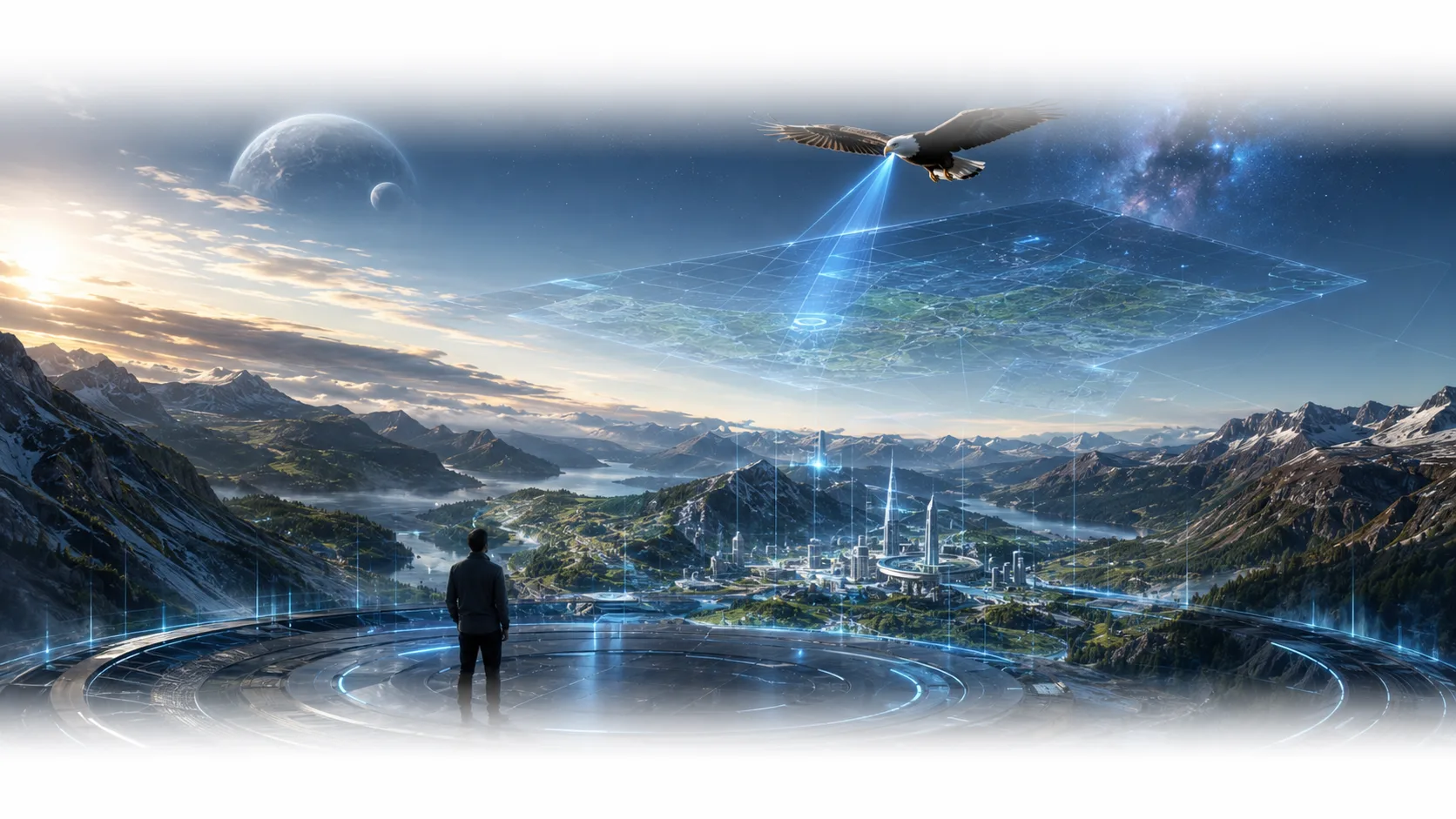
Proposed architectureThe model generalizes from one default viewer to an indexed set of perceivers. A human, bird, dog, whale, fish, or other living being can inhabit the same anchored world while possessing its own body, kinematics, gaze, sensory spectrum, cognition, and agency. A bird’s-eye view is therefore no longer just a camera in the sky; it is a species-conditioned embodiment.

Perceiver Dimensionality
Proposed architectureThe perceiver block absorbs the legacy viewer-orientation, translation, and zoom semantics, preventing double-counting. It also introduces eye positions, velocity, acceleration, angular motion, gaze, multispectral vision, audition, olfaction, tactile body maps, cognition, agency, and species-specific sensing such as ultraviolet sensitivity, polarization sensitivity, echolocation, or magnetoreception.
Controllable Vehicles as Specialized Interactive Objects
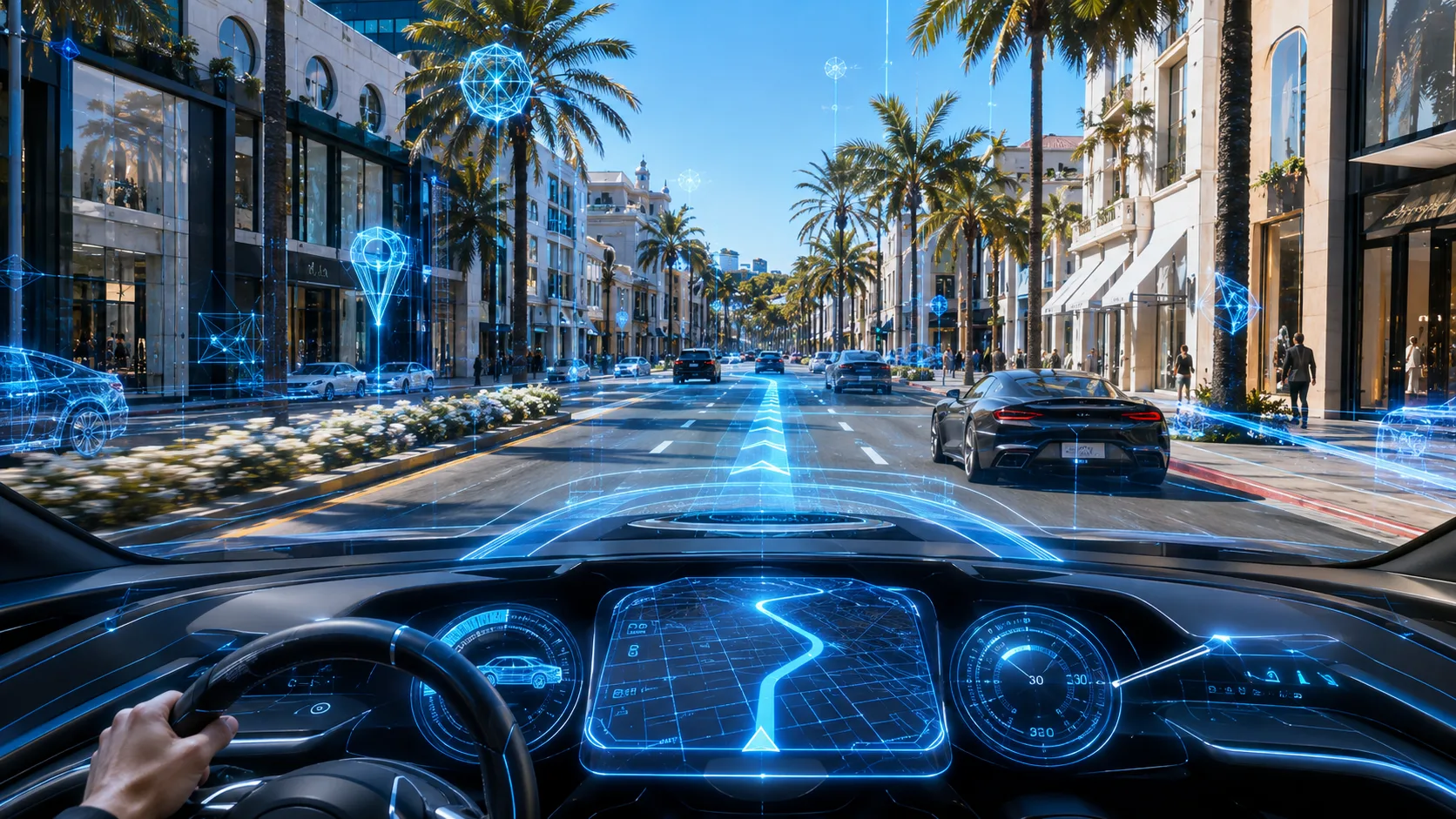
Proposed architectureA vehicle inherits object physics but adds controls, propulsion, energy or fuel state, occupant transforms, navigation state, and class-specific hardware. The user may enter the vehicle, assume a cockpit or driver perspective, operate controls, and travel through the world while preserving collision and environmental constraints.
View the formal equation (Eq. 13)Aircraft Flight State
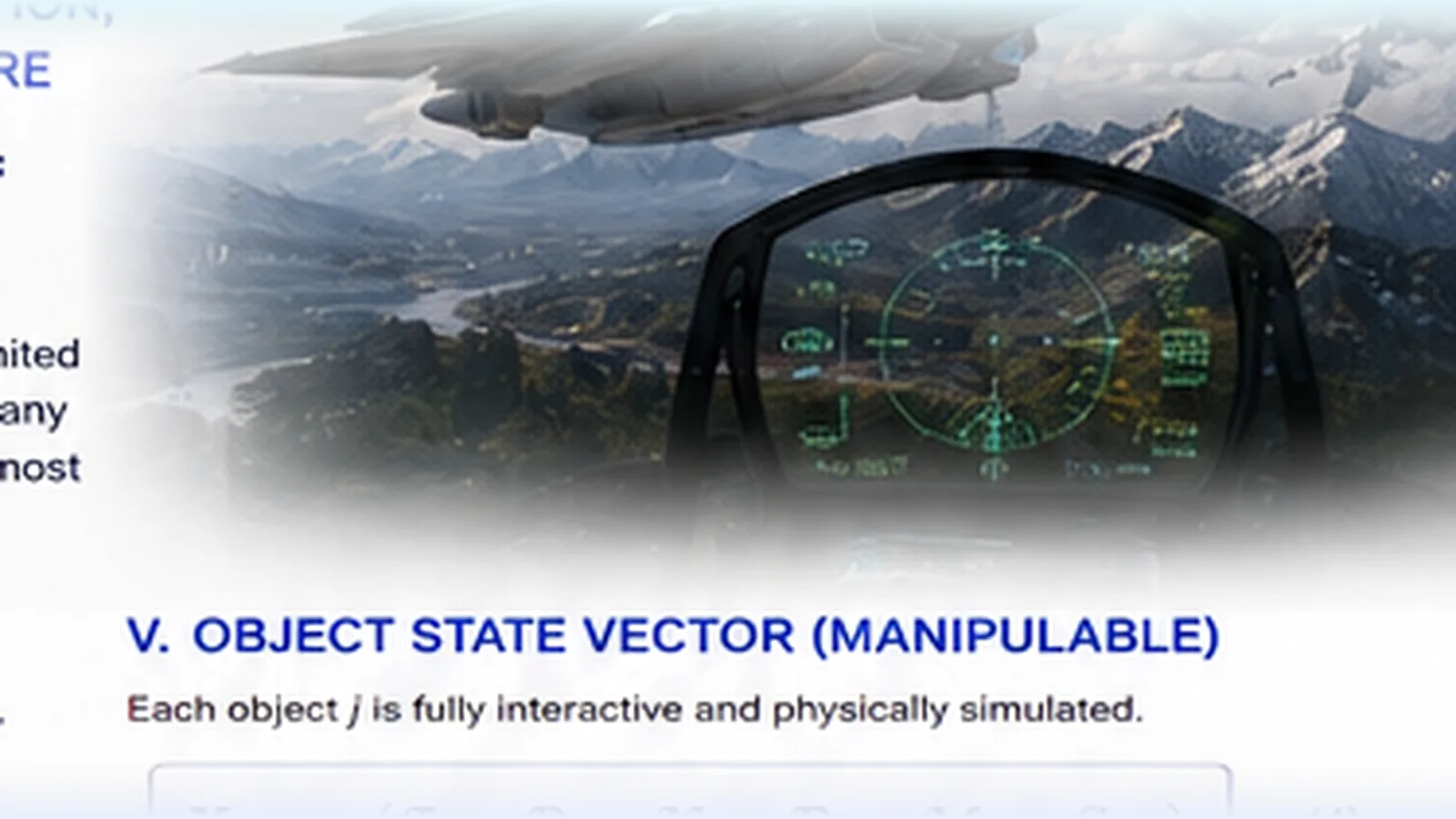
Established technologyAircraft require explicit control-surface, air-data, and engine state. The model therefore adds elevator, ailerons, rudder, flaps, spoilers, slats, landing gear, angle of attack, sideslip, airspeed, Mach, altitude, vertical speed, dynamic pressure, and per-engine operating channels.
Next-Generation Holographic Capture Cameras
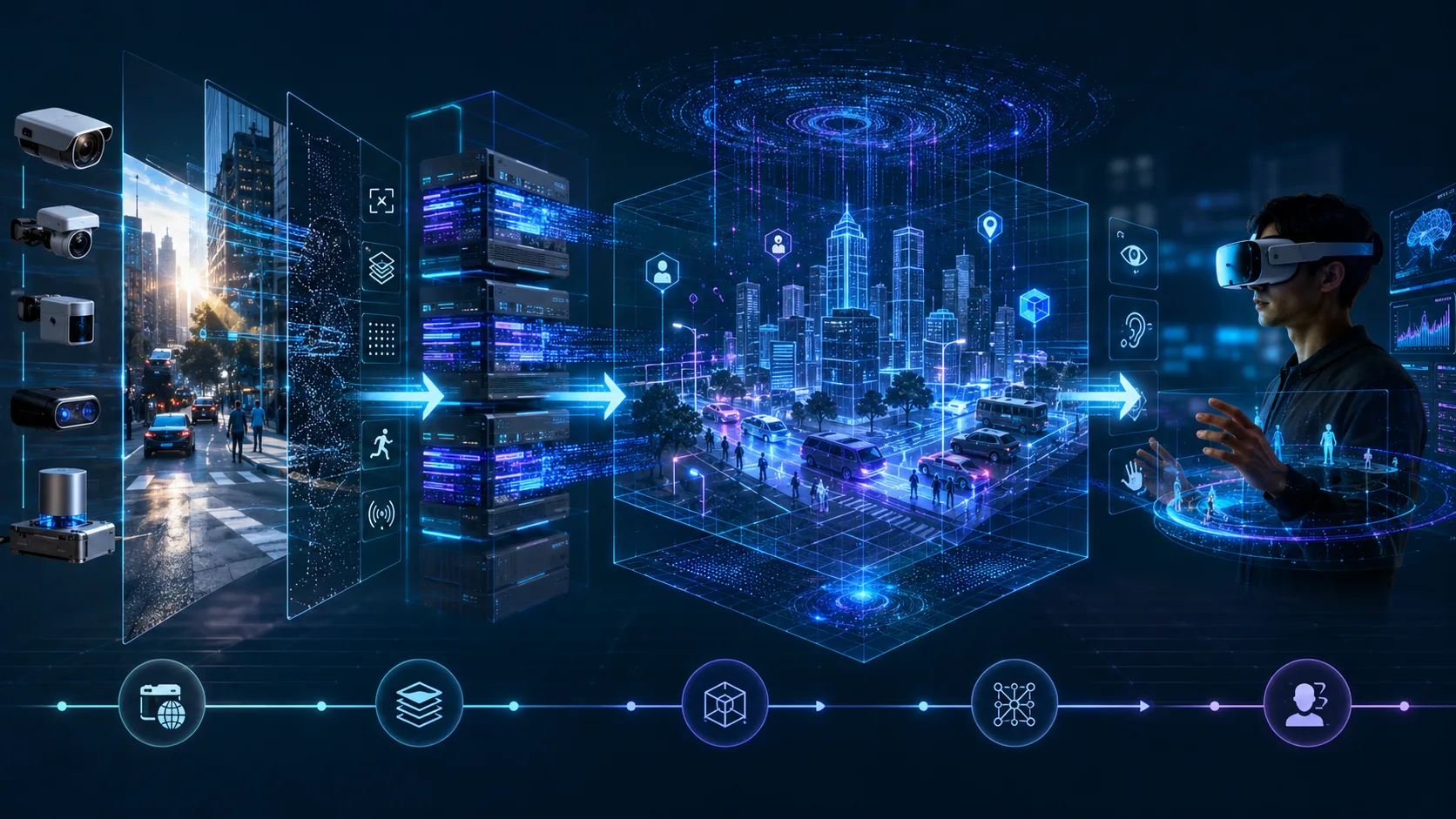
Proposed architectureThe capture camera is itself a persistent state-bearing object. Its pose, intrinsics, lens model, focus, exposure, color calibration, wavefront calibration, spectral response, and synchronization clock are part of the scene-generation pipeline. This separation between persistent device state and recorded observation vectors is essential for rigorous dimensional accounting.
Recorded Optical, Audio, and Inertial Observation Vectors
Proposed architectureEach optical or volumetric sample contributes 26 canonical scalars: position, direction, time, RGBA, depth, amplitude, phase, wavelength, polarization, normal, motion, and confidence. Audio samples contribute nine scalars, and inertial samples contribute ten. These can number in the millions or billions and therefore must not be confused with the far smaller persistent runtime state.
View the formal equation (Eq. 16)Extraterrestrial Vehicles
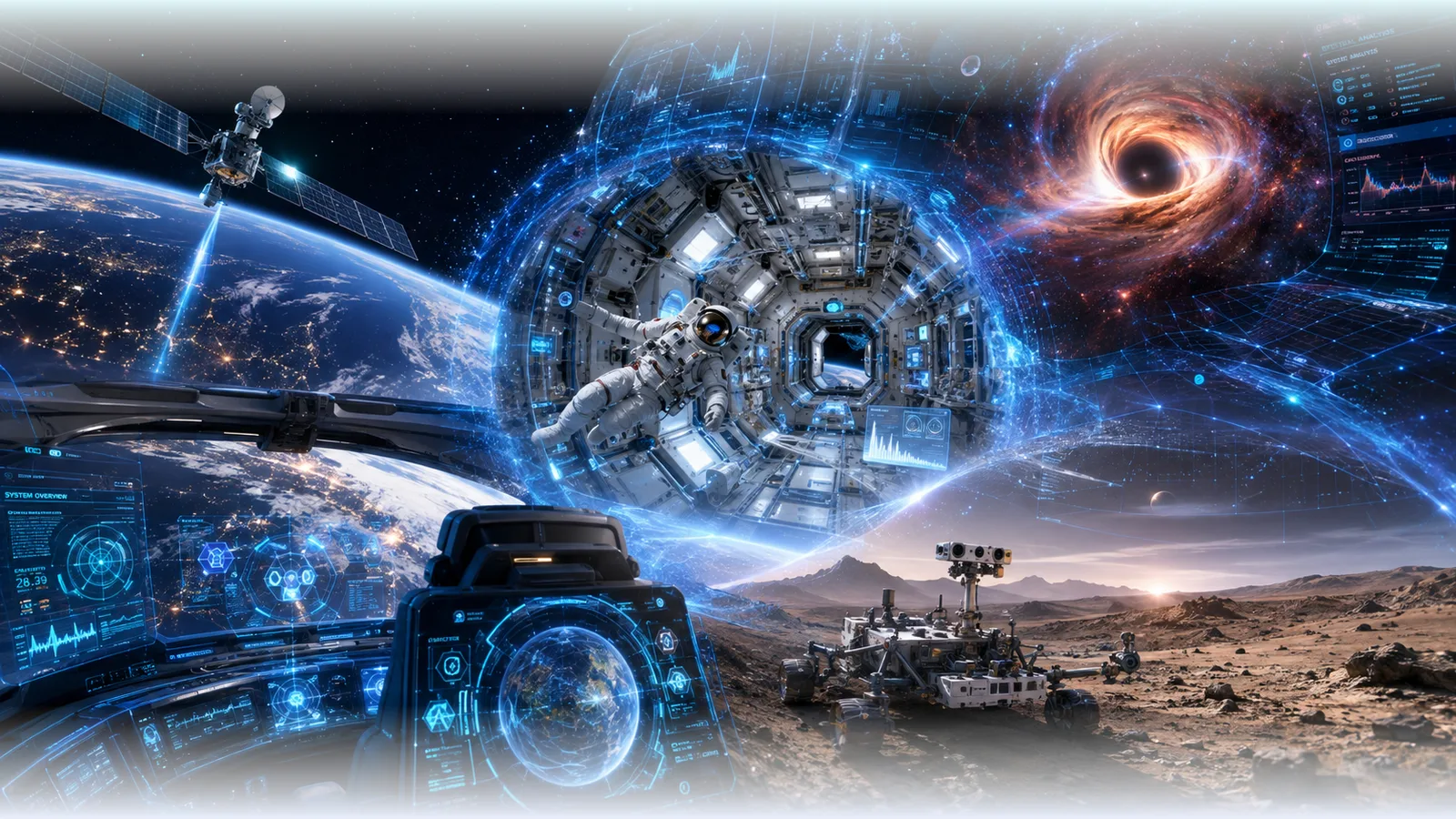
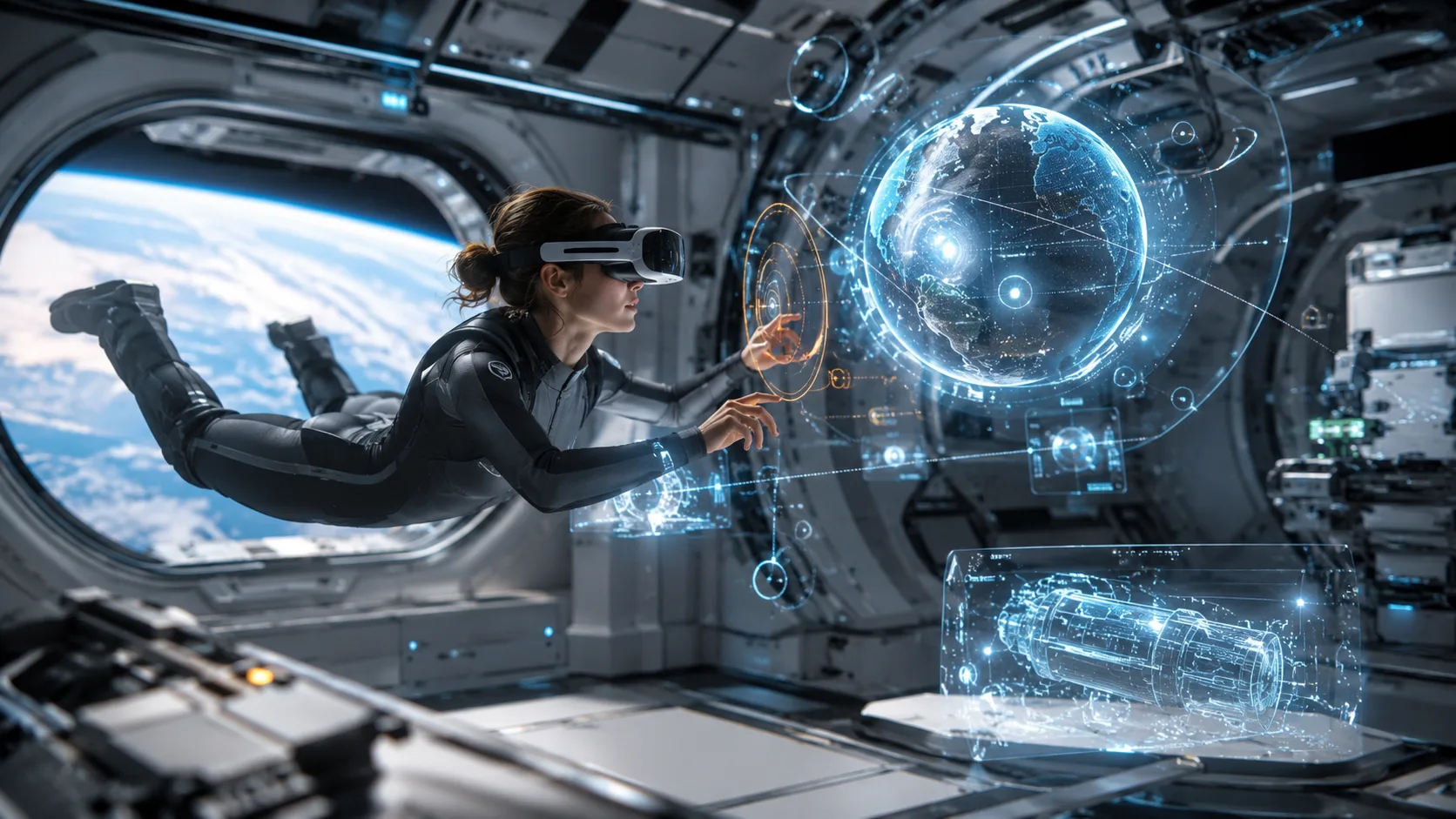
Proposed architectureThe extraterrestrial vehicle class generalizes the terrestrial vehicle formalism with orbital state, attitude, docking, habitat, life-support, sensor payloads, microgravity behavior, and robotic manipulation. A satellite can suppress habitat variables and reinterpret the local viewpoint as an instrument frame, while a crewed station can activate interior free-floating movement and manipulation.

Astronomical Target Environments
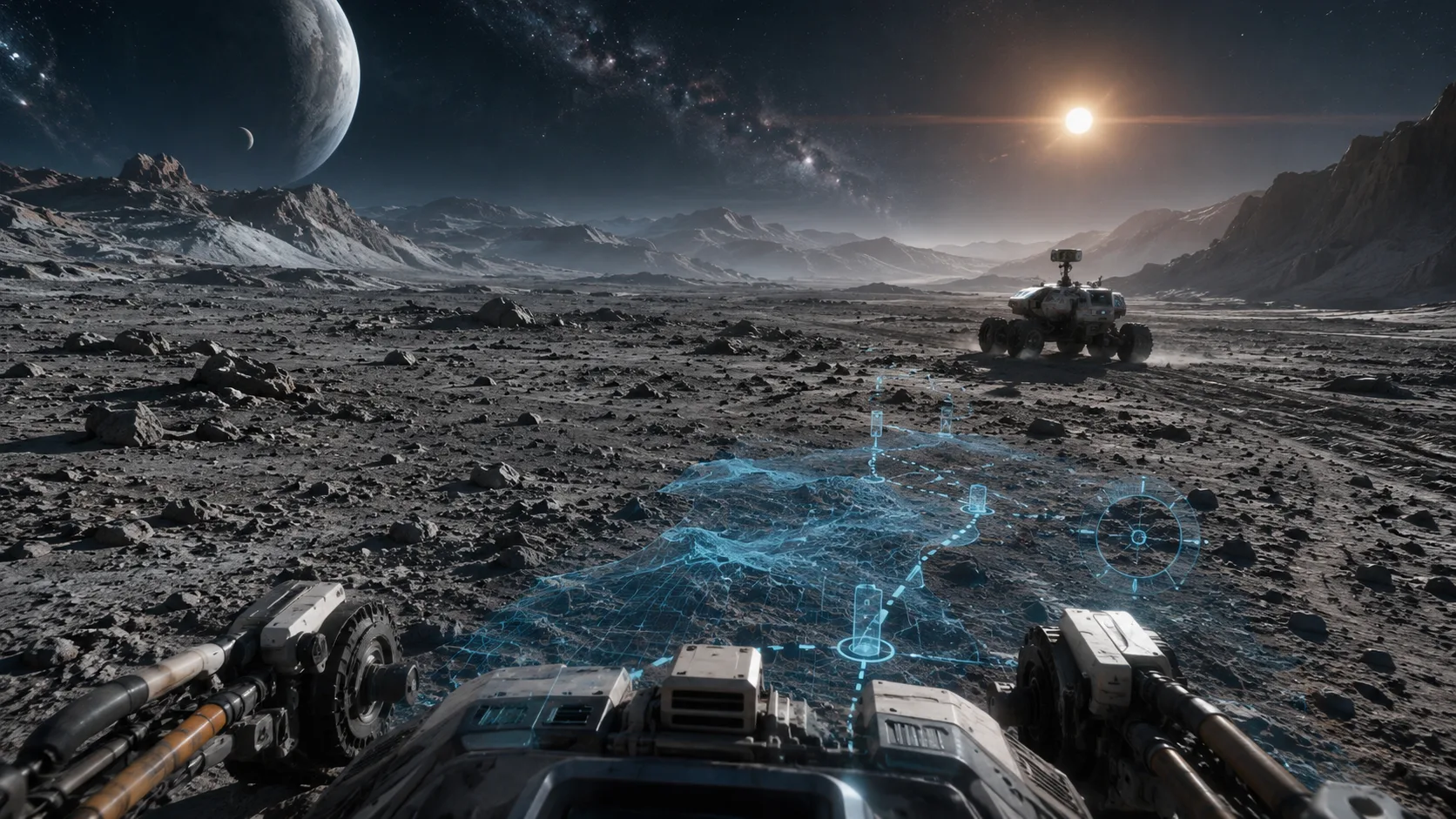
Evidence-informed reconstructionAn extraterrestrial destination is not a painted backdrop. It has position, orientation, body geometry, gravity, atmosphere or vacuum, illumination, hazards, navigability, and optional scientific fields. Solid worlds emphasize terrain and material channels; nebulae and relativistic environments emphasize volumetric fields and physically motivated visualization.

Universe-Scale Multispectral Capture
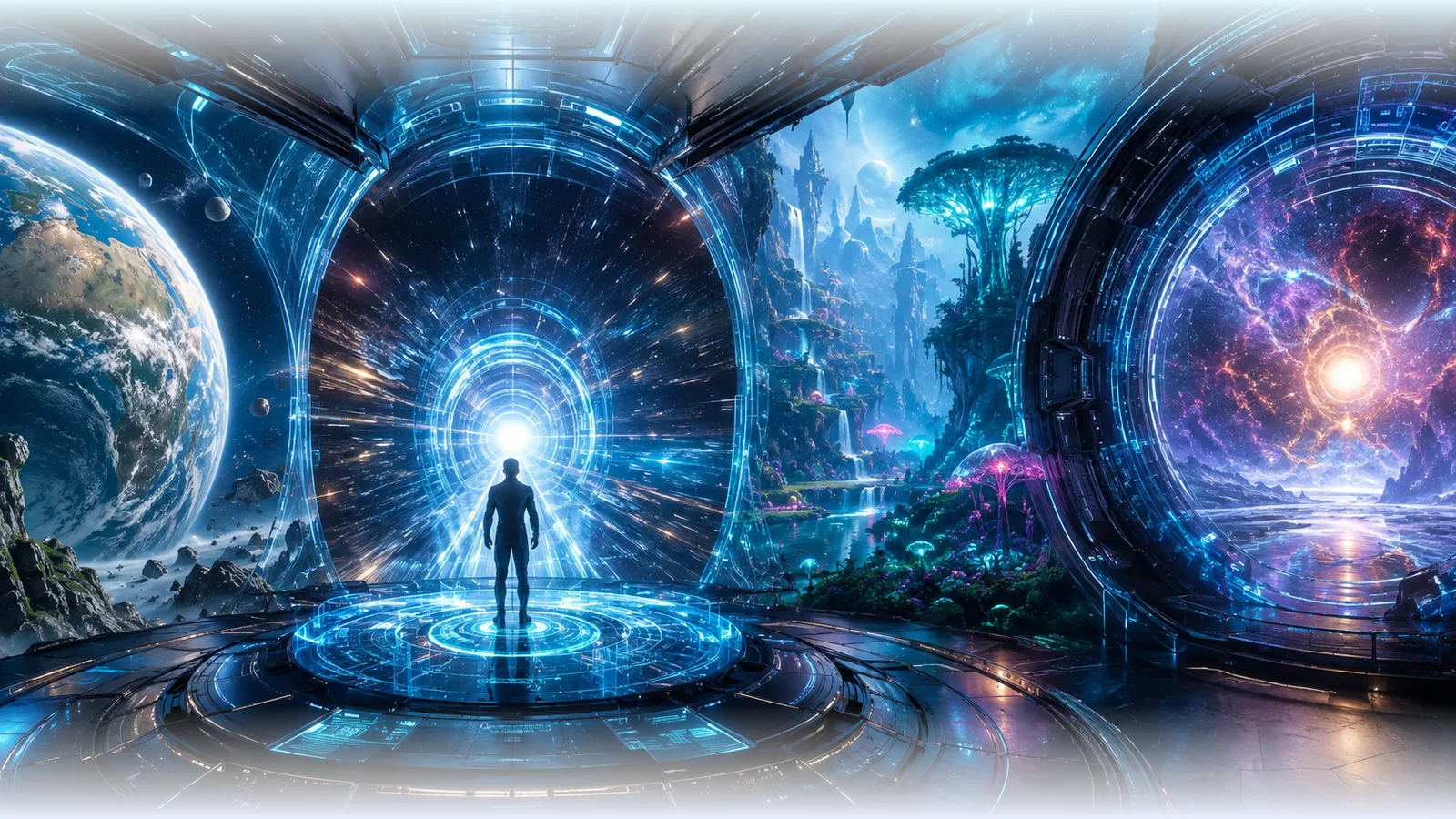
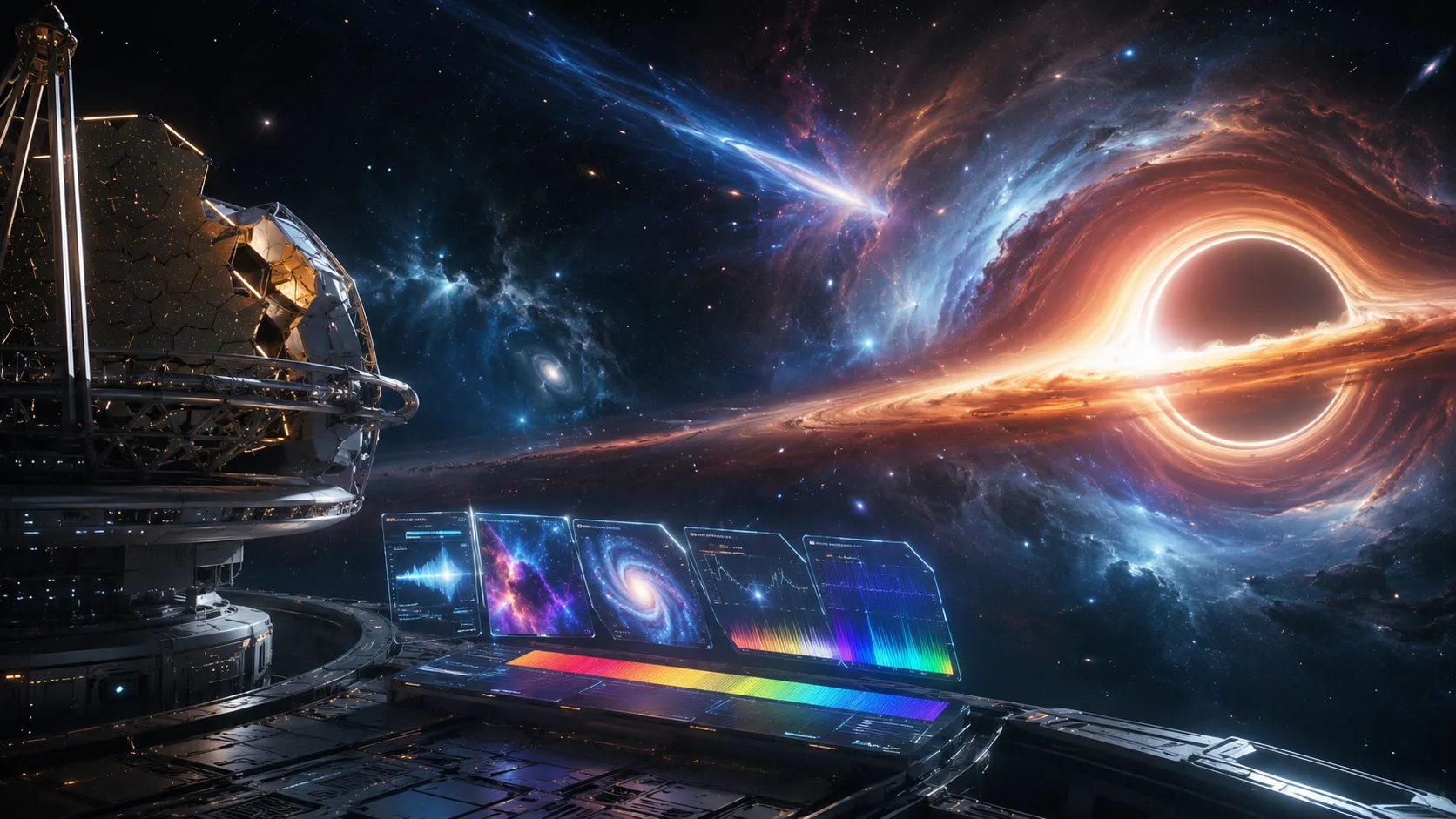
Established technologyThe universe-scale capture model explicitly rejects the idea that one camera can record every wavelength. Hubble contributes visible, ultraviolet, and some near-infrared observation; Webb extends strongly into near- and mid-infrared; Chandra observes X-rays; Fermi observes gamma rays; and Landsat supplies multispectral Earth observation. OmniReality fuses these heterogeneous products into one navigable scientific representation.

Hyper Reality
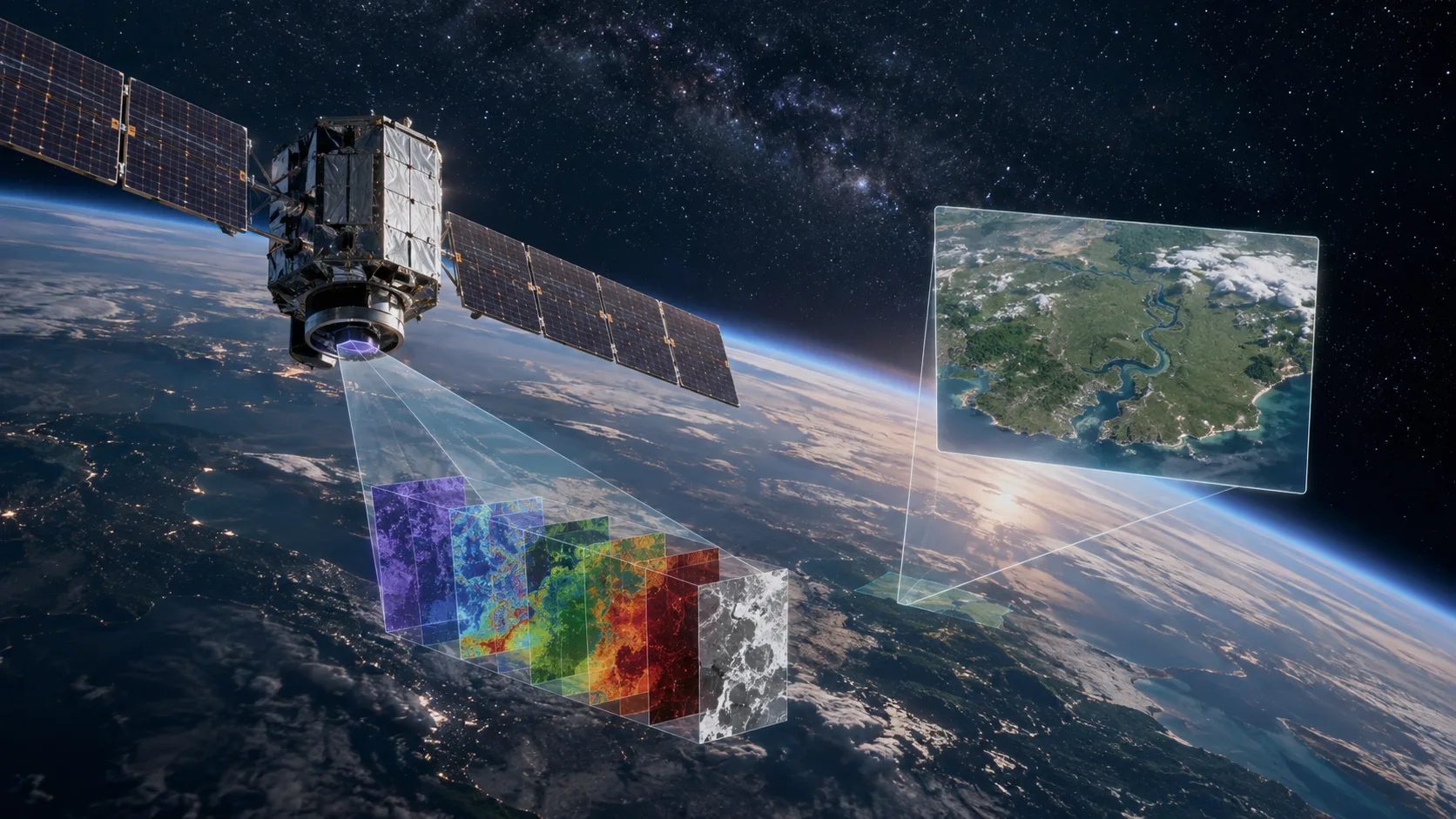
Proposed architectureHyper Reality enriches an immersive scene with explicit semantic context. Objects can carry names, relevance, warnings, memories, goals, translation, instructional overlays, or adaptive guidance. Lifelike telepresence and spatial computing interfaces motivate this layer, but OmniReality generalizes it into a world-level semantic field.
View the formal equation (Eq. 20)Super Reality
Speculative research conceptSuper Reality represents computationally amplified perception: multispectral bands, denoising, deblurring, segmentation, predictive reconstruction, extreme zoom, temporal inference, and cross-sensor fusion. The goal is not merely to reproduce what a human eye would see, but to reveal structure that ordinary perception cannot directly access.
Quantum Reality
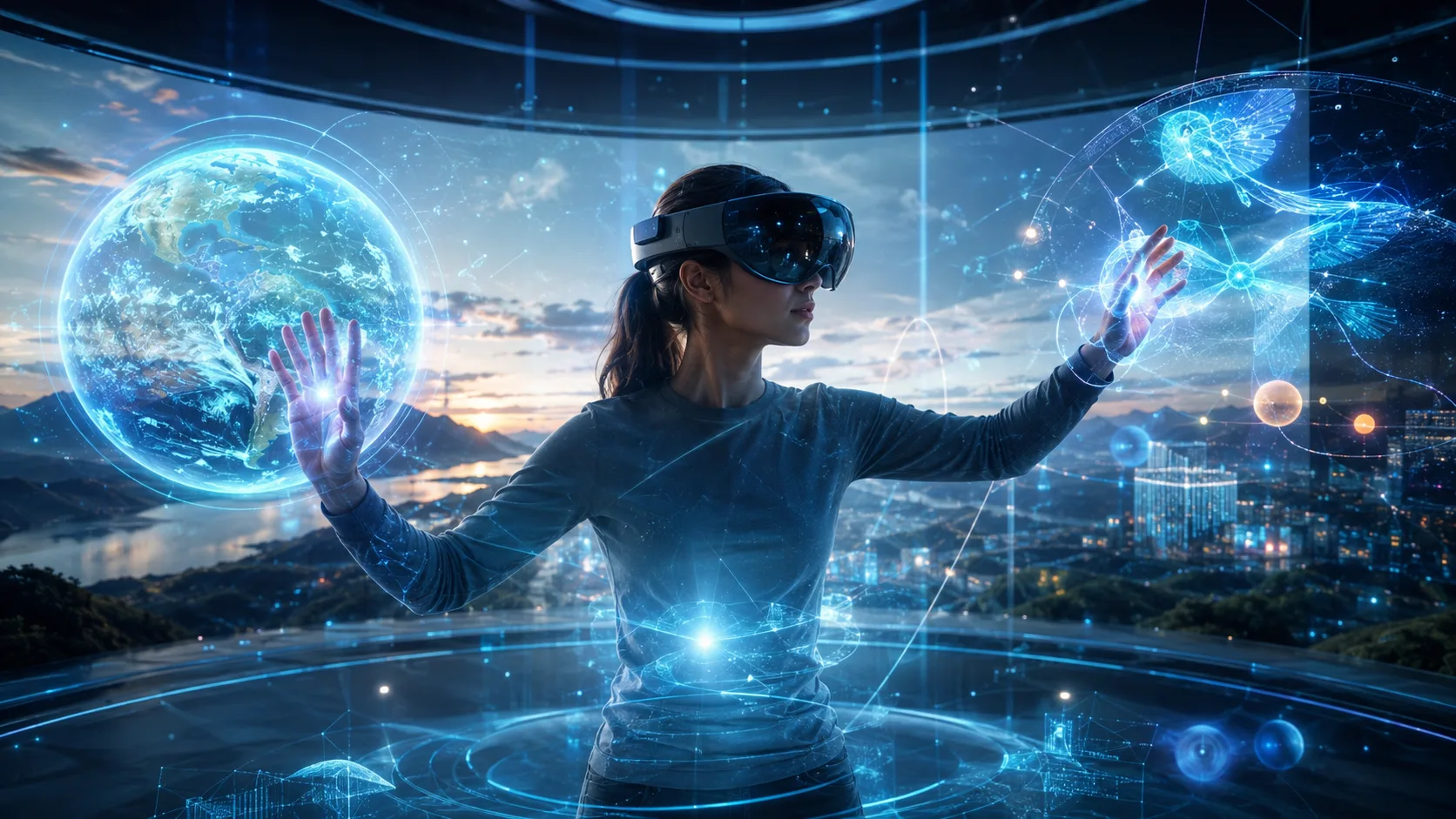
Speculative research conceptQuantum Reality is modeled cautiously as a reduced local state. The intent is not to claim that a complete macroscopic world can be stored as one exact universal quantum wavefunction. Instead, local basis states, density-operator degrees of freedom, uncertainties, measurements, decoherence, and explicit correlations can be represented where scientifically relevant.
OmniReality Orchestration
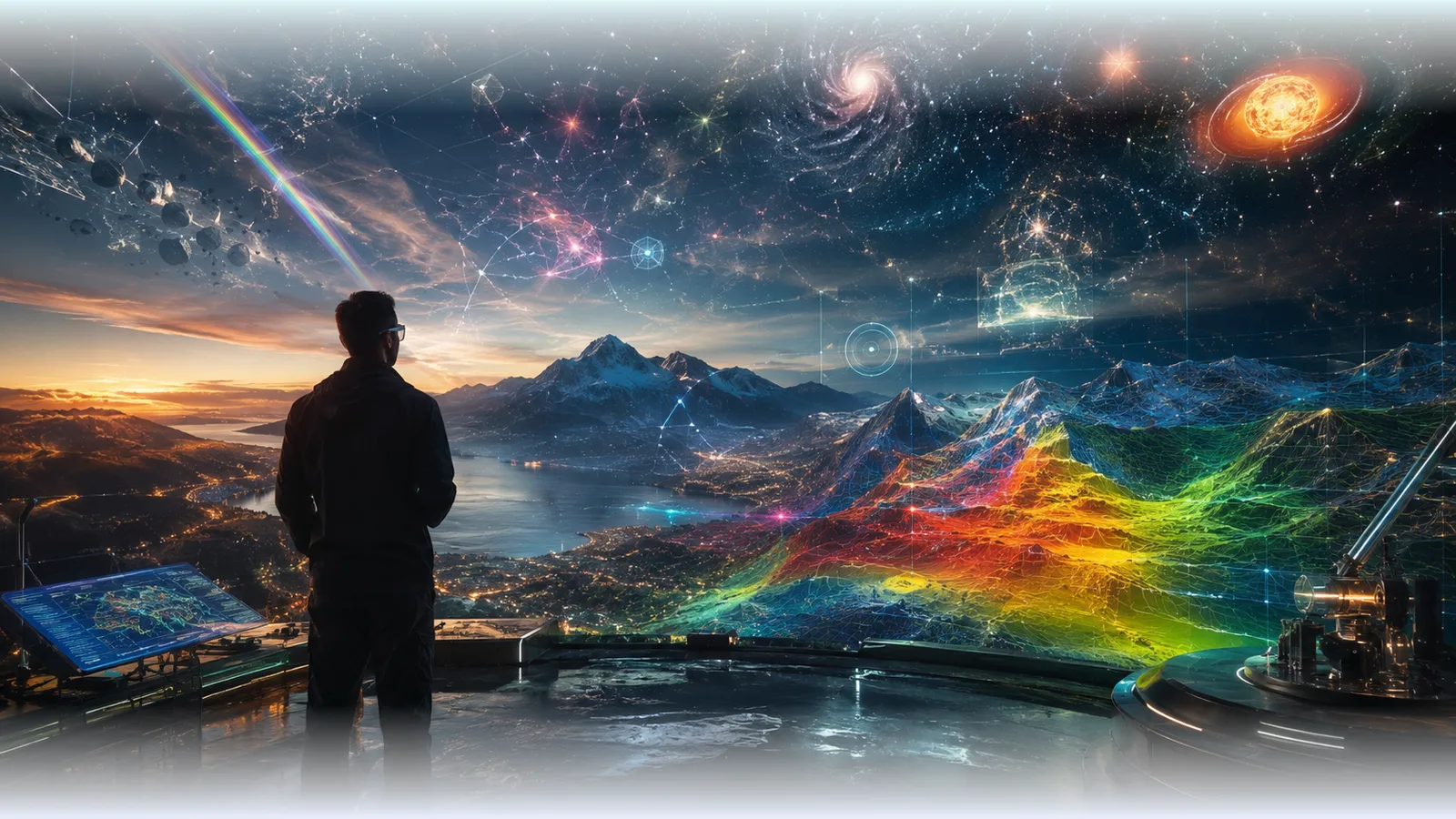
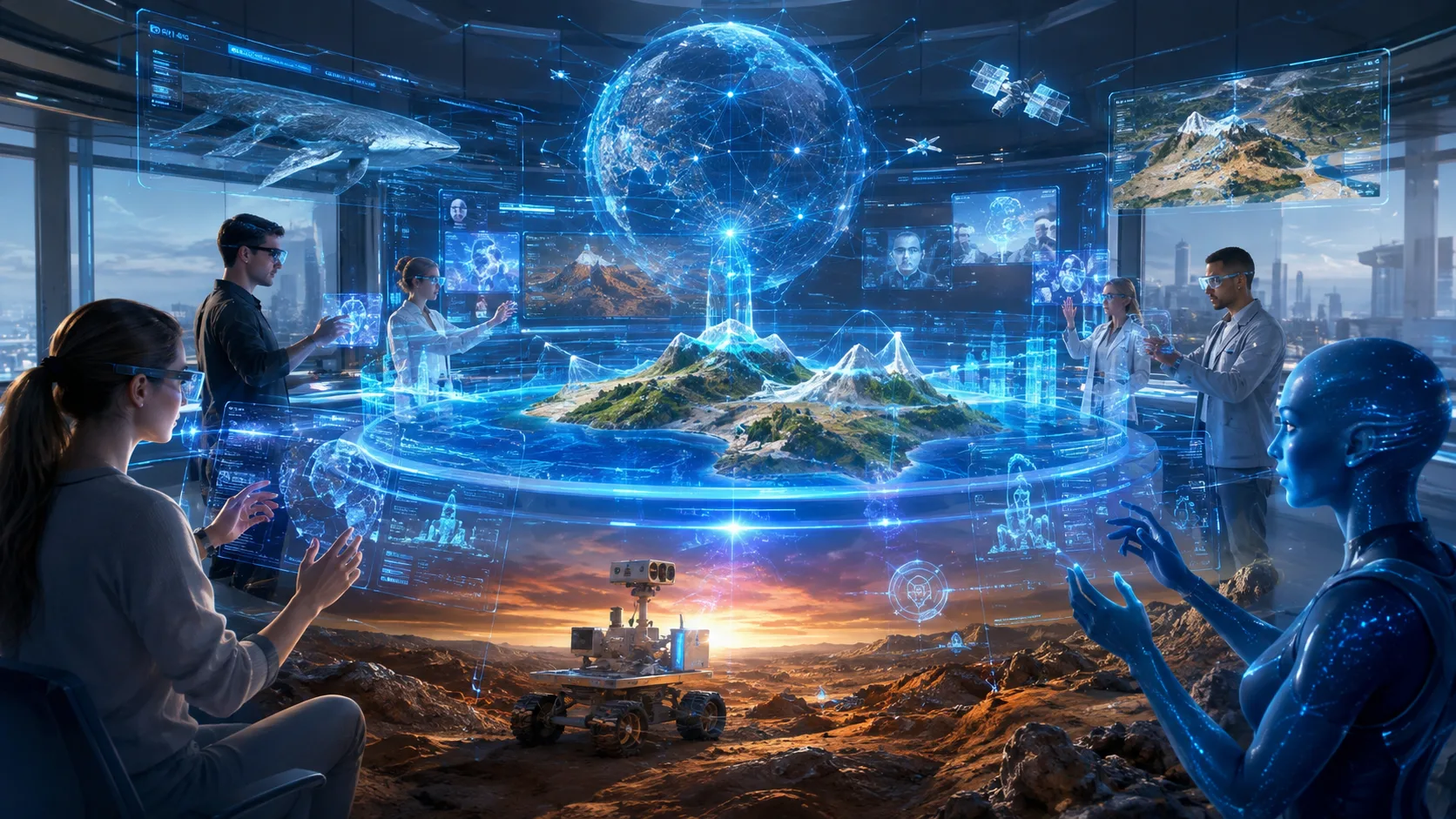
Proposed architectureOnce the model contains many perceivers, timelines, worlds, sensor layers, and interactive objects, a higher-order coordination layer becomes necessary. OmniReality orchestration manages shared memory, identity, synchronized presence, provenance, collaboration, translation, permissions, safety policy, and platform intent.


Chrono-Navigation
Speculative research conceptChrono-navigation is intentionally distinguished from a claim of physical time travel. A user may move backward through recorded or reconstructed states and forward through forecasted, simulated, or artistically authored branches. The permitted temporal window is conditioned by the available data, the current state, and the uncertainty of reconstruction.


Mutable Physics
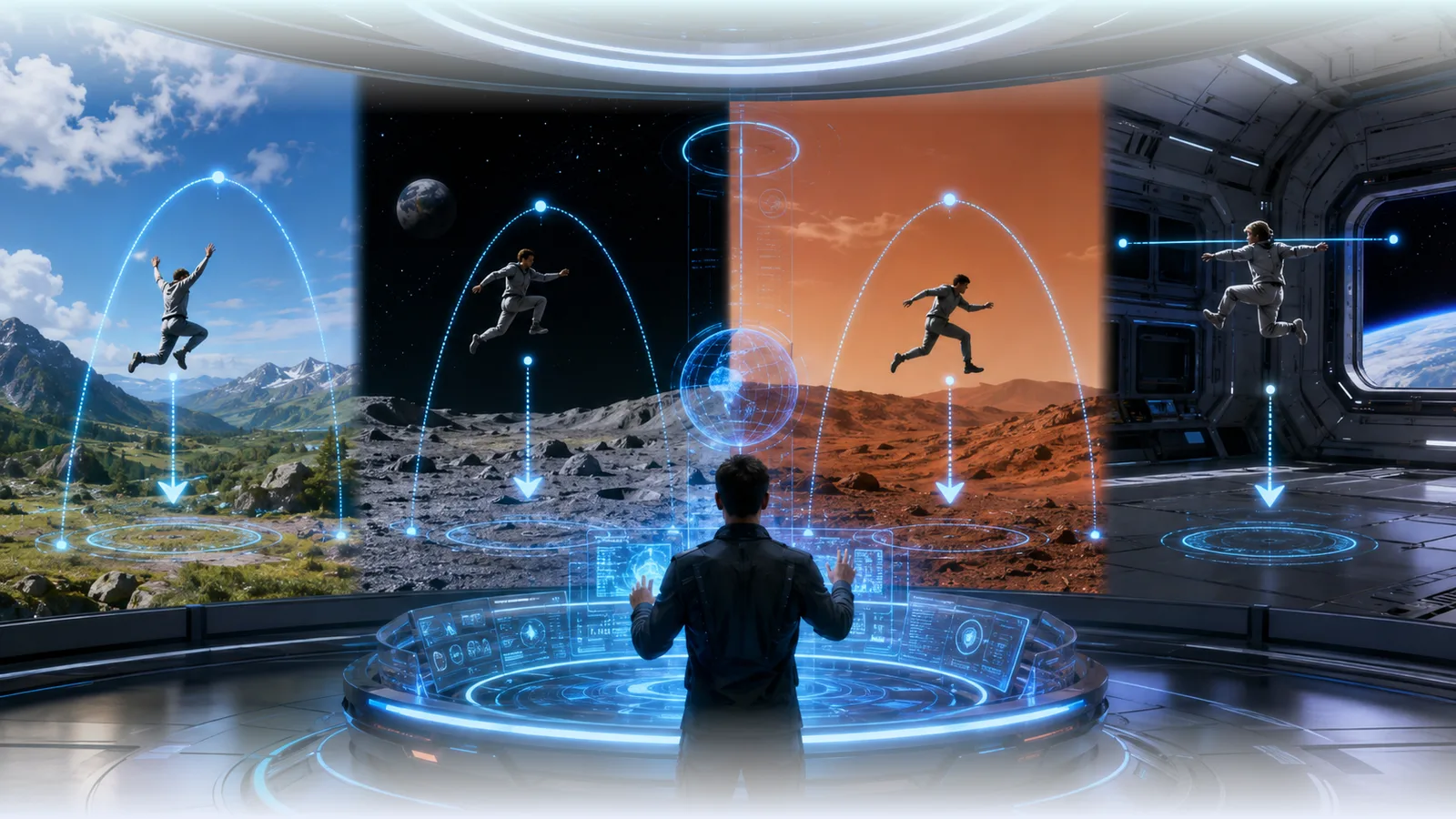
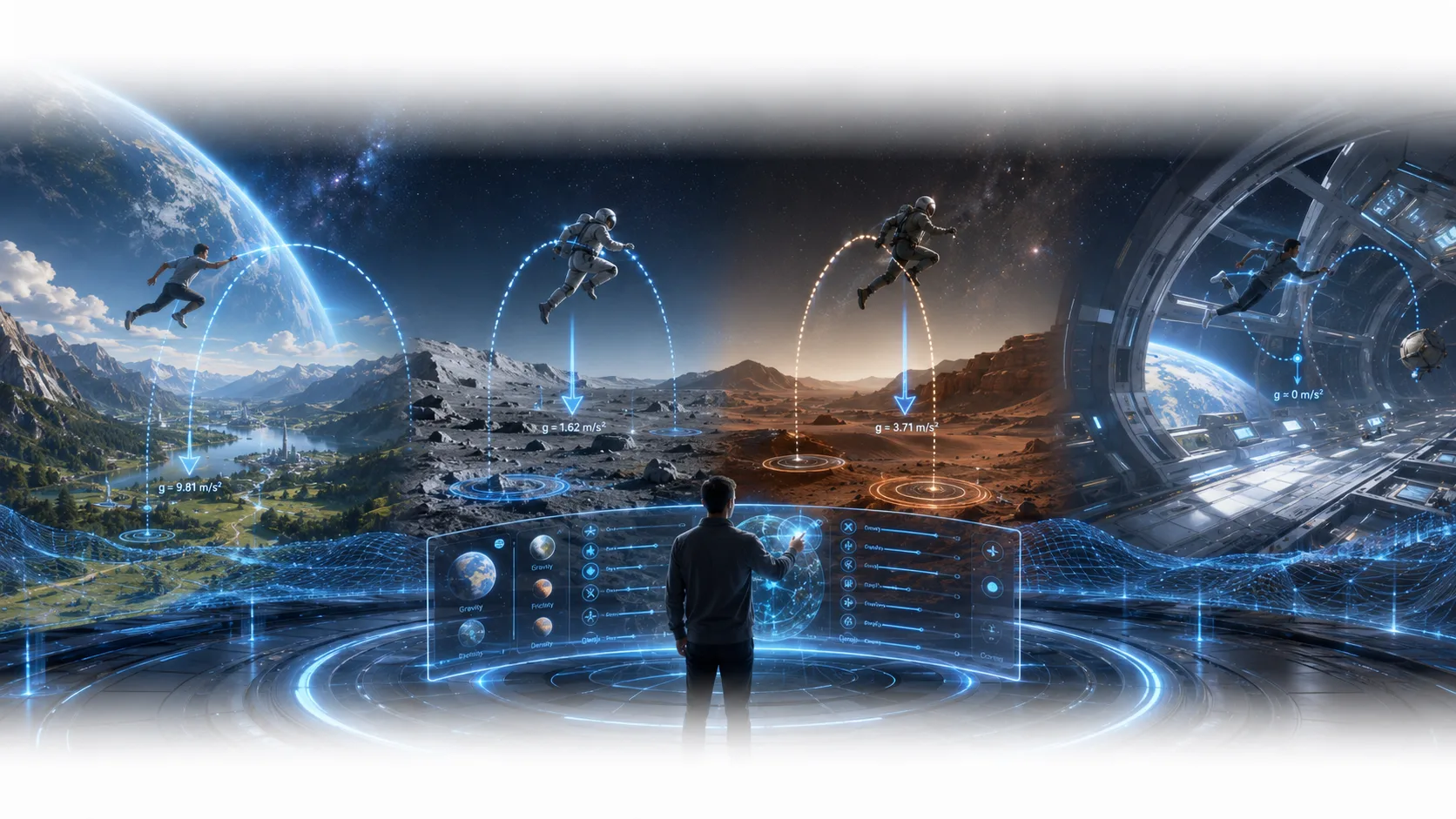
Proposed architectureThe physics profile makes gravity, atmospheric density, drag, friction, restitution, viscosity, thermal state, acoustic propagation, and optional fields explicit. A jump on the Moon therefore traces a different trajectory than a jump on Earth, while a spacecraft interior may transition toward microgravity. Creative environments can intentionally alter these values, but scientifically grounded destinations should preserve known physical constraints.
Static 360° Panoramas as Holographic Entry Frames
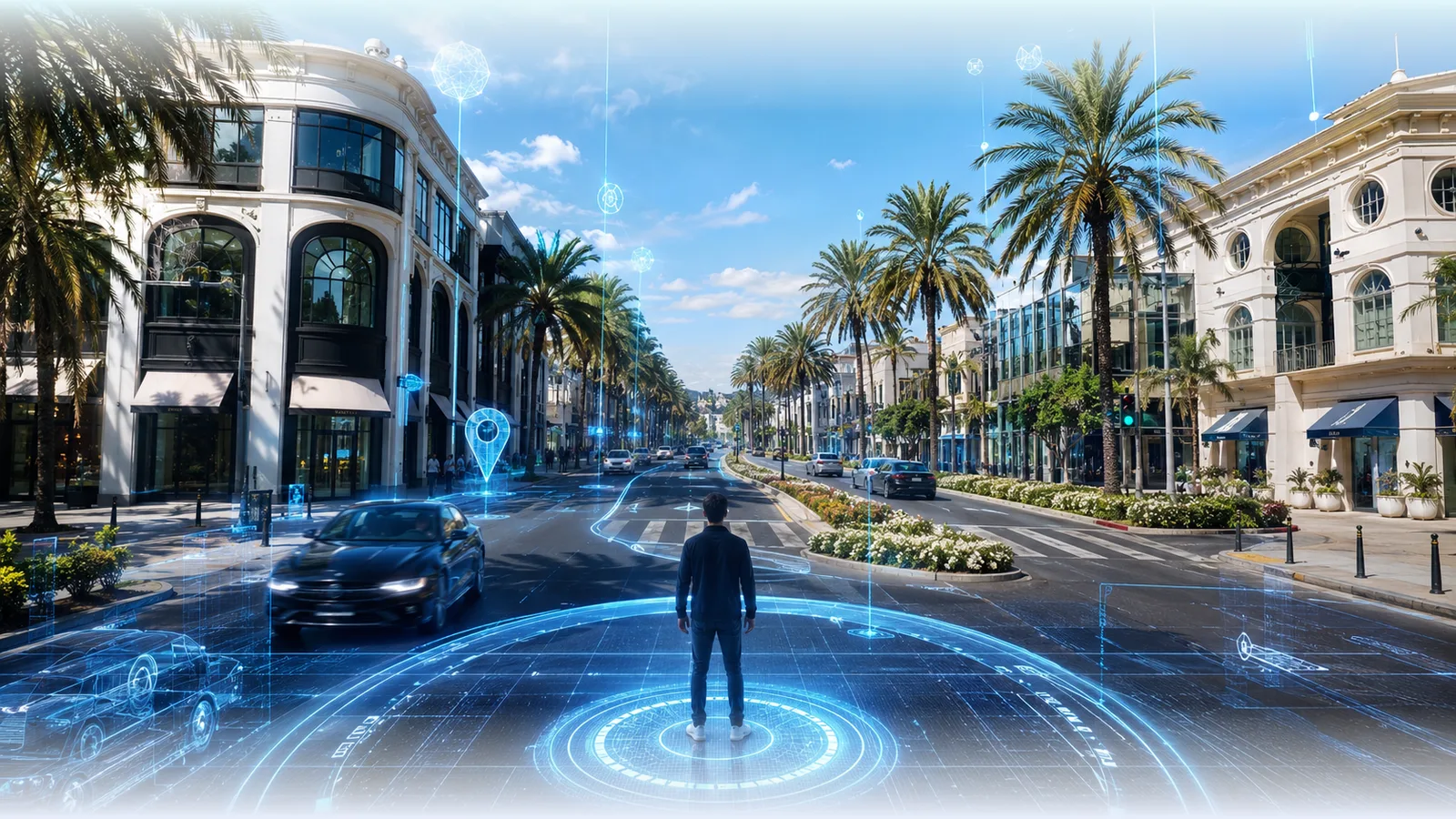
Established technologyA panorama can serve as a starting frame for an OmniReality world. Geospatial location, camera orientation, field of view, source imagery, inferred depth, semantic segmentation, ambient context, and provenance form the entry block. Google Street View APIs illustrate the practical existence of geolocated panoramic imagery and point-of-view controls, although any real deployment must comply with the provider’s licensing and usage terms.

Interpolated Street-Level Route Graphs
Proposed architectureA sequence of panorama anchors can be registered into a route graph. The graph supplies node poses, connections, lane or walkway geometry, topology, scene continuity, and interpolation constraints. Intermediate frames are synthesized between captured anchors rather than treated as independently photographed truth; the distinction between source imagery and inferred transition state should remain explicit.


Earth Atlas: Seven Mile Beach, Redwoods, Kīlauea, and the Amazon
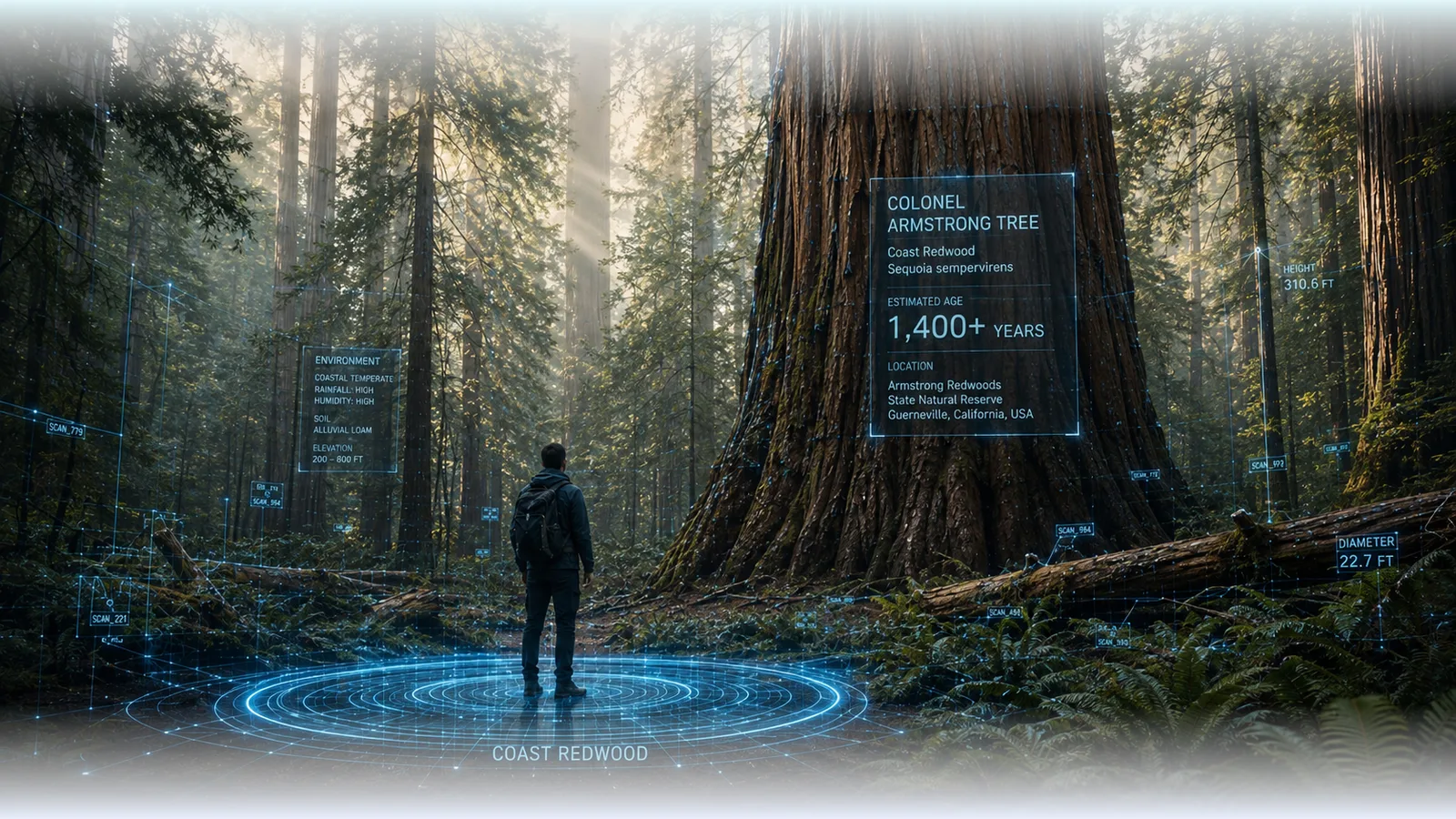
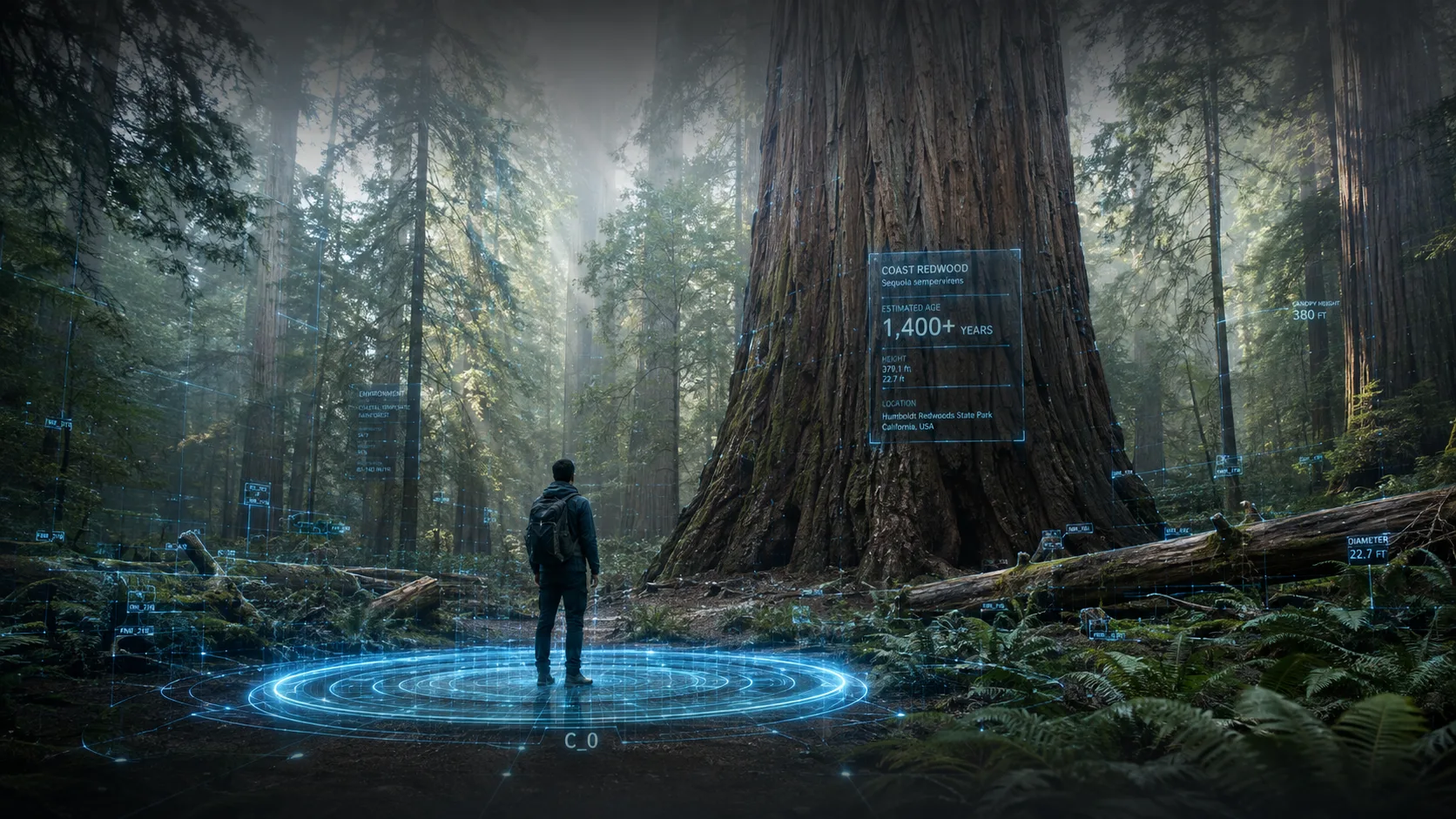
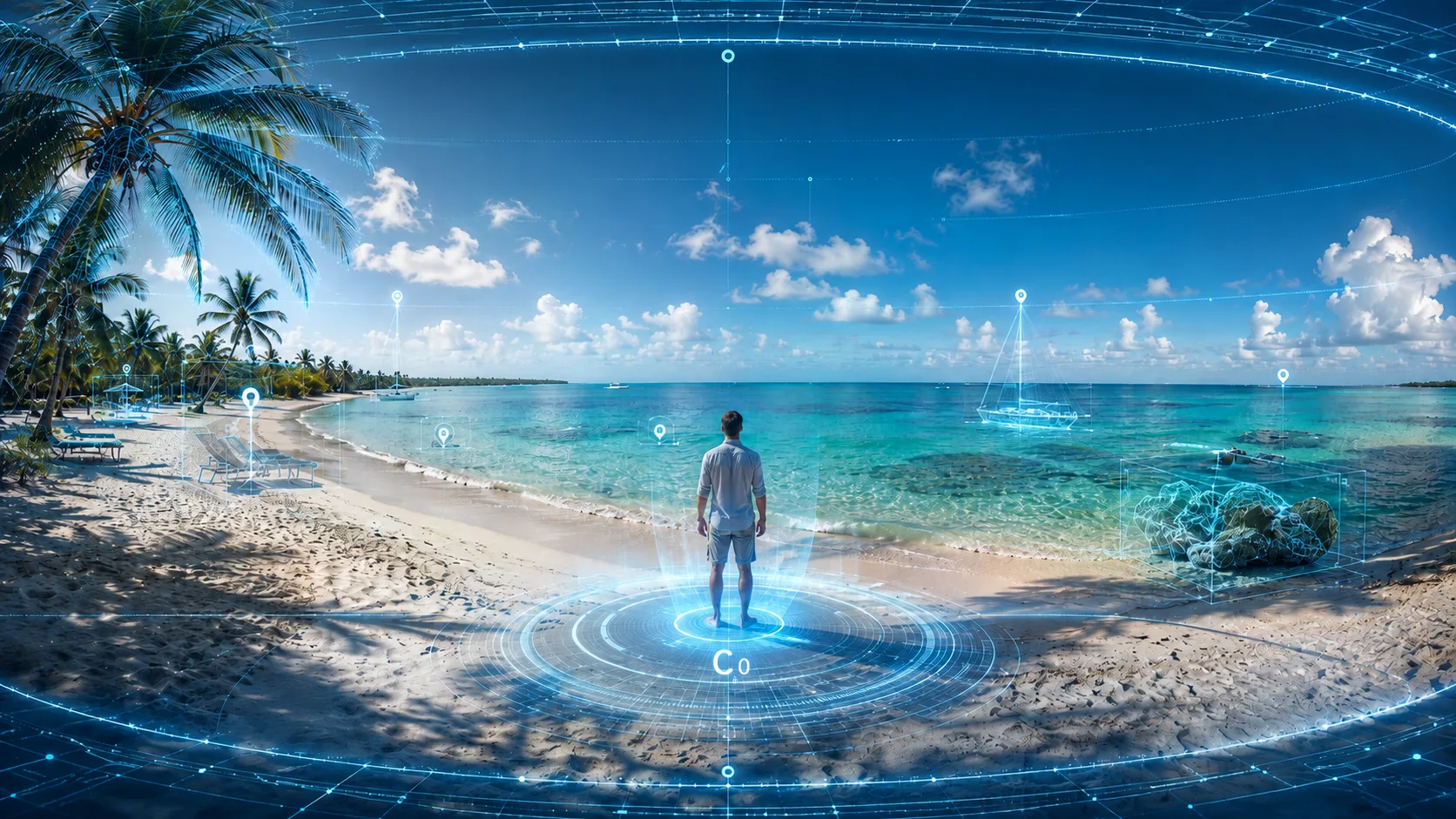
Evidence-informed reconstructionSeven Mile Beach demonstrates shoreline reconstruction: water, sand, palms, rocks, coral, boats, surf, wind, and tropical light can be lifted into separate objects and fields. The Colonel Armstrong Tree provides an old-growth redwood focal object in Armstrong Redwoods State Natural Reserve near Guerneville, California.
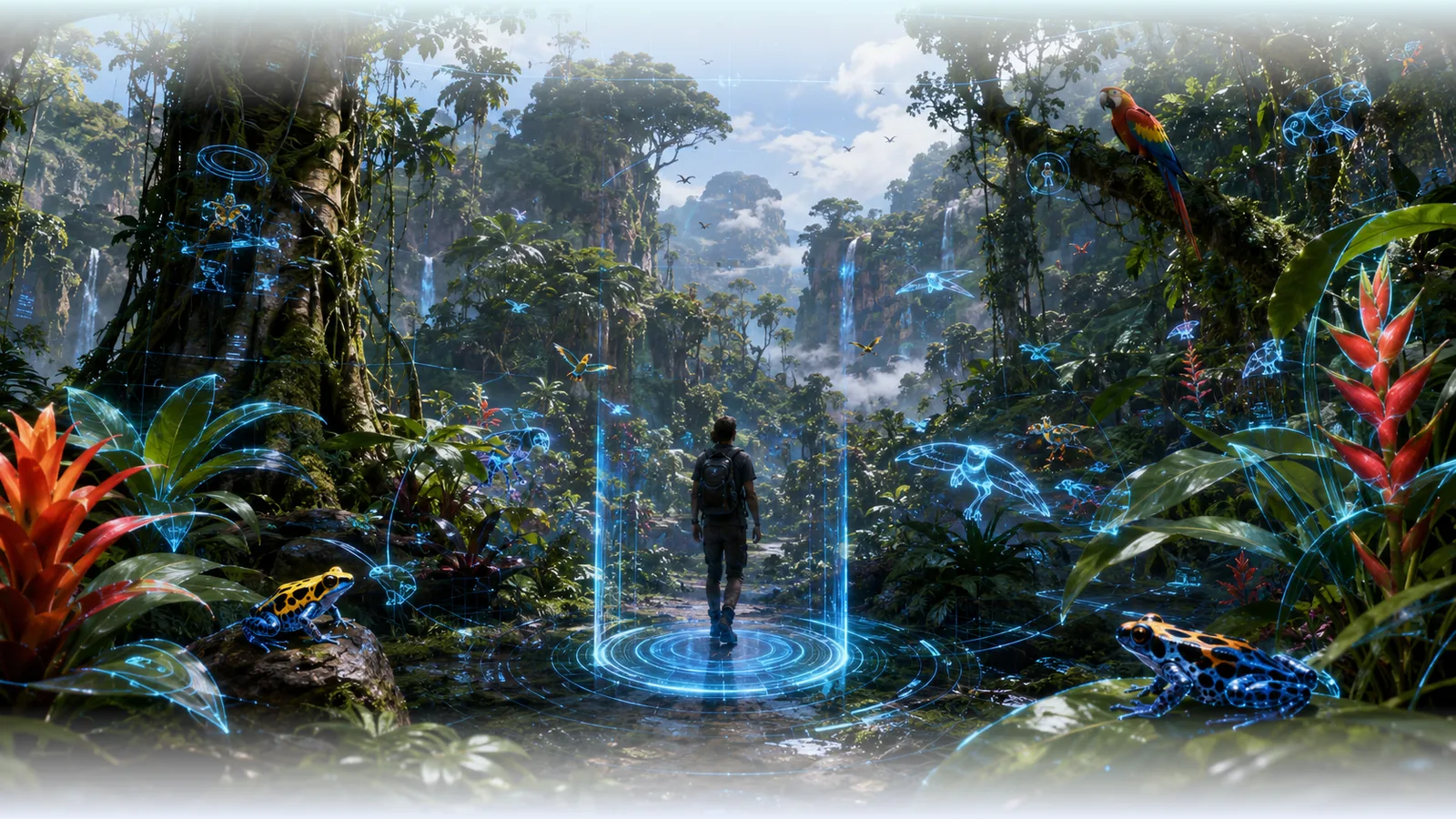
Kīlauea demonstrates the transition from static panorama to dynamic geologic event: crater geometry can remain anchored while thermal, lava, plume, and hazard fields evolve in time. The Amazon demonstrates ecological object lifting, where flowers, frogs, birds, vines, leaves, insects, streams, humidity, and sound become structured components of an immersive trail.


Great Barrier Reef and Aurora Borealis Immersion
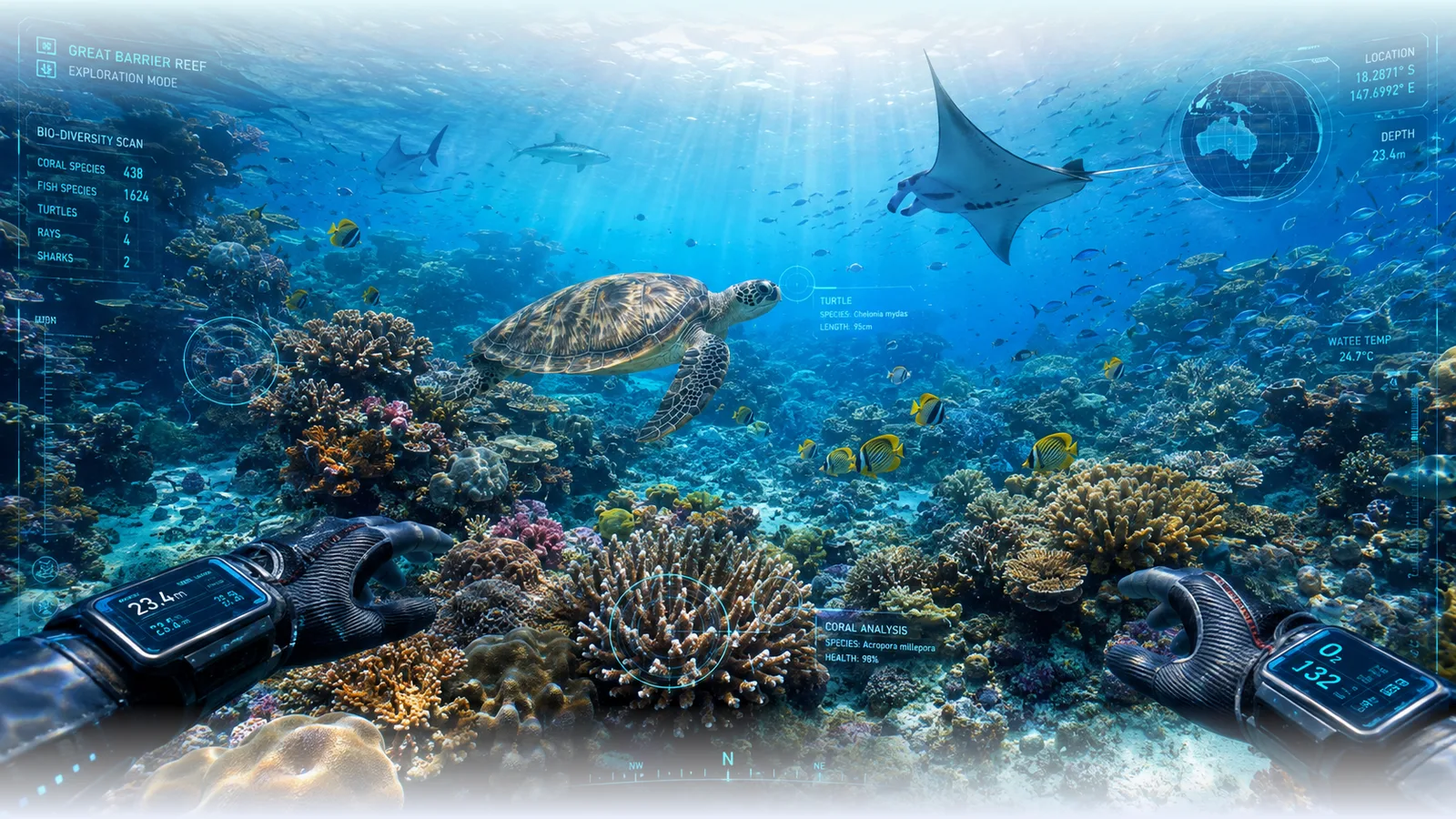
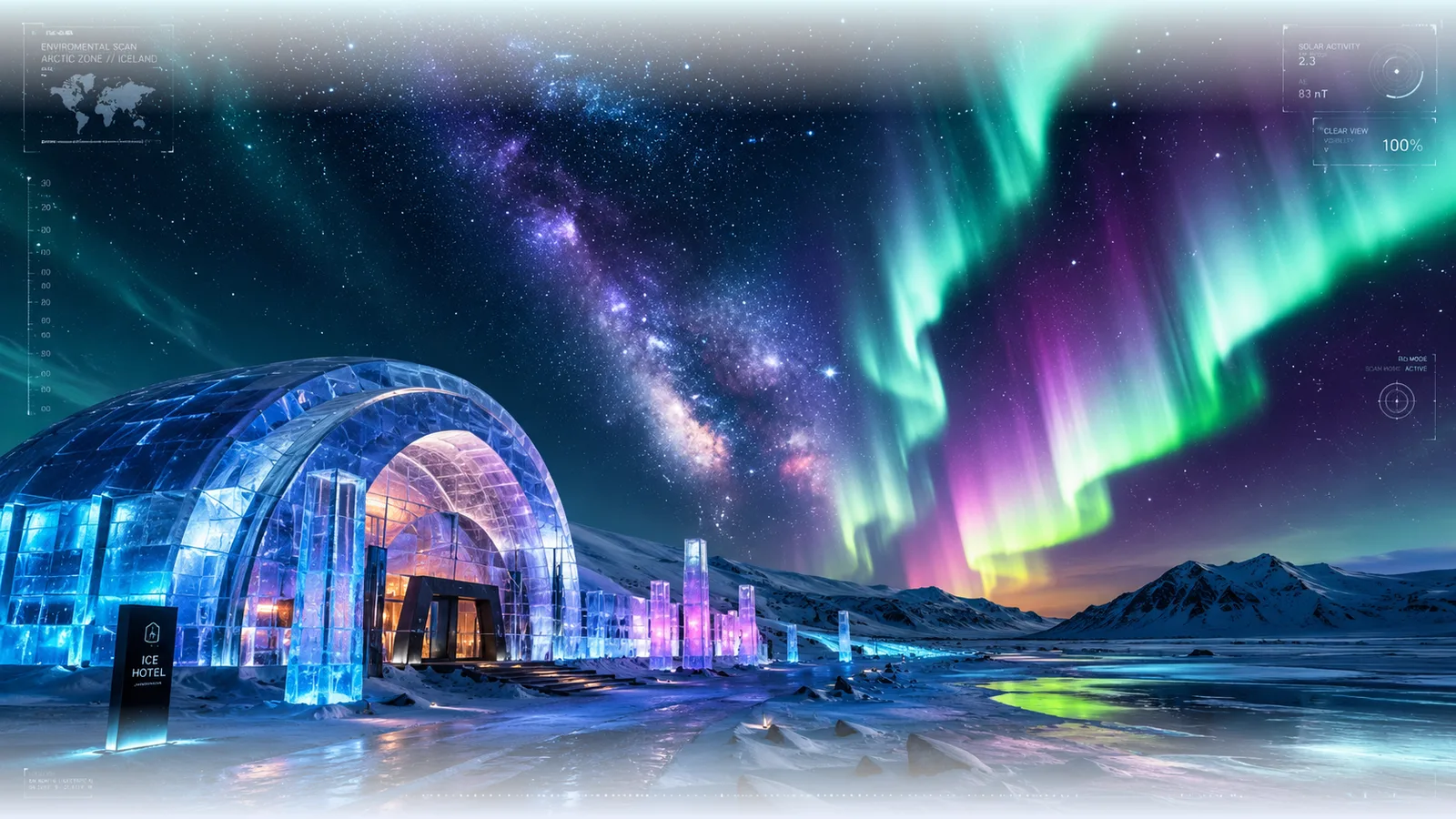
Evidence-informed reconstructionThe Great Barrier Reef application treats coral colonies, tropical fish, turtles, rays, water clarity, refraction, caustic light, and diver embodiment as linked object and field classes. The Iceland aurora experience combines snow and ice, a futuristic ice-hotel environment, adaptive LED ambience, auroral motion, and the wider night sky.
These examples reveal why the medium is more than tourism. A reef can be a scientific habitat, a classroom, a conservation story, a diving experience, or a shared social world; an auroral night can simultaneously teach atmospheric physics and become an artistic environment.
Social Replay of Entertainment, Sports, and Parties
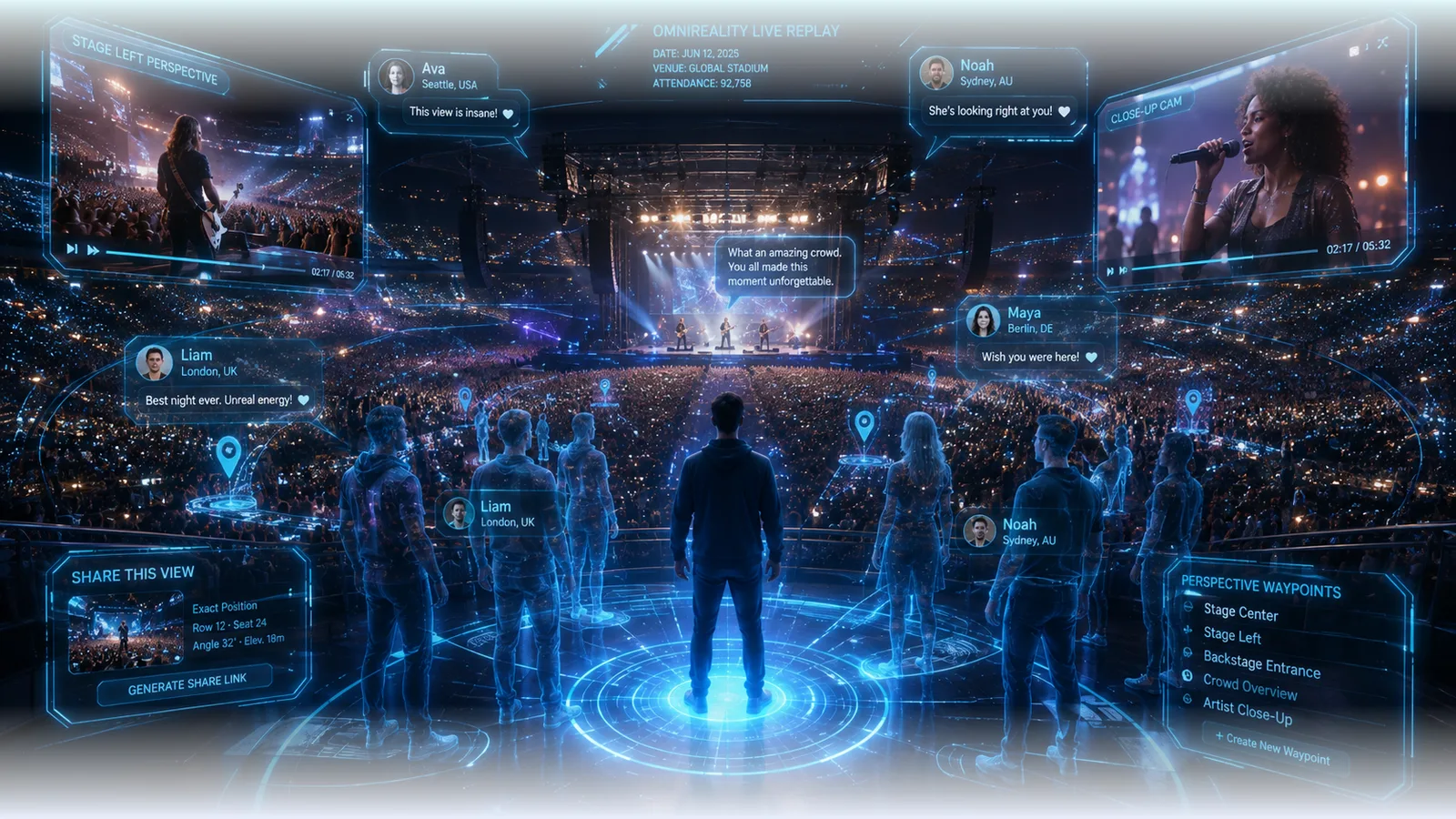
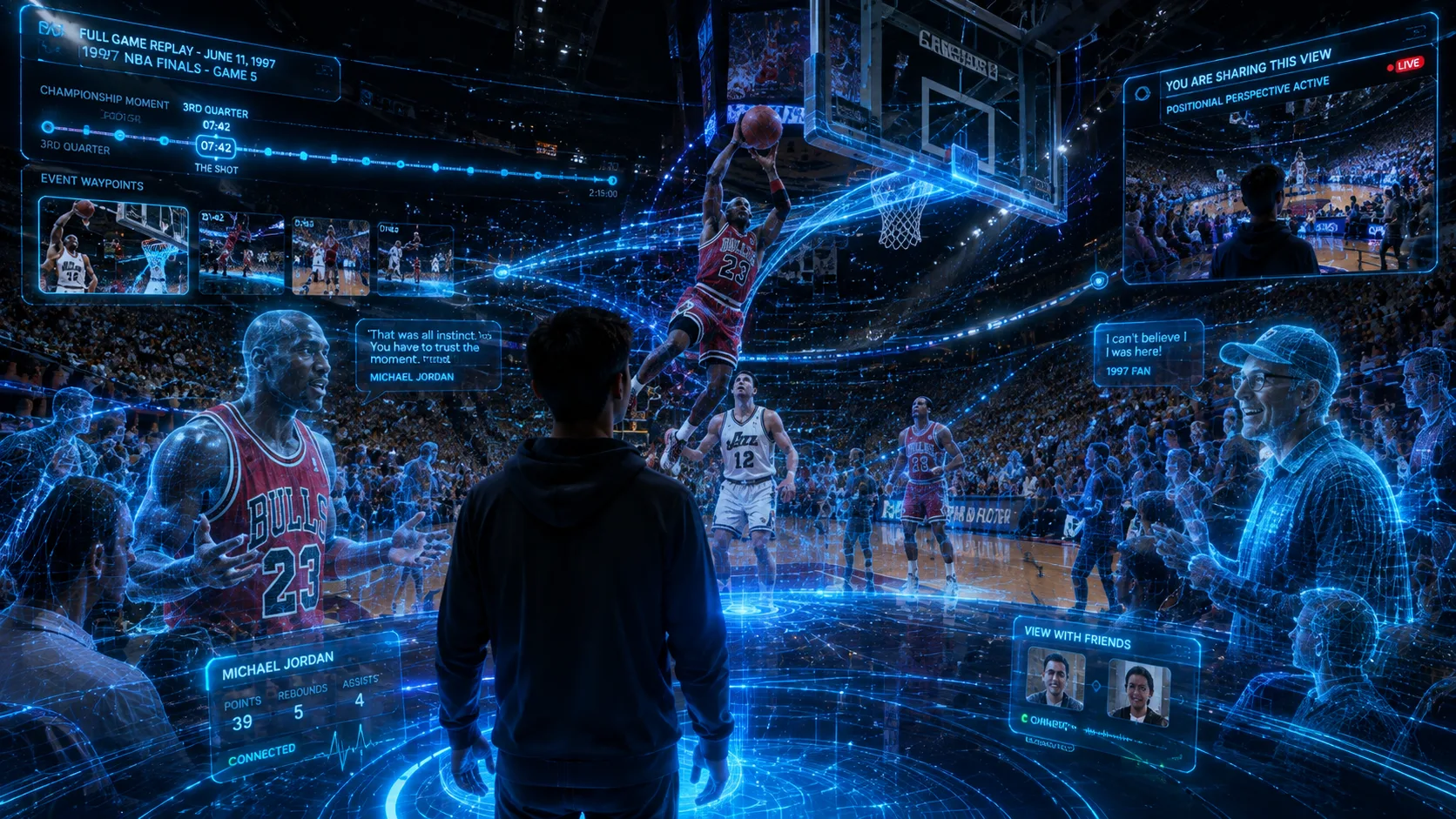
Proposed architectureOmniReality can transform sufficiently captured concerts, sporting events, festivals, and parties into navigable social replay spaces. A user may return to courtside, field-level, stage-left, aerial, or crowd viewpoints, bookmark a moment, invite friends into the same replay, and share an exact perspective state. Rights-cleared talent or celebrity representations could support moderated conversation, but likeness, voice, publicity, consent, and archival rights must be explicit platform-level constraints rather than afterthoughts.
Social Presence and Shareable Positional Perspective
Proposed architectureA social-share state should be compact enough to transmit yet rich enough to reconstruct a viewpoint. It may include world identifier, event or world time, perceiver position, orientation, active embodiment, selected sensory mode, access permissions, and room or party state. This lets a friend open a link directly into the same reef dive, Amazon trail, concert replay, or historical reconstruction.
Epoch Reconstruction
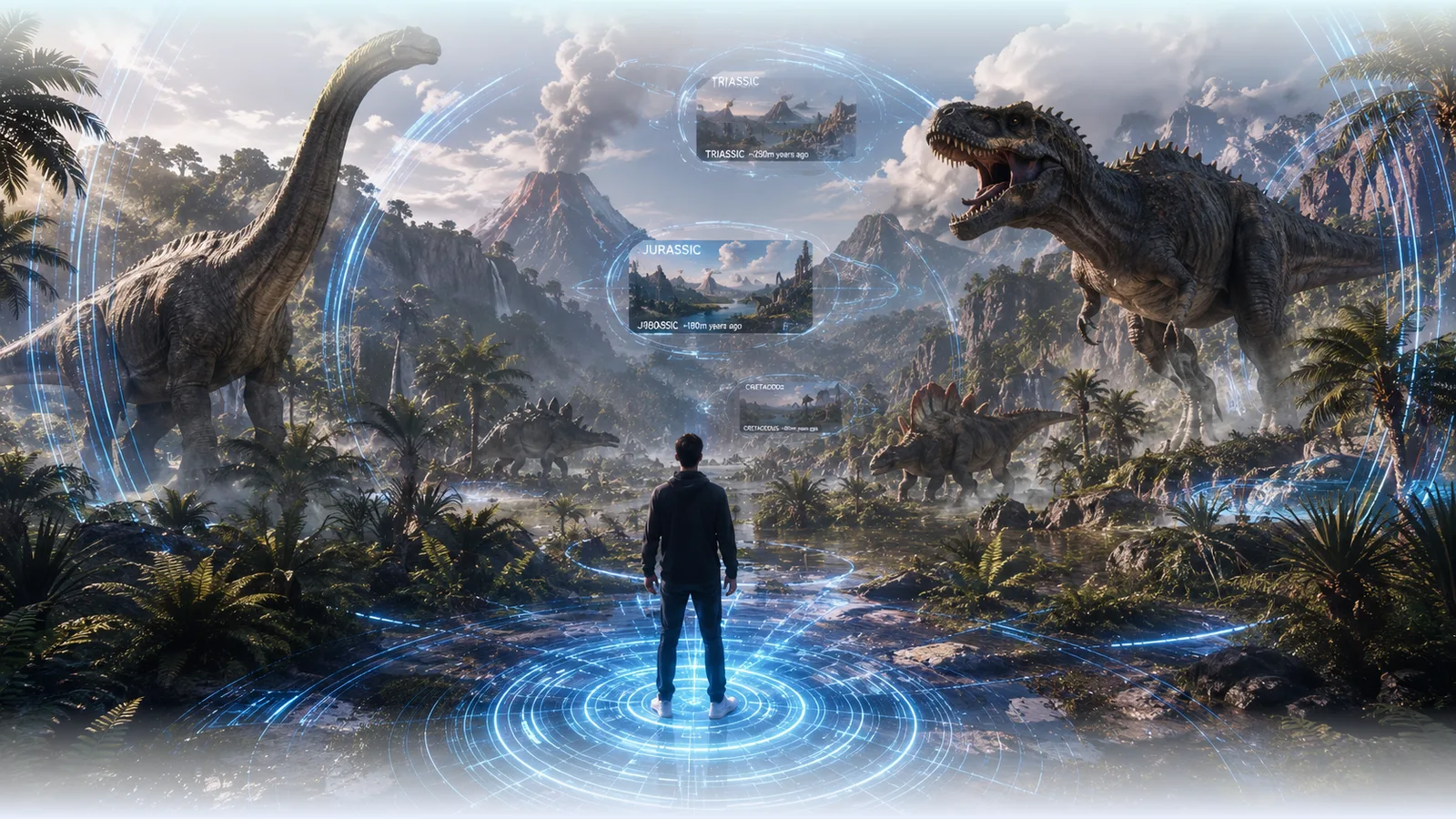
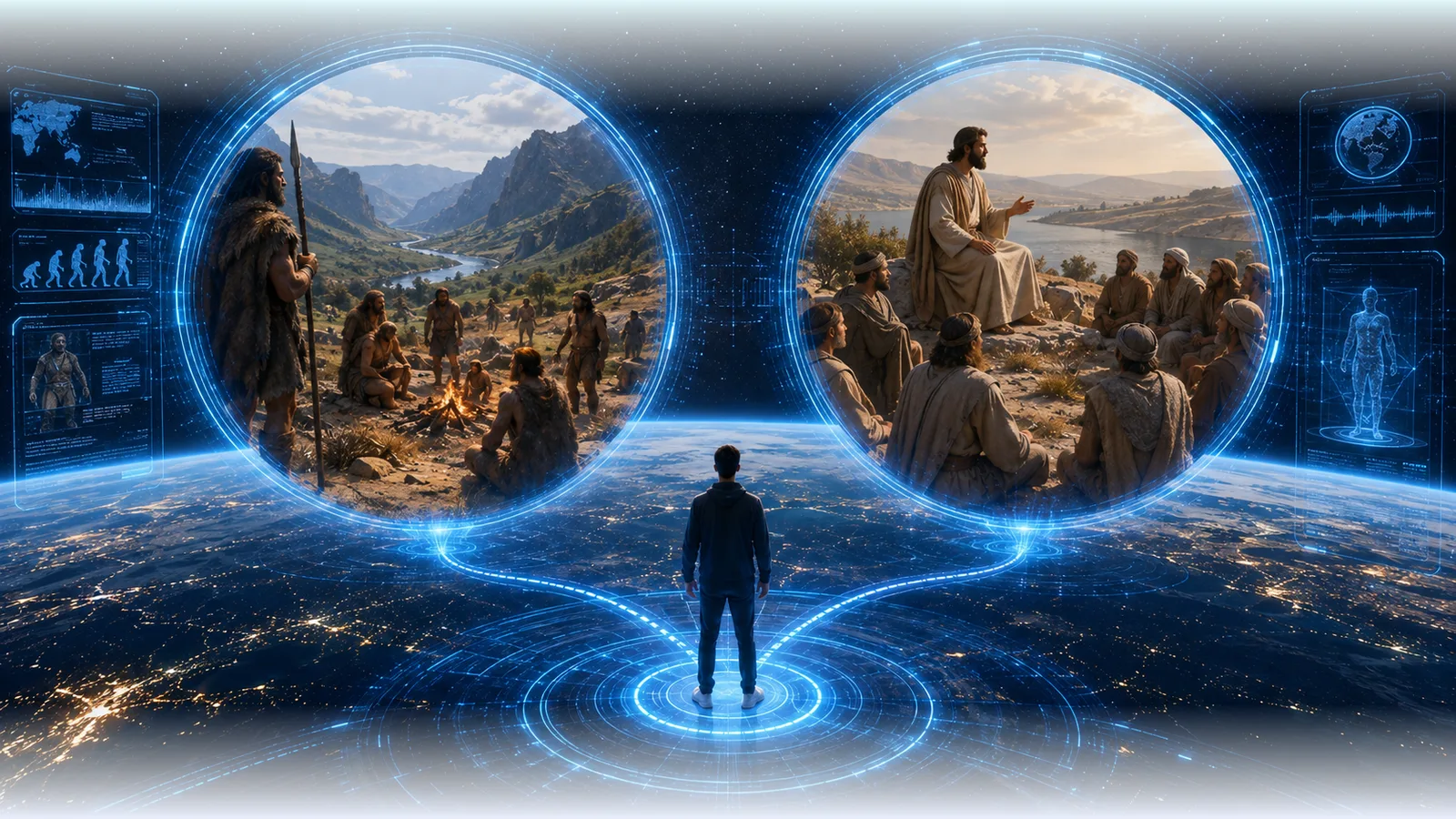
Evidence-informed reconstructionTime travel to deep history must be explicitly reconstructed rather than falsely presented as recorded fact. The Triassic and Jurassic can be synthesized from paleontological and geological evidence, with uncertainty displayed as part of the interface. Neanderthal environments can draw from the Smithsonian Human Origins record to support anthropology, survival, and comparative-cognition learning.
The same architecture can create respectful teaching environments representing Jesus Christ or other religious and philosophical teachers. Such worlds should clearly distinguish primary textual traditions, historical evidence, scholarly reconstruction, devotional interpretation, and artistic invention. The value is not pretending to possess a camera from antiquity; the value is making uncertainty visible while allowing learners to inhabit questions that are otherwise abstract.
OmniReality Ads
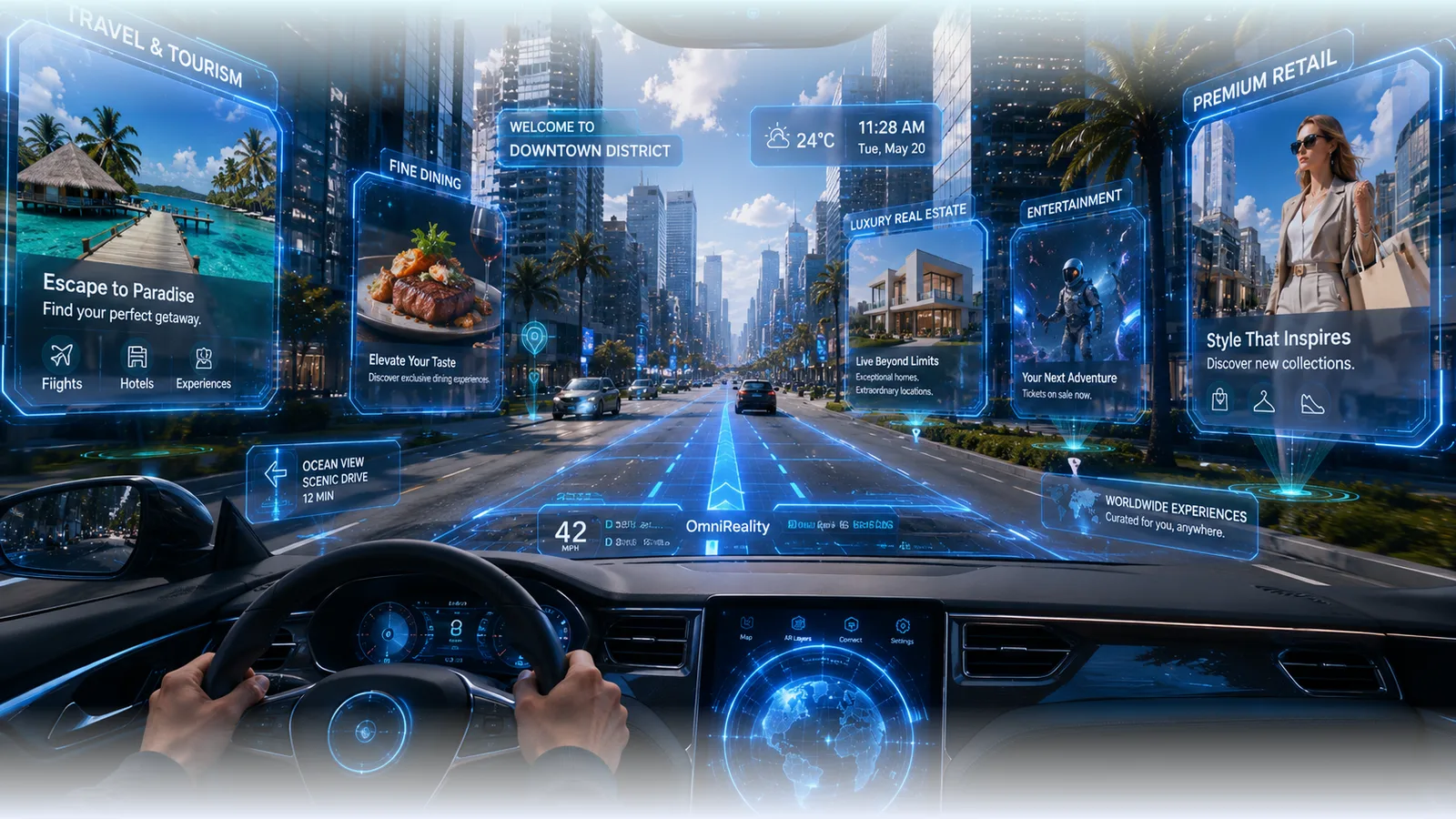
Proposed architectureOmniReality Ads are proposed as world-anchored, viewpoint-aware advertising units. They may appear as roadside billboards while driving reconstructed routes, sponsored objects inside resorts or museums, shoppable product placements in replay spaces, destination portals, interactive coupons, virtual showrooms, or contextual services keyed to geography, activity, time of day, language, or explicit user preferences.
The advertising model should preserve an unambiguous distinction between source reality and sponsored insertion. Every ad unit should therefore carry creative state, targeting state, attribution state, and compliance or disclosure state.
Real-Estate and Hospitality Holographic Commerce
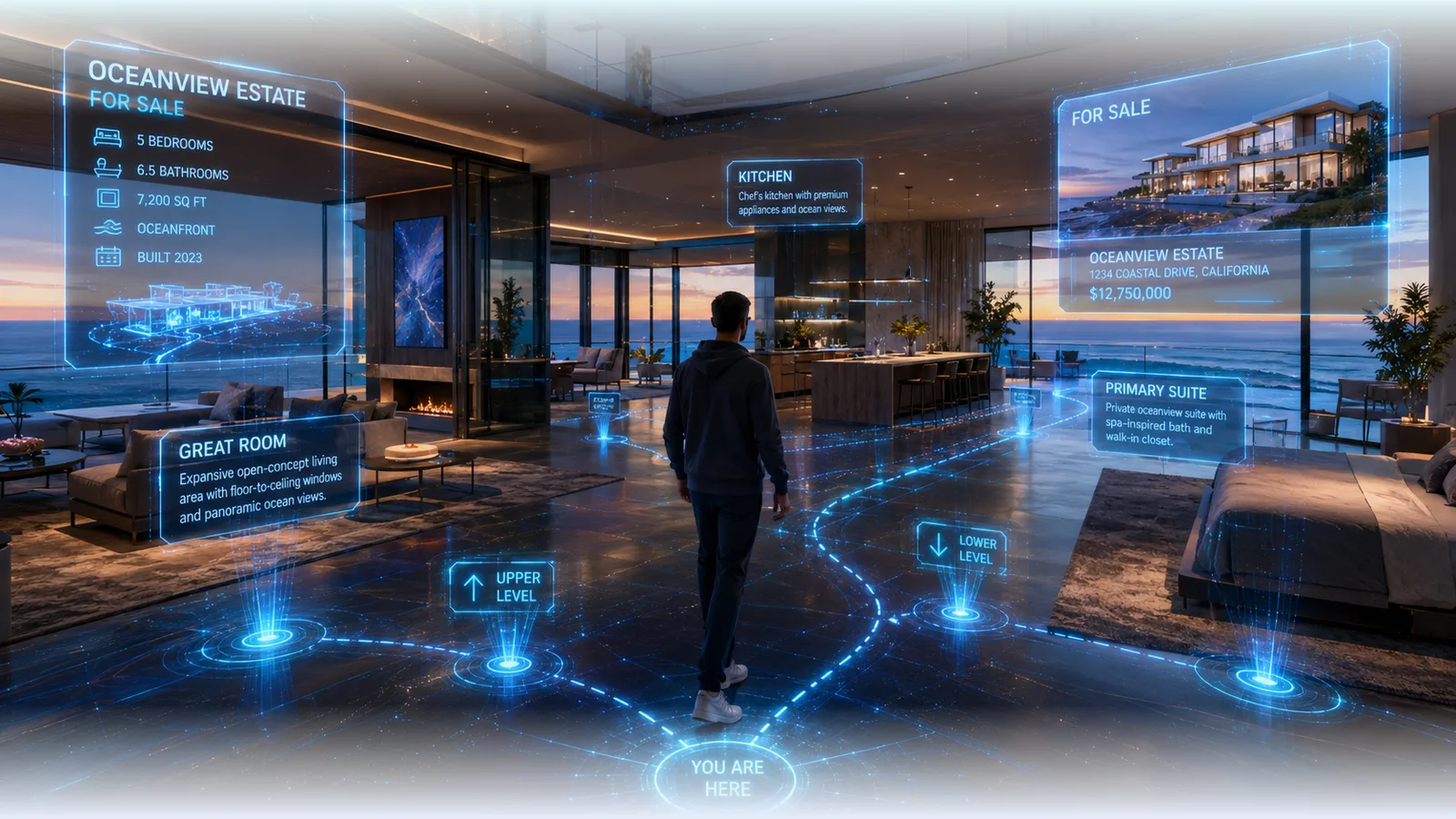
Proposed architectureRealtors, developers, hotels, and property owners can upload room-by-room panoramas that are registered into a pose graph, reconstructed into room geometry, and enriched with semantic objects such as kitchens, windows, views, fixtures, floor plans, measurements, furniture, renovation options, availability, pricing, financing, and lead-capture actions.
No new structural class is counted for real estate because the application reuses the panorama entry frame, route graph, reconstruction seed, object, advertising, and orchestration classes. This is a deliberate example of the anti-duplication principle: an application should compose existing primitives before the model invents another class.
Proprietary Commercialization Vision
Proposed architectureThe project positions the innovative synthesis of multidimensional holographic video inversion, OmniReality orchestration, temporal navigation, social co-presence, spatial advertising, and the integrated computational architecture described in this report as proprietary intellectual property owned by Web Development Corporation d/b/a Web Development, Inc.
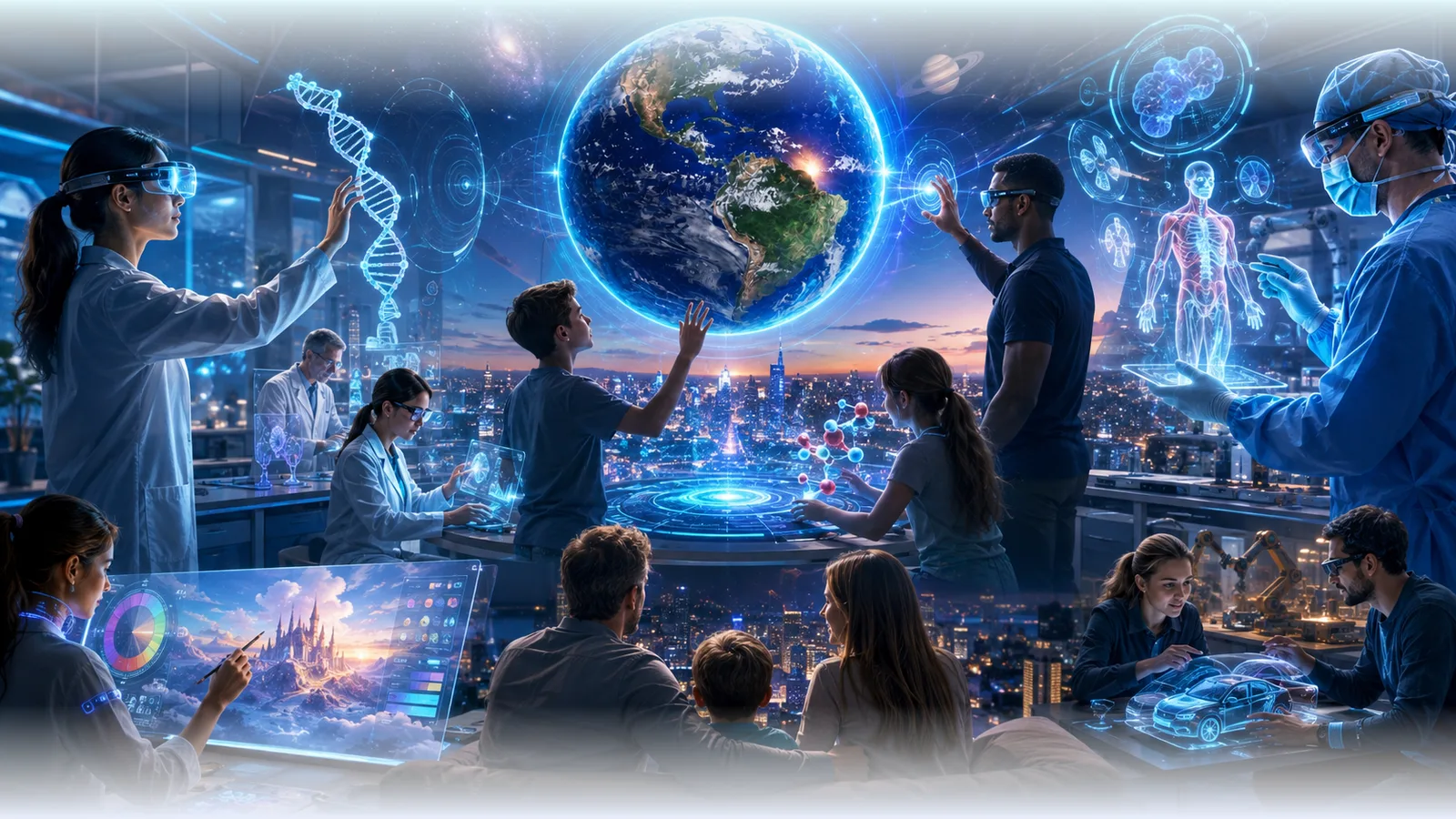
Commercial pathways include enterprise licensing, venue replay subscriptions, property-tour processing and hosting, approved capture APIs, world analytics, premium scientific and historical content packs, tourism deployments, and internationally exportable OmniReality Ads. The deeper opportunity is not one product category but a platform on which many future industries can build.
Formal Mathematical Architecture
The 35 canonical equations of the specification, each with its table of symbols, units, and roles, concluding with the final dimensional summations.
The Foundational HVR16 State
Foundational HVR16 State
Symbols & Quantities — Section 1
Tap any symbol to expand its meaning, units, and role
Scene-sample position
RoleLocates recorded or reconstructed content in 3D space.
Master scene time
RoleSynchronizes geometry, appearance, audio, and all dynamic layers.
Greek letters: tau
Color and transparency
RoleDefines visible appearance and compositing.
Greek letters: alpha
Legacy viewer orientation
RoleRetained as historical aliases of perceiver orientation.
Greek letters: theta
Legacy translation and zoom
RoleRetained as historical aliases of perceiver pose and optical state.
Optical phase
RoleSupports interference-aware holographic reconstruction.
Greek letters: phi
Greek letter key:tau · alpha · theta · phi
Deduplicated World Core and Fixed Anchor
Deduplicated World Core and Fixed Anchor
Symbols & Quantities — Section 2
Tap any symbol to expand its meaning, units, and role
Photonic scene sample (x,y,z,τ,r,g,b,α,φ)
RoleShared scene-sample state.
Anchor position, orientation, scale
RolePins the holographic world to a fixed center and frame.
Persistent world core
RoleUsed in the final runtime summation instead of the legacy 25-scalar core.
Wavefront Reconstruction and Eye-Specific Perspective
Wavefront Reconstruction and Eye-Specific Perspective
Symbols & Quantities — Section 3
Tap any symbol to expand its meaning, units, and role
World-space scene point
RoleRepresents anchored geometry.
Active eye position
RoleSets the parallax origin.
Eye orientation matrix
RoleMaps world orientation to the active viewpoint.
Eye-space point
RoleInput to projection or wavefront reconstruction.
Complex Optical Field and Intensity
Complex Optical Field and Intensity
Symbols & Quantities — Section 4
Tap any symbol to expand its meaning, units, and role
Complex optical field
RoleCarries amplitude and phase.
Field amplitude
RoleControls field magnitude.
Optical phase
RoleControls interference and wavefront structure.
Greek letters: phi
Optical intensity
RoleVisible energy measure derived from the field.
Greek letter key:phi
Volumetric Transport, Transparency, and Light Sources
Volumetric Transport, Transparency, and Light Sources
Symbols & Quantities — Section 5
Tap any symbol to expand its meaning, units, and role
Accumulated transmittance
RoleAttenuation before the sample.
Density / extinction
RoleControls opacity and scattering.
Greek letters: sigma
Local radiance / emission
RoleContributes emitted or scattered color.
Ray coordinate
RoleParameterizes the viewing ray.
Greek letter key:sigma
Acoustic Fields and Synchronized Spatial Audio
Acoustic Fields and Synchronized Spatial Audio
Symbols & Quantities — Section 6
Tap any symbol to expand its meaning, units, and role
Source amplitude
RoleControls source pressure amplitude.
Wave vector
RoleEncodes propagation direction and wavenumber.
Angular frequency
RoleSets pitch.
Greek letters: omega
Initial phase
RoleSets phase offset.
Greek letters: phi
Greek letter key:omega · phi
The Six-Channel Perceptual Interface
The Six-Channel Perceptual Interface
Symbols & Quantities — Section 7
Tap any symbol to expand its meaning, units, and role
Vision
RoleConveys form, motion, color, depth, and light.
Audition
RoleConveys speech, ambience, and events.
Touch
RoleConveys contact, texture, pressure, and temperature cues.
Olfaction
RoleConveys spatial chemical context.
Gustation
RoleConveys taste-related state.
Cognitive imagery
RoleSpeculative dream-like experiential channel.
Manipulable Objects: From Watching to Doing
Manipulable Objects: From Watching to Doing
Symbols & Quantities — Section 8
Tap any symbol to expand its meaning, units, and role
Object position
RoleMoves object independently of the source recording.
Unit quaternion
RoleStable 3D orientation.
Object scale (positive)
RoleSupports controlled resizing.
World transform
RoleMaps local object geometry into the world.
Rigid-Body Dynamics, Contact, and Constraints
Rigid-Body Dynamics, Contact, and Constraints
Symbols & Quantities — Section 9
Tap any symbol to expand its meaning, units, and role
Mass
RoleSets translational inertia.
Inertia tensor
RoleSets rotational inertia.
Net external force
RoleIncludes user, gravity, and contacts.
Net torque
RoleDrives rotation.
Object-State Update and Dimensionality
Object-State Update and Dimensionality
Symbols & Quantities — Section 10
Tap any symbol to expand its meaning, units, and role
Canonical object base
RolePose, scale, motion, physical properties, grasp/contact, force/torque/haptics, friction auxiliaries.
Generalized joint coordinates
RoleEach adds a coordinate plus two limits.
Manipulation input dimensionality
RoleController or user inputs acting directly on object j.
Object dimensionality
RoleTotal independent state of manipulable object j.
Unlimited Living Perceivers
Unlimited Living Perceivers
Symbols & Quantities — Section 11
Tap any symbol to expand its meaning, units, and role
Default perceiver
RoleInitial human viewpoint.
Greek letters: Pi
Perceiver i
RoleHuman or nonhuman embodied perspective.
Greek letters: Pi
Additional perceivers (nonnegative)
RoleAllows arbitrarily many finite perceiver instances.
Perceiver set
RoleCollects all simultaneous or switchable viewpoints.
Greek letters: Pi
Greek letter key:Pi
Perceiver Dimensionality
Perceiver Dimensionality
Symbols & Quantities — Section 12
Tap any symbol to expand its meaning, units, and role
Embodied core
RoleBody pose, eye positions, kinematics, and gaze.
Vision block
RoleField-of-view / resolution plus spectral channels.
Greek letters: Lambda
Audition block
RoleHearing limits plus individualized auditory shape.
Olfaction block
RoleNose position, threshold, and odor sensitivities.
Greek letters: Xi
Tactile map
RoleSeven state terms per tactile zone.
Cognition, agency, species additions
RoleAttention, intent, locomotion, and nonhuman modalities.
Greek letter key:Lambda · Xi
Controllable Vehicles as Specialized Interactive Objects
Controllable Vehicles as Specialized Interactive Objects
Symbols & Quantities — Section 13
Tap any symbol to expand its meaning, units, and role
Generic vehicle base
RoleObject state plus a 40-scalar operation extension.
Articulated coordinates
RoleSteering, suspension, doors, joints, or mechanisms.
Class specialization
RoleWheels, rotors, propellers, surfaces, engines, landing gear.
Vehicle dimensionality
RoleComplete state of terrestrial vehicle k.
Aircraft Flight State
Aircraft Flight State
Symbols & Quantities — Section 14
Tap any symbol to expand its meaning, units, and role
Aircraft base
RoleGeneric vehicle plus flight-control and air-data extensions.
Engine count
RoleScales propulsion state.
Per-engine state
RoleThrottle, thrust, speed, fuel/energy flow.
Aircraft state
RoleTotal flyable aircraft representation.
Next-Generation Holographic Capture Cameras
Next-Generation Holographic Capture Cameras
Symbols & Quantities — Section 15
Tap any symbol to expand its meaning, units, and role
Canonical camera base
RolePose, intrinsics, lens/focus, exposure, color, wavefront/polarization, clock.
Spectral response channels
RoleAllows RGB, multispectral, or hyperspectral capture.
Camera device state
RolePersistent calibrated state of camera c.
Recorded Optical, Audio, and Inertial Observation Vectors
Recorded Optical, Audio, and Inertial Observation Vectors
Symbols & Quantities — Section 16
Tap any symbol to expand its meaning, units, and role
Optical / volumetric samples
RoleEach contributes 26 scalars.
Audio samples
RoleEach contributes 9 scalars.
IMU samples
RoleEach contributes 10 scalars.
Recorded-observation dimensionality
RoleData-stream burden at time τ.
Extraterrestrial Vehicles
Extraterrestrial Vehicles
Symbols & Quantities — Section 17
Tap any symbol to expand its meaning, units, and role
Canonical extraterrestrial-vehicle base
RoleGeneric vehicle plus orbital, attitude, habitat, and payload extensions.
Articulated coordinates
RoleRobotic arms, arrays, docking hardware, gimbals.
Class specialization
RoleRocket staging, satellite instruments, rover wheels, lander gear.
Extraterrestrial-vehicle state
RoleComplete state of space vehicle k.
Greek letters: Xi
Greek letter key:Xi
Astronomical Target Environments
Astronomical Target Environments
Symbols & Quantities — Section 18
Tap any symbol to expand its meaning, units, and role
Canonical astronomical target base
RoleGeometry, body, medium, illumination, hazards.
Surface-detail augmentation
RoleHeight, albedo, roughness, mineralogy, semantics.
Scientific-field augmentation
RoleDensity, temperature, plasma, lensing, radiation.
Target-environment dimensionality
RoleLocal world state for destination n.
Universe-Scale Multispectral Capture
Universe-Scale Multispectral Capture
Symbols & Quantities — Section 19
Tap any symbol to expand its meaning, units, and role
Astrophysical sample base
RoleExtends the 26-scalar optical sample with flux/count, band center, bandwidth/resolution, redshift/depth proxy.
Additional spectral channels
RoleMission-specific bands or hyperspectral bins.
Astrophysical sample dimensionality
RoleScientific sample feeding cosmic reconstruction.
Hyper Reality
Hyper Reality
Symbols & Quantities — Section 20
Tap any symbol to expand its meaning, units, and role
Hyper-reality canonical base
RoleContext, sensing, adaptation, narrative, salience.
Semantic channels
RoleLabels, relations, relevance, knowledge.
Profile / adaptation channels
RoleOptional user-specific adaptation state.
Hyper-reality dimensionality
RoleTotal semantic augmentation layer.
Super Reality
Super Reality
Symbols & Quantities — Section 21
Tap any symbol to expand its meaning, units, and role
Super-reality canonical base
RoleSpectral, resolution, prediction, fusion, computational state.
Additional spectral channels
RoleInfrared, ultraviolet, remote-sensing, scientific bands.
Task enhancement channels
RoleDenoising, segmentation, reconstruction, analysis.
Super-reality dimensionality
RoleEnhanced-perception layer.
Quantum Reality
Quantum Reality
Symbols & Quantities — Section 22
Tap any symbol to expand its meaning, units, and role
Canonical non-density-matrix base
RoleLocal position/time, momentum expectation, uncertainties, measurement, decoherence.
Local basis size (positive)
RoleFinite local quantum basis.
Density-operator degrees of freedom
RoleNormalized Hermitian density operator.
Correlation augmentation
RoleExplicit local entanglement / correlation descriptors.
OmniReality Orchestration
OmniReality Orchestration
Symbols & Quantities — Section 23
Tap any symbol to expand its meaning, units, and role
Orchestration base
RoleShared presence, memory, provenance, intent, governance.
Collaboration augmentation
RoleSynchronization, roles, translation, group interaction.
Governance augmentation
RolePrivacy, safety, access, rights, consent.
Orchestration dimensionality
RoleHigher-order coordination layer.
Greek letters: lambda
Greek letter key:lambda
Chrono-Navigation
Chrono-Navigation
Symbols & Quantities — Section 24
Tap any symbol to expand its meaning, units, and role
Canonical chrono base
RoleWindow, offset, direction, rate, branch selector, synchronization.
Historical-state augmentation
RoleRecorded or reconstructed prior states.
Scenario branches
RoleForecasted or authored future alternatives.
Chrono-navigation dimensionality
RoleLocal temporal-navigation state.
Mutable Physics
Mutable Physics
Symbols & Quantities — Section 25
Tap any symbol to expand its meaning, units, and role
Canonical physics profile
RoleGravity vector, drag, density, friction, restitution, viscosity, thermal and acoustic terms.
Field augmentation
RoleMagnetic, electric, radiative, or custom fields.
Medium augmentation
RoleAtmosphere, water, vacuum, plasma, custom material.
Physics-profile dimensionality
RoleEditable local physical-law state.
Greek letters: Phi
Greek letter key:Phi
Static 360° Panoramas as Holographic Entry Frames
Static 360-degree Panoramas as Holographic Entry Frames
Symbols & Quantities — Section 26
Tap any symbol to expand its meaning, units, and role
Geospatial + orientation + FOV metadata
RoleLongitude, latitude, altitude, yaw, pitch, roll, FOV.
Panorama image state
RoleSource spherical imagery or compressed representation.
Depth state
RoleEstimated or captured scene depth.
Semantic masks
RoleObjects, surfaces, roads, boundaries.
Ambient context
RoleAudio and environmental cues.
Capture / provenance metadata
RoleSource, time, calibration, confidence.
Interpolated Street-Level Route Graphs
Interpolated Street-Level Route Graphs
Symbols & Quantities — Section 27
Tap any symbol to expand its meaning, units, and role
Panorama nodes
RoleEach node contributes a seven-scalar pose/FOV anchor.
Connection state
RoleConnectivity and traversal constraints.
Road / walkway geometry
RoleDrivable or walkable boundaries.
Route topology
RoleTurns, intersections, branching, continuity.
Social Replay of Entertainment, Sports, and Parties
Social Replay of Entertainment, Sports, and Parties
Symbols & Quantities — Section 30
Tap any symbol to expand its meaning, units, and role
Canonical event-replay base
RoleEvent ID/time window, anchor, playback and synchronization state.
Venue geometry
RoleSeats, stages, fields, access regions.
Replay media linkage
RoleCaptured optical/audio streams and timecodes.
Rights / consent state
RoleLikeness, voice, archival, territorial permissions.
Crowd-state augmentation
RoleOptional recorded or synthesized audience state.
Social Presence and Shareable Positional Perspective
Social Presence and Shareable Positional Perspective
Symbols & Quantities — Section 31
Tap any symbol to expand its meaning, units, and role
Canonical social base
RoleWorld / time / viewpoint / room core.
Social graph state
RoleParticipants, groups, relationships.
Permission state
RoleVisibility, moderation, privacy, access.
Share-state augmentation
RoleLink metadata, bookmarks, annotations, embeds.
Epoch Reconstruction
Epoch Reconstruction
Symbols & Quantities — Section 32
Tap any symbol to expand its meaning, units, and role
Canonical epoch base
RoleEra interval, geography, anchor, temporal controls, confidence.
Provenance state
RoleSources and evidence chains.
Uncertainty state
RoleAlternative reconstructions and confidence.
Environmental reconstruction
RoleClimate, atmosphere, seasonality.
Biological / ecological state
RoleSpecies, populations, interactions.
OmniReality Ads
OmniReality Ads
Symbols & Quantities — Section 33
Tap any symbol to expand its meaning, units, and role
Canonical ad-unit base
RoleAnchor, timing, visibility, interaction, campaign core.
Creative payload
RoleVideo, model, audio, animation, copy.
Context / targeting state
RoleLocation, world, route, activity, language.
Attribution state
RoleImpression, engagement, conversion linkage.
Disclosure / compliance state
RoleSponsorship labels, permissions, regional policy.
Final Structured-Class Count
The final count includes only structurally distinct blocks. Real-estate tours, reef dives, Amazon hikes, celebrity replay, and similar experiences are applications composed from the same primitives and therefore are not counted again as new classes. This avoids the inflation that occurred in earlier drafts when application names were sometimes treated as additional dimensions.
The final canonical architecture contains 22 persistent structured runtime classes and 5 recorded observation-vector classes, for 27 unique structured class types.
Final Structured-Class Count
Symbols & Quantities — Section 36
Tap any symbol to expand its meaning, units, and role
Persistent runtime classes
RoleWorld, light, object, terrestrial vehicle, extraterrestrial vehicle, perceiver, astronomical target, camera, microphone, HR, SR, QR, OR, chrono, physics, panorama, route graph, reconstruction seed, event replay, social state, epoch, ad unit.
Greek letters: Omega
Observation-vector classes
RoleOptical/volumetric, astrophysical, audio, IMU, quantum-sensor.
Greek letters: Omega
Combined structured class types
RoleFinal unique class count after deduplication.
Greek letters: Omega
Greek letter key:Omega
Final Entity Count
A small room may contain one perceiver and a few objects; a city-scale or universe-scale world may contain millions of objects, many perceivers, multiple routes, event layers, ads, sensors, and scientific targets. The entity count is therefore parametric rather than a universal constant.
Final Entity Count
Symbols & Quantities — Section 37
Tap any symbol to expand its meaning, units, and role
Anchored world + default perceiver
RoleAlways present in a live OmniReality session.
Physical, perceiver, capture, destination entities
RolePreviously defined world constituents.
Representational / orchestration / time / physics layers
RoleActive higher-order layers.
Greek letters: Phi
Panorama, route, reconstruction entities
RoleEarth and imported-scene infrastructure.
Greek letters: rho
Event, social, epoch, advertising entities
RoleNew final-expansion structures.
Greek letter key:Phi · rho
Final Runtime Dimensionality
Because objects, perceivers, cameras, worlds, routes, and layers are indexed and variable in size, the total scalar dimensionality of OmniReality is not one finite universal number. The correct total is the sum of the scalar dimensions of every instantiated block. The final equation below is the canonical answer to the project’s dimension-counting question.
The shared world contributes 18 scalars after deduplication. The default perceiver is counted only inside the perceiver sum, which eliminates the legacy double-counting of viewer orientation and translation. Every other term contributes exactly once.
Final Runtime Dimensionality
Symbols & Quantities — Section 38
Tap any symbol to expand its meaning, units, and role
Deduplicated world core
RolePhotonic scene sample + anchored world frame.
Light-source state
RolePosition, RGBA-like emission, directional brightness.
Objects and vehicles
RoleManipulable, terrestrial, extraterrestrial.
Perceivers and sensors
RoleLiving perceivers, cameras, microphones.
HR / SR / QR / OR / time / physics
RoleHigher-order representational and control layers.
Panorama / route / reconstruction / event / social / epoch / ad
RoleImported worlds and final expansion structures.
Final Recorded-Data Dimensionality
The final observation stream retains five unique sample classes. Panoramas, concert recordings, and property captures are composed from these underlying optical, audio, inertial, astrophysical, or quantum-informed samples rather than being counted as wholly new observation-vector classes.
Final Recorded-Data Dimensionality
Symbols & Quantities — Section 39
Tap any symbol to expand its meaning, units, and role
Optical / volumetric observations
RoleBase visual / holographic samples.
Astrophysical observations
RoleMultispectral scientific samples.
Audio observations
RoleLocalized acoustic samples.
IMU observations
RoleAcceleration, angular velocity, magnetic field, time.
Quantum-sensor observations
RoleQuantum or quantum-informed scientific samples.
Appendix A — Structured Class Taxonomy
The 22 persistent structured runtime classes and 5 recorded observation-vector classes that together define the 27 unique structured class types.
| # | Class | Dimension | Purpose |
|---|---|---|---|
| 1 | World core | D_W = 18 | Photonic scene sample + anchor; legacy viewer aliases removed from count. |
| 2 | Light source | 11 per light | Position, emitted RGBA-like state, directional brightness. |
| 3 | Manipulable object | 51 + 3d_q + d_u | Independent pose, physics, contacts, constraints, haptics. |
| 4 | Terrestrial vehicle | 91 + 3d_q + d_class | Controllable vehicle specialization. |
| 5 | Extraterrestrial vehicle | 142 + 3d_q + d_class | Orbital/habitat/payload specialization. |
| 6 | Perceiver | D_{Π,i} | Body, kinematics, gaze, senses, cognition, agency, species. |
| 7 | Astronomical target | 32 + d_surface + d_field | Planetary/cosmic destination state. |
| 8 | Camera | 45 + d_spec | Capture-device calibration and timing. |
| 9 | Microphone | 10 + d_resp | Spatial microphone configuration. |
| 10 | Hyper Reality | 40 + d_sem + d_profile | Semantic/adaptive layer. |
| 11 | Super Reality | 32 + d_band + d_task | Perception enhancement layer. |
| 12 | Quantum Reality | 17 + (b² − 1) + d_corr | Reduced local quantum descriptor. |
| 13 | OmniReality orchestration | 36 + d_collab + d_policy | Memory, provenance, collaboration, governance. |
| 14 | Chrono-navigation | 16 + d_history + d_branch | Historical and simulated temporal traversal. |
| 15 | Physics profile | 22 + d_field + d_medium | Explicit local physical-law state. |
| 16 | Panorama entry | 7 + d_I + d_D + d_M + d_A + d_C | 360° source, pose, depth, masks, ambient, provenance. |
| 17 | Route graph | 7N_node + d_edge + d_lane + d_topology | Continuous terrestrial traversal graph. |
| 18 | Reconstruction seed | d_geo + d_sem + d_mat + d_dyn + d_conf | Generated scene geometry/semantics/materials/dynamics/confidence. |
| 19 | Event replay | 12 + d_venue + d_media + d_rights + d_crowd | Past entertainment and social event state. |
| 20 | Social presence/share | 10 + d_graph + d_perm + d_share | Co-presence, viewpoint sharing, permissions. |
| 21 | Epoch reconstruction | 14 + d_prov + d_uncert + d_climate + d_bio | Evidence-informed historical/prehistorical world layer. |
| 22 | Spatial ad unit | 20 + d_creative + d_target + d_attr + d_compliance | World-anchored advertising and attribution. |
Recorded Observation-Vector Classes
| Class | Dimension | Purpose |
|---|---|---|
| Optical / volumetric | 26 scalars / sample | Base visual and holographic samples: position, direction, time, RGBA, depth, amplitude, phase, wavelength, polarization, normal, motion, confidence. |
| Astrophysical | 31 + d_band scalars / sample | Multispectral scientific samples fusing heterogeneous mission products. |
| Audio | 9 scalars / sample | Localized acoustic samples. |
| Inertial (IMU) | 10 scalars / sample | Acceleration, angular velocity, magnetic field, and time. |
| Quantum-sensor | 14 + d_spec scalars / sample | Quantum or quantum-informed scientific samples. |
Appendix B — Master Variable Glossary
A single authoritative meaning, unit, and role for every canonical symbol used across the specification.
| Variable | Meaning | Units | Role |
|---|---|---|---|
| x, y, z | Scene-space position | m | Coordinates of a scene sample. |
| τ | Master scene time | s | Synchronizes all dynamic state. |
| r, g, b | Color channels | normalized / radiometric | Visible color state. |
| α | Opacity / transmittance | [0,1] | Compositing and transparency. |
| φ | Optical phase | rad | Wavefront reconstruction. |
| x0, y0, z0 | World anchor position | m | Fixed world center. |
| ψx, ψy, ψz | World anchor orientation | rad | Fixed world rotation. |
| sx, sy, sz | World scale | dimensionless | Anchored scene scale. |
| xL,j, yL,j, zL,j | Light position | m | Locates light source j. |
| rL,j, gL,j, bL,j, αL,j | Light color / gating | radiometric / [0,1] | Emitted / projected appearance. |
| Bx,j, By,j, Bz,j, Bα,j | Brightness state | renderer / radiometric | Directional source intensity. |
| qo | Object orientation / generalized coordinate | quaternion or joint domain | Object rotation or constrained coordinate. |
| mo | Object mass | kg | Inertia. |
| Io | Inertia tensor | kg·m² | Rotational inertia. |
| Fext | Net force | N | Physical interaction. |
| Mext | Net torque | N·m | Rotational interaction. |
| Πi | Perceiver i | structured | Embodied living viewpoint. |
| NP | Additional perceivers | count | Number beyond default perceiver. |
| Nbody,i | Tactile zones | count | Body-map granularity. |
| dΛ,i | Vision spectral channels | scalar count | Species / user spectral augmentation. |
| dH,i | Auditory-shape parameters | scalar count | Individual auditory model. |
| dΞ,i | Olfactory sensitivity dimensions | scalar count | Odor sensitivity state. |
| dC,i | Cognitive state dimensions | scalar count | Attention, memory, imagery. |
| dA,i | Agency dimensions | scalar count | Intent, locomotion, control. |
| dspecies,i | Species-specific senses | scalar count | Echolocation, UV, polarization, magnetoreception. |
| NE | Aircraft engine count | count | Propulsion multiplicity. |
| dspec,c | Camera spectral channels | scalar count | Multispectral / hyperspectral calibration. |
| dresp,m | Microphone response parameters | scalar count | Frequency response calibration. |
| NR, NS, NI, NU, NQ | Observation sample counts | counts | Optical, audio, inertial, astrophysical, quantum. |
| bq | Quantum local basis size | integer | Dimension of reduced local basis. |
| dcorr | Quantum correlation augmentation | scalar count | Local explicit correlations. |
| dsem | Semantic dimensions | scalar count | Meaning / context channels. |
| dprofile | Profile / adaptation dimensions | scalar count | User adaptation state. |
| dtask | Task enhancement channels | scalar count | Computational perception tasks. |
| dcollab | Collaboration dimensions | scalar count | Group synchronization and roles. |
| dpolicy | Policy / governance dimensions | scalar count | Privacy, access, consent. |
| dhistory | Historical state dimensions | scalar count | Recorded / reconstructed prior states. |
| dbranch | Future branch dimensions | scalar count | Forecasted / authored scenarios. |
| dfield | Field augmentation | scalar count | Magnetic, radiative, plasma, or custom fields. |
| dmedium | Medium augmentation | scalar count | Atmosphere, water, vacuum, plasma. |
| Pj³⁶⁰ | Panorama entry frame | structured | 360° source and metadata. |
| Gr | Route graph | structured | Continuity among panorama nodes. |
| ρz | Reconstruction seed | structured | Geometry / semantics / material / dynamics / confidence. |
| Ee | Event-replay layer | structured | Past live event world. |
| Socs | Social / share state | structured | Co-presence and shareable viewpoint. |
| Epochh | Epoch reconstruction | structured | Evidence-informed past-world state. |
| Ada | Spatial ad unit | structured | World-anchored commercial content. |
Appendix C — Bibliography
Compiled in Chicago style. References are listed in citation order.
- Khronos Group. The OpenXR Specification, version 1.1. Beaverton, OR: Khronos Group, 2026.
- ISO/IEC. ISO/IEC 23090-5:2026, Information technology — Coded representation of immersive media — Part 5: Visual volumetric video-based coding (V3C) and video-based point cloud compression (V-PCC). Geneva: ISO/IEC, 2026.
- ISO/IEC. ISO/IEC 23090-12:2025, Information technology — Coded representation of immersive media — Part 12: MPEG immersive video. Geneva: ISO/IEC, 2025.
- International Telecommunication Union. Report ITU-R BT.2420-6: Collection of Usage Scenarios of Advanced Immersive Sensory Media Systems. Geneva: ITU, 2024.
- Apple. visionOS. Apple Developer, accessed August 27, 2026.
- Meta Reality Labs. Codec Avatars. Accessed August 27, 2026.
- Federal Aviation Administration. Pilot's Handbook of Aeronautical Knowledge, FAA-H-8083-25C. Washington, DC: U.S. Department of Transportation, 2023.
- Federal Aviation Administration. Airplane Flying Handbook, FAA-H-8083-3C. Washington, DC: U.S. Department of Transportation, 2021.
- NASA Glenn Research Center. Four Forces on an Airplane. Beginner's Guide to Aeronautics, accessed August 27, 2026.
- NASA. International Space Station Overview; International Space Station Facts and Figures. Accessed August 27, 2026.
- NASA Science. About Hubble. Accessed August 27, 2026.
- NASA Science. Infrared Astronomy — James Webb Space Telescope. Accessed August 27, 2026.
- NASA Science. Chandra. Accessed August 27, 2026.
- NASA Science. Fermi Gamma-ray Space Telescope. Accessed August 27, 2026.
- United States Geological Survey. Landsat Missions. Accessed August 27, 2026.
- NASA Science. Black Hole Basics. Accessed August 27, 2026.
- NASA. Moon to Mars: Artemis. Accessed August 27, 2026.
- National Institute of Standards and Technology. Quantum Information Science. Accessed August 27, 2026.
- United States Department of Energy. Quantum Information Science. Accessed August 27, 2026.
- Google for Developers. Street View Static API Overview. Google Maps Platform, accessed August 27, 2026.
- Google for Developers. Street View Publish API. Google Maps Platform, accessed August 27, 2026.
- Visit Cayman Islands. Seven Mile Beach. Official Tourism Site, accessed August 27, 2026.
- California State Parks. Armstrong Redwoods State Natural Reserve. Accessed August 27, 2026.
- National Park Service. Eruption Viewing — Hawaiʻi Volcanoes National Park. Accessed August 27, 2026.
- U.S. Geological Survey. Kīlauea Webcams. Accessed August 27, 2026.
- NASA Earth Observatory. Indigenous Communities Protect the Amazon. Accessed August 27, 2026.
- Great Barrier Reef Marine Park Authority. About Us; Animals. Accessed August 27, 2026.
- NASA Science. Auroras; What Is an Aurora?. Accessed August 27, 2026.
- Visit Iceland. The Northern Lights in Iceland. Official Travel Guide of Iceland, accessed August 27, 2026.
- National Park Service. Triassic Period — 251.9 to 201.3 MYA. U.S. Department of the Interior, accessed August 27, 2026.
- National Park Service. Jurassic Dinosaurs. U.S. Department of the Interior, accessed August 27, 2026.
- Smithsonian Institution, Human Origins Program. Homo neanderthalensis. Accessed August 27, 2026.
Frequently Asked Questions
OmniReality is a proposed canonical architecture for interactive, multidimensional, holographic video reality. Instead of a flat recorded video stream, it models a persistent, wavefront-aware world in which geometry, light, sound, physics, living perceivers, vehicles, and time are all explicit, addressable state. It unifies 22 persistent structured runtime classes and 5 recorded observation-vector classes into 27 unique structured class types.
OmniReality was authored by Michael Aaron Loftus, Founder & President of Web Development, Inc. The synthesis of multidimensional holographic video inversion, OmniReality orchestration, temporal navigation, social co-presence, spatial advertising, and the integrated computational architecture is proprietary intellectual property owned by Web Development Corporation d/b/a Web Development, Inc. Copyright © 2026 Web Development, Inc. All Rights Reserved.
No. This paper is a canonical research vision and formal specification, not a shipping product. Each section is labeled with an epistemic status — from established technology through proposed architecture, evidence-informed reconstruction, and speculative research concept — so readers can always tell demonstrated capability apart from forward-looking design.
Ordinary RGB video discards optical phase and stores only what one camera saw. OmniReality retains amplitude and phase as a complex optical field, models volumetric light transport and spatial audio, and treats every object, light, perceiver, and vehicle as independent physical state. That makes worlds navigable, manipulable, and shareable rather than merely watchable.
The total scalar dimensionality of an OmniReality world is not one fixed universal number. It is the sum of the scalar dimensions of every instantiated block — an 18-scalar deduplicated world core plus every light, object, perceiver, sensor, layer, route, and event actually present. A small room and a universe-scale world therefore have very different totals, computed from the same canonical formulas.
No. Chrono-navigation is explicitly distinguished from a claim of physical time travel. Users move backward through recorded or reconstructed states and forward through forecasted, simulated, or artistically authored branches. Deep-history worlds such as the Triassic or Neanderthal environments are evidence-informed reconstructions with uncertainty shown as part of the interface, never presented as recorded fact.
Rights and consent are platform-level constraints, not afterthoughts. Social replay of events carries explicit likeness, voice, publicity, and archival permissions, and OmniReality Ads must preserve an unambiguous distinction between source reality and sponsored insertion — every ad unit carries creative, targeting, attribution, and disclosure/compliance state.
Authorial Attribution & Ownership
OmniReality was authored by Michael Aaron Loftus, Founder & President of Web Development, Inc. The synthesis presented here is proprietary intellectual property owned by Web Development Corporation d/b/a Web Development, Inc. Copyright © 2026 Web Development, Inc. All Rights Reserved. This paper is a canonical research vision and formal specification, not a shipping product.