







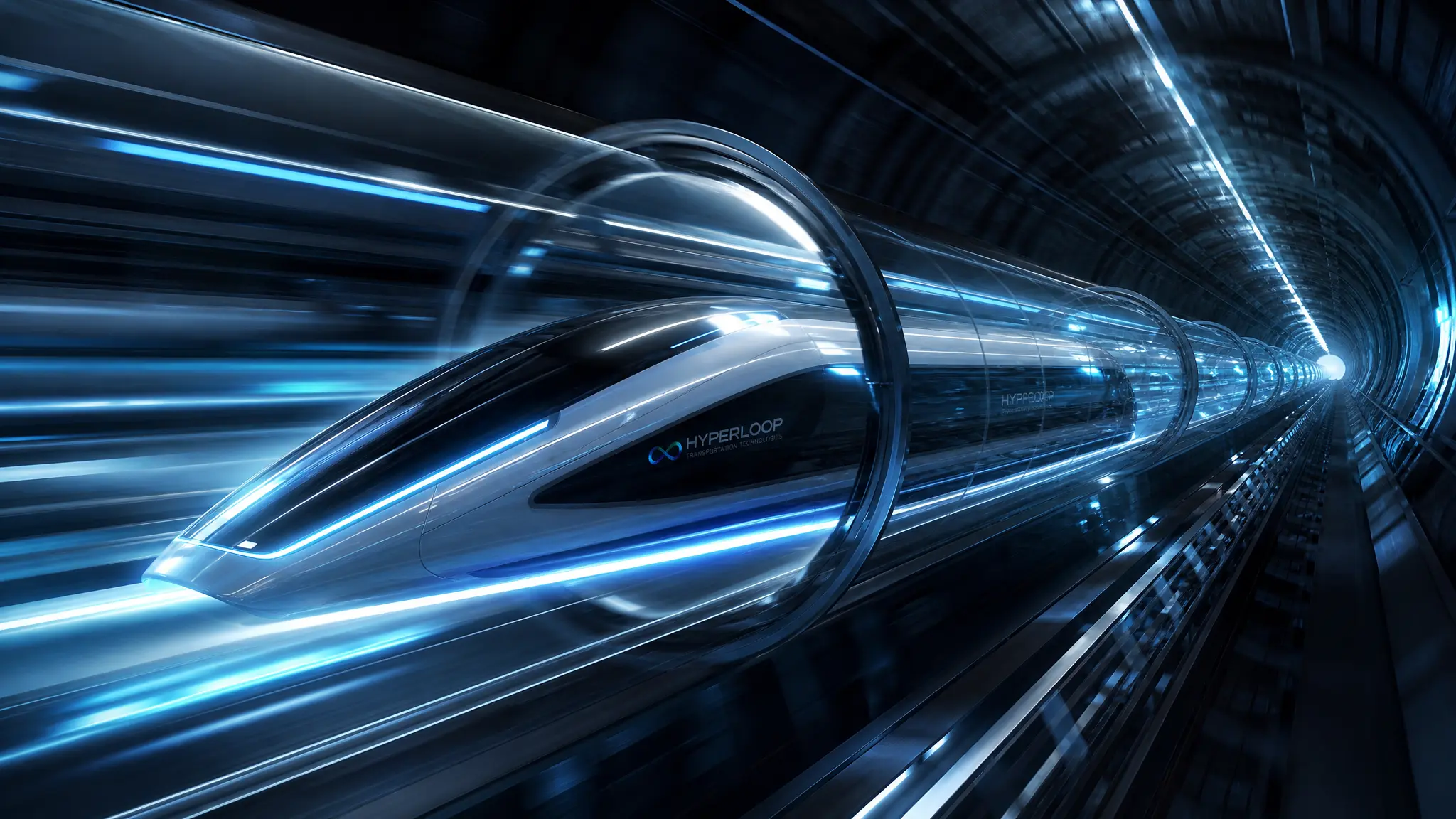
The Boring Hyperway — The Future Cities of a Transcontinental Underground Network
A vision of America’s high-speed evacuated-tube maglev network linking Washington, DC to San Francisco — and of the four luminous cities of tomorrow that would bloom along its path, imagined with the wonders of the distant future that we could build today.
Keywords: Boring Hyperway, maglev, vacuum tube, hyperloop, The Boring Company, high-speed rail, future cities, biophilic urbanism, infrastructure, underground transit, Aethercrest, Aqualith, Summara, Canyonara, smart city, clean energy, vertical farming, Michael Aaron Loftus
Executive Vision
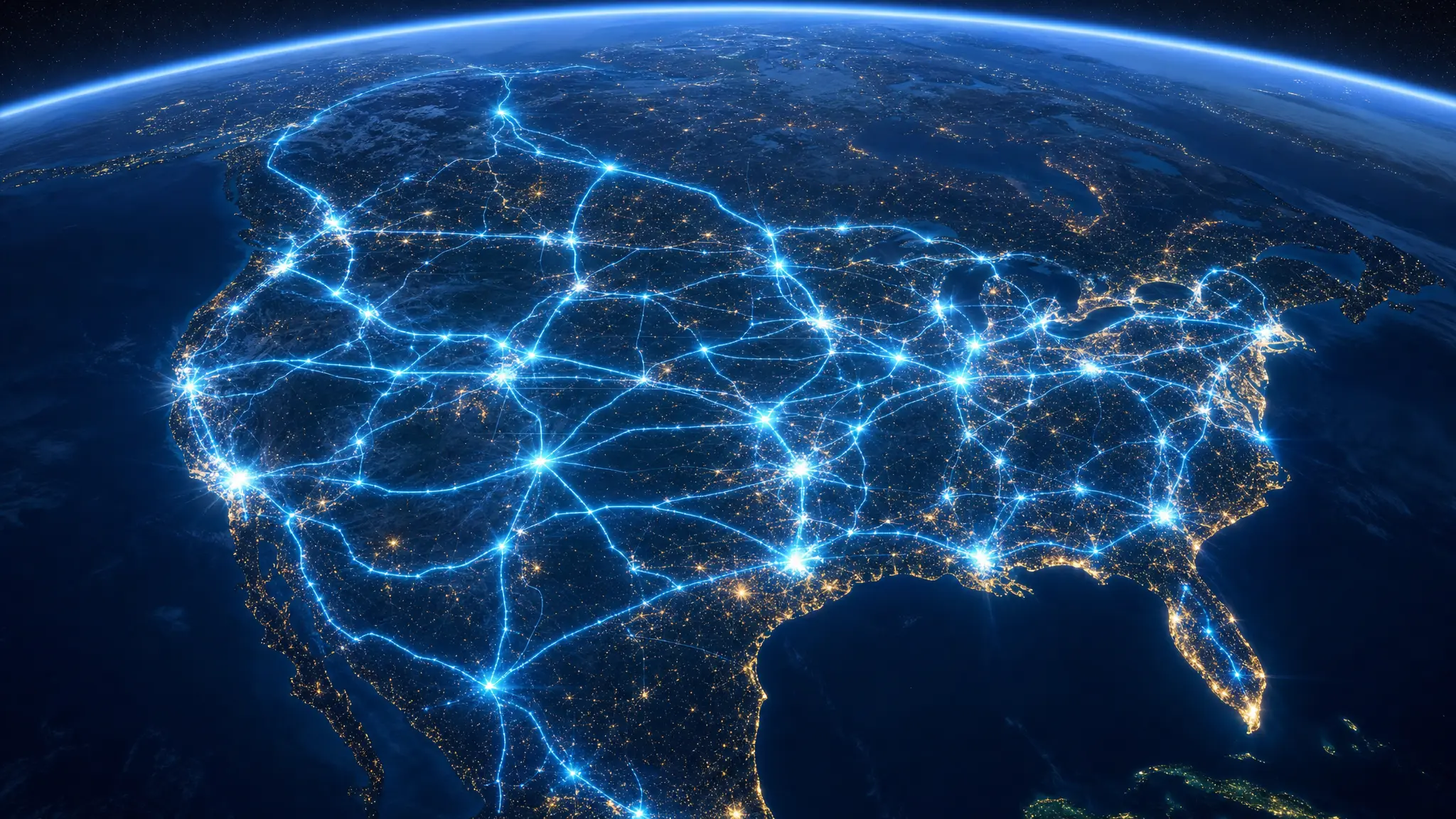
Imagine boarding in Washington, DC after breakfast and stepping off in San Francisco in time for lunch. The Boring Hyperway is a vision of American infrastructure equal to its ambition: a high-speed, underground maglev network, housed in evacuated tubes, that spans roughly 2,500 coast-to-coast miles in about five and a half hours. It is not merely a faster train; it is a new geography for the country, capable of drawing mountains, deserts, and riverlands to within minutes of one another.
But the Hyperway’s deepest promise lies not only in the journey — it lies in the places it would create. Along its path, four new gateway cities would bloom: Aethercrest in Appalachia, Aqualith in the Ozarks, Summara in the Rockies, and Canyonara in Utah’s red rock. Each is a master-planned, luminous, transit-oriented community. And each is a canvas for the wonders of the distant future that, remarkably, we could already begin to build today.
“We do not bore tunnels to escape the landscape, but to honor it — leaving the surface to forests, rivers, and people, while the future glides silently beneath our feet.”
1. The Hyperway System
At its core, the Hyperway is a twin evacuated-tube system in which autonomous pods — the “HyperBore” capsules — levitate magnetically and are driven by linear induction through near-absent air. By removing atmospheric drag, the system reaches a maximum cruise speed of 650 mph (1,046 km/h) at extraordinarily low energy consumption. Effective average speed, accounting for acceleration, deceleration, and stops, is around 480 mph.
The stations are biophilic by design: cathedrals of light, glass, and living greenery where the traveler scarcely senses being underground. Pods depart at high frequency, so the experience feels less like waiting for a train and more like stepping into an elevator that crosses a continent.
2. The Underground Technology
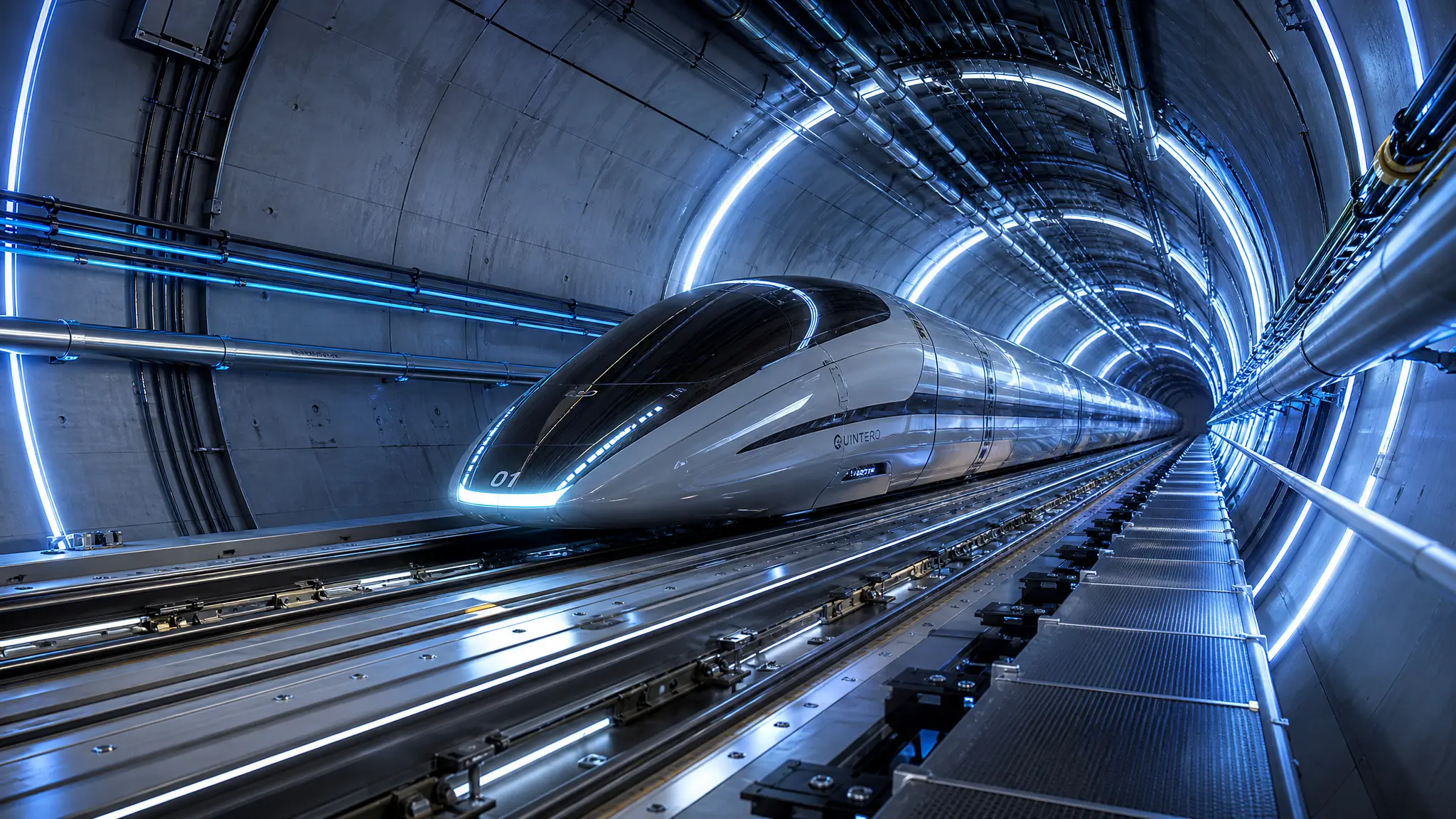
The Hyperway’s feasibility rests on three technological pillars that already exist or stand one step from maturity. The first is large-diameter, low-cost boring: advanced tunnel-boring machines, derived from The Boring Company’s Prufrock line, capable of continuous, fast, economical excavation — transforming the cost equation that historically stalled tunneling in the United States.
The second pillar is magnetic levitation paired with linear-induction propulsion, which removes physical contact and therefore wheel friction. The third is the near-vacuum environment inside the tube, cutting air resistance to a minimal fraction. Together they permit extreme speed at an energy cost that shames aviation, and a ride so quiet and stable that reading or working at 650 mph feels natural.
- Prufrock boring: continuous-excavation TBMs that dramatically lower the cost per mile of tunnel.
- Maglev + linear induction: contactless propulsion that eliminates rolling friction and mechanical wear.
- Near-vacuum environment: low-pressure tubes that cut air resistance to a fraction of atmospheric drag.
- Autonomous HyperBore pods: high-frequency, driverless capsules with quiet, biophilic interiors.
3. The Transcontinental Route
The corridor traces a continental arc from the nation’s capital to San Francisco Bay, with four new cities strung like beads along its thread. Each segment is covered in a little over an hour — or less — folding the whole country into a single afternoon of travel.
| Segment | Distance | Approx. Time |
|---|---|---|
| Washington, DC → Aethercrest | 380 mi | 50 min |
| Aethercrest → Aqualith | 620 mi | 1h 20m |
| Aqualith → Summara | 680 mi | 1h 25m |
| Summara → Canyonara | 520 mi | 1h 5m |
| Canyonara → San Francisco | 300 mi | 40 min |
| Total transcontinental | ~2,500 mi | ~5h 30m |
4. The Four Gateway Cities
Each Hyperway stop is not a mere halt but the seed of an entire city conceived from scratch around transit, nature, and light. These four metropolises — Aethercrest, Aqualith, Summara, and Canyonara — share a common DNA: walkable density, living architecture, and a reverent integration with their landscape. And yet each expresses the unrepeatable character of its ground.
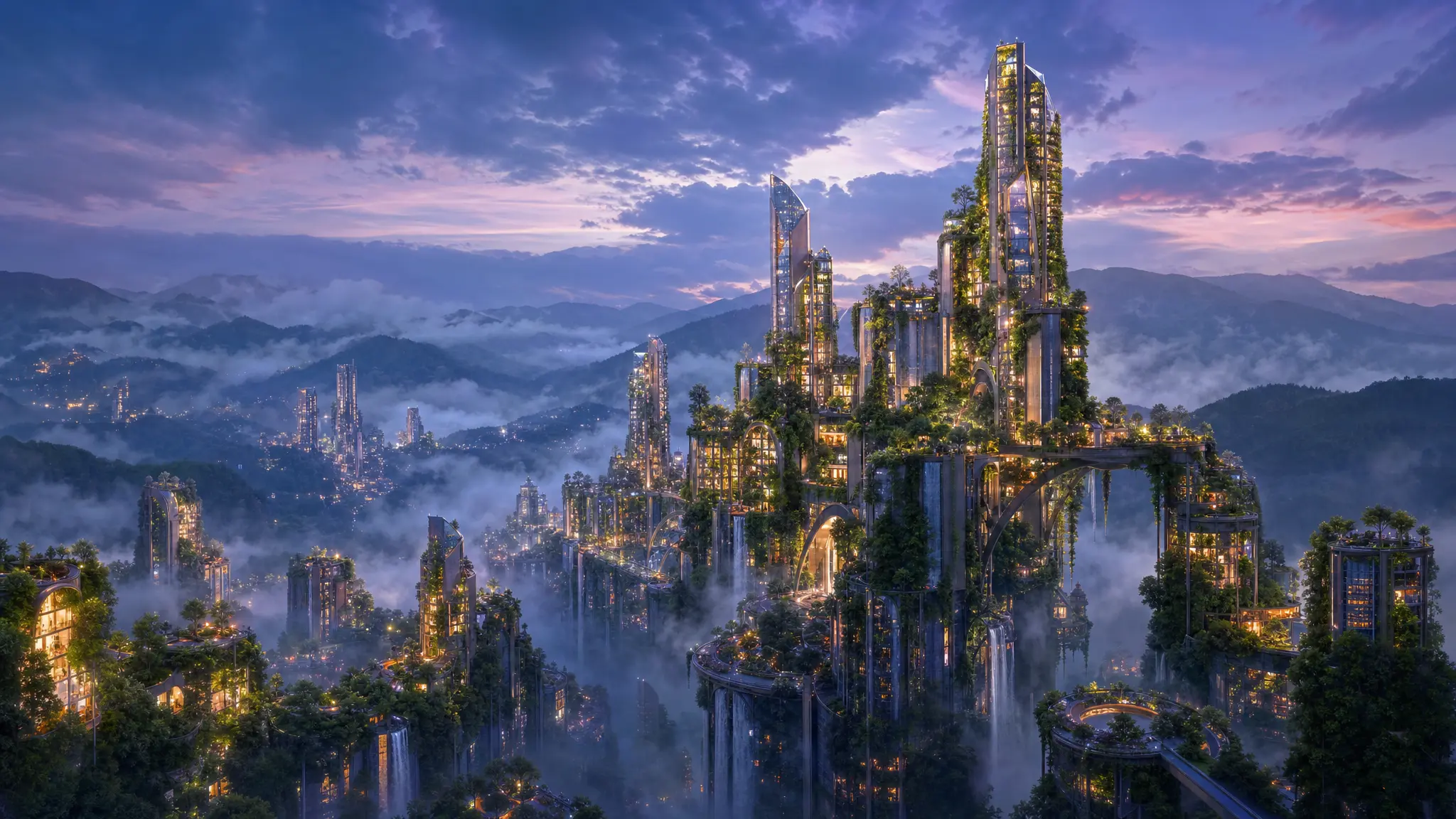
Aethercrest
Appalachian Highlands · 380 mi from DC
A luminous, biophilic mountain metropolis: crystalline towers wrapped in vertical gardens and living terraces, with a radiant HyperBore station as its beating heart. It leads in eco-innovation, forest science, wellness tourism, and sustainable materials.
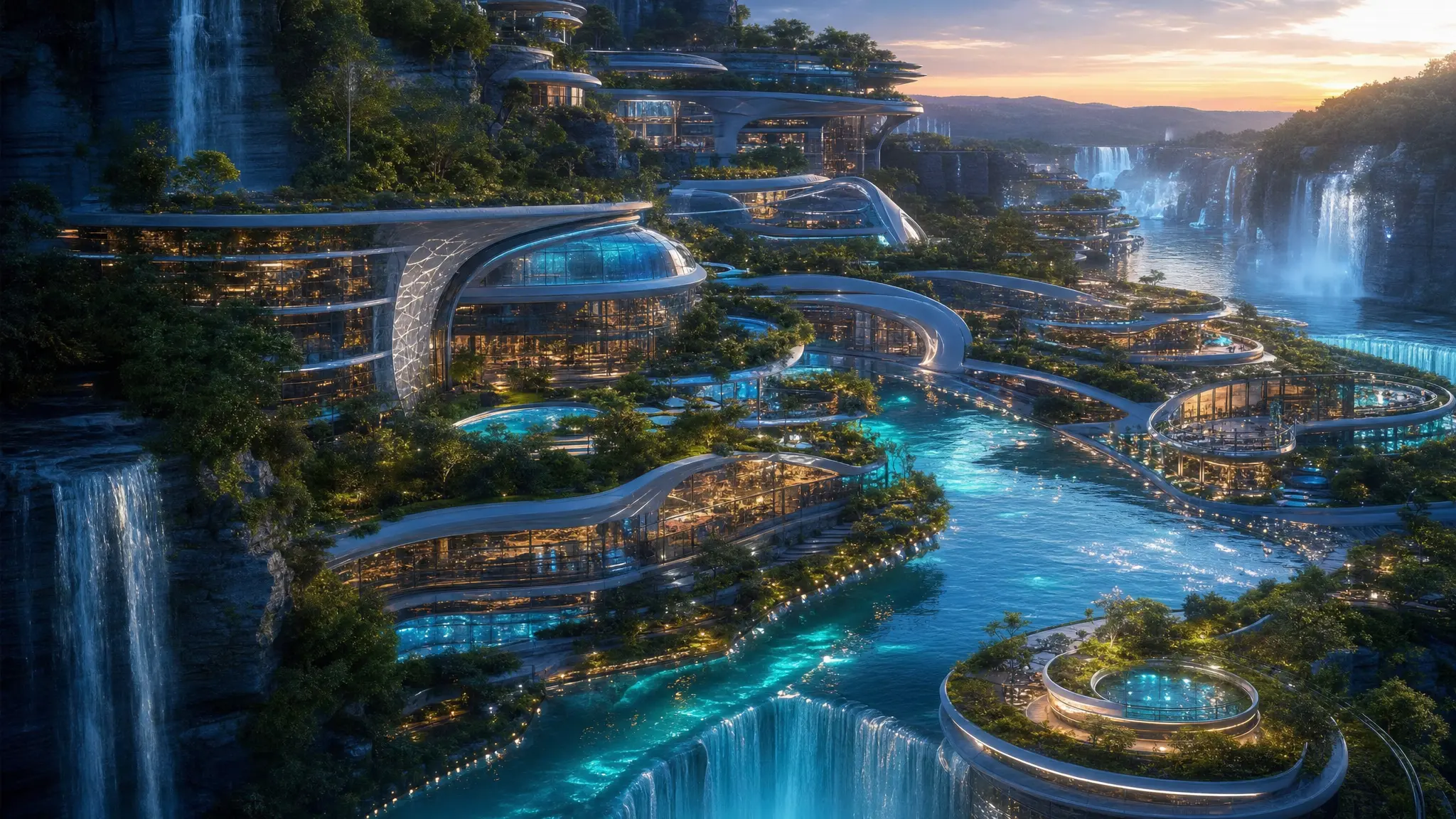
Aqualith
Ozark Riverlands · 620 mi from Aethercrest
Carved into the river bluffs and waterfall valleys of the Ozarks, where water is both lifeblood and design principle. Flowing terraced architecture, integrated waterways, and green corridors drive adventure tourism, sustainable water technology, and an exceptional quality of life.
Summara
Rocky Mountain Crest · 680 mi from Aqualith
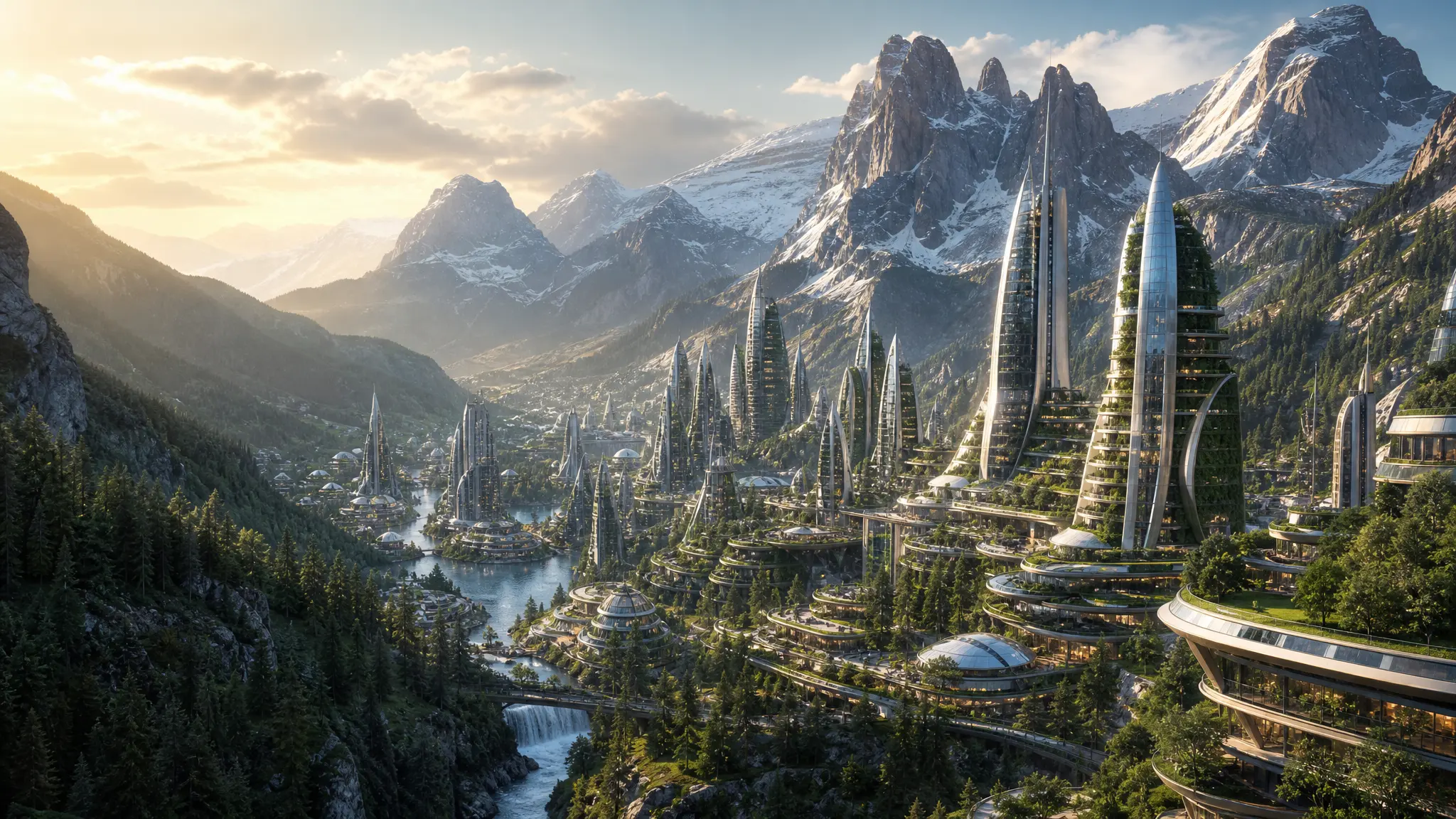
An alpine valley framed by snow-capped peaks. Sleek spires and terraced green buildings blend into forests and mountains, sustaining clean energy, outdoor industries, alpine research, and luxury eco-tourism.
Canyonara
Red Rock Gateway (Utah) · 520 mi from Summara
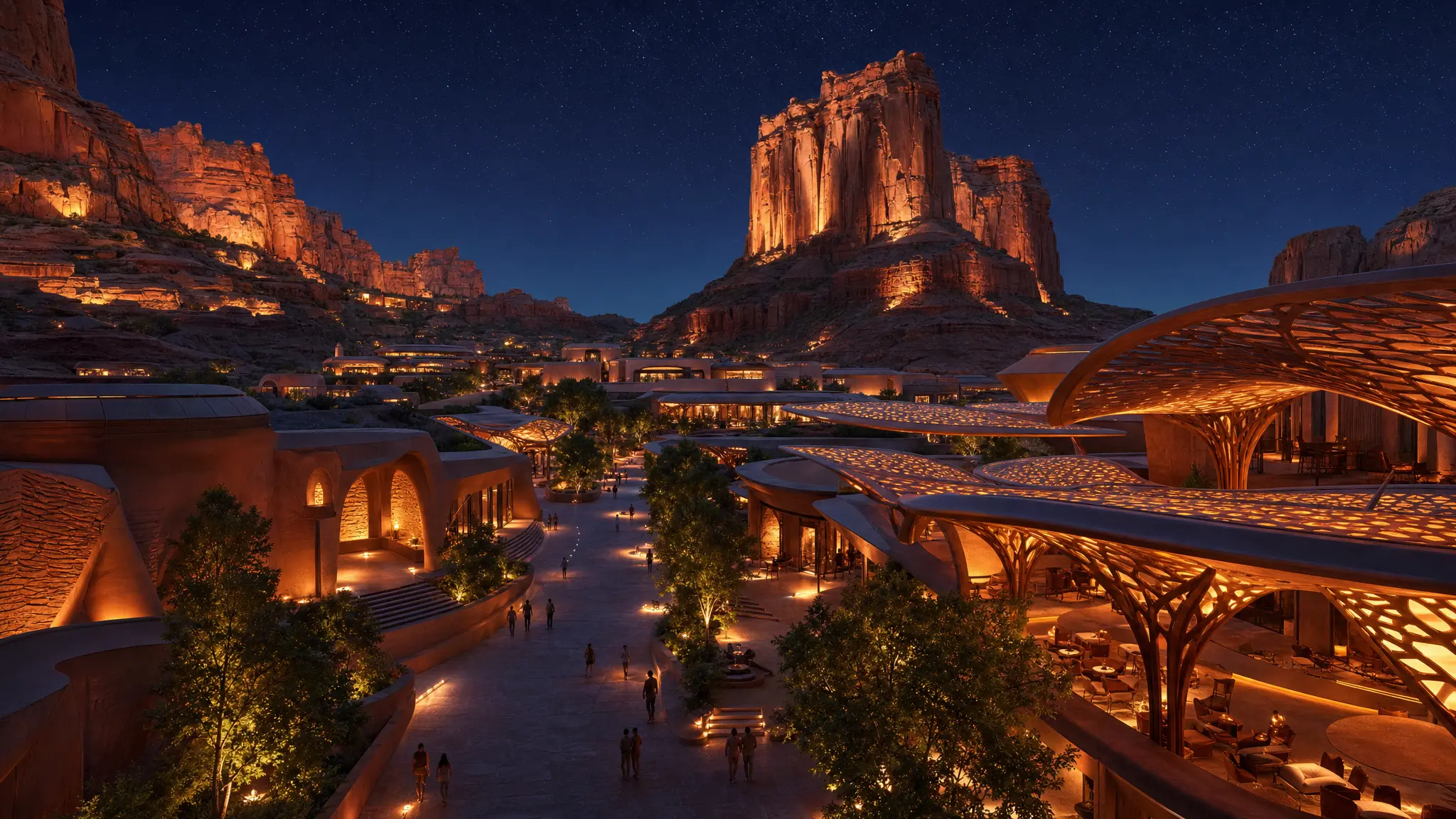
A desert-futurist masterpiece integrated with red rock canyons and mesas. Warm-toned buildings, shaded arcades, and solar canopies define adventure tourism, film production, dark-sky experiences, and sustainable desert living.
5. What These Cities Could Contain
Here is the most thrilling part. Because these cities would be built from nothing, they need not inherit the compromises of the past. They could be born already equipped with the wonders we usually reserve for the distant future — and yet every one of those wonders has demonstrable roots in today’s technology. What follows is not science fiction: it is a catalogue of the possible, assembled into a single coherent vision.
Living, biophilic architecture
- Self-healing masonry and bio-receptive concrete façades that cultivate air-purifying mosses and lichens.
- Towers wrapped in vertical gardens and terraced forests that cool buildings naturally.
- Locally sourced mycelium and mass-timber materials that store carbon rather than emit it.
Closed-loop water and energy
- Atmospheric water harvesting and fog capture that supplement rainfall and snowmelt.
- Total greywater and blackwater recycling, returning clean water to neighborhoods with no waste.
- Building-integrated solar, geothermal, and battery storage powering self-sufficient microgrids.
Food, mobility, and civic intelligence
- Vertical farms and urban aquaponics producing fresh food within steps of every home.
- Fully autonomous, shared mobility — no private cars — with underground tunnels for quiet freight and logistics.
- An augmented-reality civic layer that guides, translates, and informs, and a “digital twin” that optimizes the city in real time.
“The city of tomorrow is not a place we arrive at someday; it is a set of choices we can make this decade. Every technology that would make it wondrous already breathes in some laboratory or prototype today.”
6. Economics, Financing & Phased Delivery
A vision of this scale becomes real only if it is financeable and delivered in stages. The Hyperway would be built as a public-private partnership, leveraging low-cost boring to reduce capital expenditure per mile, land-value capture around the new stations to fund the infrastructure, and segment-by-segment construction that generates revenue and communities as it advances.
- Phase 1 — Coastal anchors: the DC → Aethercrest and Canyonara → San Francisco segments prove the technology and the first cities.
- Phase 2 — The continental heart: Aethercrest → Aqualith → Summara joins the network and consolidates inter-regional demand.
- Phase 3 — Closure and expansion: Summara → Canyonara completes the spine and opens branches toward new regions.
With streamlined permitting and federal, state, and private alignment, such a system is conceivable within two decades. And unlike most megaprojects, this one pays cultural and economic dividends from the very first phase: every city that awakens is living proof of what America can still build.
7. Consulting Cost & Value
Had a government or consortium commissioned this vision — the synthesis of transportation engineering, urban planning, sustainable technology, and systems design — from a top-tier architecture-and-engineering firm, the cost would have been substantial. The table below estimates that cost honestly, based on the actual tasks and justified U.S. market hourly rates.
| Research & Design Task | Hours | Rate | Cost |
|---|---|---|---|
| Maglev & vacuum-tube system concept design | 120 | $450 | $54,000 |
| Route alignment & tunneling engineering | 100 | $420 | $42,000 |
| Master planning of the four gateway cities | 160 | $400 | $64,000 |
| Sustainable technology design (water, energy, food) | 90 | $380 | $34,200 |
| Economic modeling, financing & phasing | 80 | $520 | $41,600 |
| Visualization, authoring & QA | 85 | $340 | $28,900 |
| Total (professional-services equivalent) | 635 | — | $264,700 |
Frequently Asked Questions
It is a vision of a high-speed, underground, evacuated-tube maglev network that would connect Washington, DC to San Francisco across roughly 2,500 miles, at cruise speeds up to 650 mph and a transcontinental trip of about five and a half hours. Four new master-planned gateway cities would rise along the way.
A low-pressure tube removes almost all air resistance, enabling very high speeds at remarkably low energy use. Boring with advanced tunnel-boring machines avoids surface land-taking, protects the landscape, and delivers a quiet, comfortable, weather-proof ride shielded from storms and snow.
The full DC-to-San-Francisco run would take about five and a half hours with all stops, and roughly four hours and forty-five minutes on express services that skip intermediate stations — a radical leap over the four-to-five-day drive it replaces.
They are the four gateway cities imagined along the route: a biophilic mountain metropolis in Appalachia, a waterfall city in the Ozarks, an alpine capital in the Rockies, and a desert-futurist city in Utah’s red rock. Each is a master-planned, transit-oriented, luminous community.
Self-healing biophilic architecture, atmospheric water harvesting, closed-loop energy, vertical farms feeding the neighborhoods, autonomous mobility with no private cars, and an augmented-reality civic layer. Every one of these technologies has demonstrable roots today and could be built into the very first master plan.
The vision builds on the low-cost tunneling pioneered by The Boring Company and on well-established maglev and vacuum-tube principles. With a public-private partnership, streamlined permitting, and phased construction, such a system is conceivable within two decades, with the cities flourishing as segments are completed.
It was prepared by Michael Aaron Loftus, Founder and President of Digital Marketing Company and Web Development, Inc., based in Baltimore, Maryland, as an independent, visionary synthesis of transportation engineering, urban planning, and sustainable technology.
Bibliography
Primary sources only — authoritative government institutions and peer-reviewed academic outlets. Click any entry to reveal its annotation and source link.
The engineering foundation for low-cost, fast tunneling and in-tunnel electric transit that makes an affordable transcontinental underground network conceivable.
boringcompany.com — Tunnels & PrufrockDocuments the physics and engineering of magnetic levitation and linear induction propulsion that underpin the Hyperway’s frictionless, high-speed ride.
railroads.dot.gov — FRAThe authoritative federal source for the clean-electricity and efficiency data used to model the closed-loop, low-carbon energy systems of the gateway cities.
eia.gov — Energy DataSurveys demonstrated technologies for capturing water from air and integrating solar generation into building envelopes — core to the cities’ self-sufficiency.
nrel.gov — NRELProvides the transit-oriented-development principles used to plan compact, walkable, station-centered cities around the Hyperway stops.
transportation.gov — USDOTThe benchmark framework for the biophilic, regenerative, and net-positive building standards envisioned across all four gateway cities.
usgbc.org — LEED
Independent Research Disclaimer
This white paper is an independent, visionary synthesis prepared by Digital Marketing Company It describes a forward-looking infrastructure and urban-design concept and does not represent a project under construction, an official government proposal, or a commitment by The Boring Company or any agency. Speeds, distances, times, costs, and horizons are illustrative estimates based on publicly available engineering and technology principles, and are subject to revision. The cities and their names are illustrative.
Ready to Elevate Your Digital Presence?
Text us anytime — we'll get back to you as soon as possible. We're text-only.

Let's Build Something Extraordinary
Our expert team of developers is ready to transform your vision into reality. From SEO to custom web applications — we do it all.