







What Is Local SEO?
Local SEO is the practice of optimizing a business's online presence to attract more customers from relevant local searches. These searches take place on Google and other search engines, map applications, voice assistants, and increasingly, AI-powered local discovery platforms. In 2026, local SEO encompasses a sophisticated ecosystem of signals that determine which businesses appear in local search results, map packs, and AI-generated local recommendations.
According to research from BrightLocal, 98% of consumers used the internet to find information about local businesses in 2025, and 87% of consumers used Google to evaluate local businesses. Local search has become the primary discovery mechanism for businesses with physical locations, service areas, or geographically-defined target markets.
The local search landscape has evolved significantly with the integration of AI. Google's AI Overviews now frequently include local business recommendations, and conversational AI assistants process millions of local intent queries daily. Businesses that invest in local SEO capture high-intent traffic — research shows that 76% of people who search for something nearby on their smartphone visit a related business within 24 hours.
Google Business Profile: The Foundation of Local SEO
Google Business Profile (GBP, formerly Google My Business) is the single most important element of local SEO. A fully optimized GBP listing directly influences whether your business appears in the Local Pack (the map-based results that appear at the top of local searches), Google Maps results, and Google AI Overview local recommendations.
Complete GBP optimization includes providing accurate and complete business information (name, address, phone number — the "NAP"), selecting the most specific primary and secondary business categories, writing a keyword-rich business description, uploading high-quality photos and videos regularly (businesses with 100+ photos receive 520% more calls than the average), maintaining accurate business hours including special hours for holidays, enabling messaging and booking features, and regularly posting updates, offers, and events through GBP Posts.
GBP Categories and Attributes
Category selection directly impacts which searches your business appears for. Research from Sterling Sky shows that the primary category is the single most influential ranking factor in local search. Secondary categories add additional visibility for related search terms. Business attributes (wheelchair accessible, free Wi-Fi, outdoor seating, etc.) provide additional matching signals and improve click-through rates by displaying relevant information directly in search results.
Local Pack Rankings: The Three Pillars
Google's local ranking algorithm evaluates three primary factors, as documented in their official support documentation:
1. Relevance
Relevance measures how well a local business listing matches what someone is searching for. Complete and detailed business information helps Google understand your business better and match your listing to relevant searches. Ensuring your GBP categories, description, and services accurately reflect your business is essential for relevance optimization.
2. Distance
Distance refers to how far each potential search result is from the location term used in a search. If a user doesn't specify a location, Google calculates distance based on what's known about the user's location. While you can't control distance directly, you can optimize your service area settings and create location-specific content that helps Google associate your business with relevant geographic areas.
3. Prominence
Prominence refers to how well-known a business is. This is influenced by link profile, article mentions, review count and quality, local citation consistency, and overall web presence. Prominence is the factor most within your control and where strategic local SEO efforts have the greatest impact.

Citation Building and NAP Consistency
Local citations are mentions of your business's name, address, and phone number (NAP) across the web. Citations appear on business directories (Yelp, Yellow Pages, BBB), social platforms, industry-specific directories, and data aggregators. Citation consistency is crucial — inconsistent NAP information across different sources confuses search engines and can negatively impact local rankings.
A strategic citation building program targets the most authoritative directories first, ensures 100% consistency in business name formatting, address format, and phone number, and expands to industry-specific and hyper-local directories. Citation management tools automate the process of finding and correcting inconsistencies across hundreds of directory listings.
Review Management and Reputation
Reviews are a critical local ranking factor and a primary decision-making input for consumers. Research from BrightLocal's Consumer Review Survey shows that 87% of consumers read online reviews for local businesses, and the average consumer reads 10 reviews before feeling able to trust a business.
Effective review management includes actively requesting reviews from satisfied customers (timing requests shortly after positive experiences), responding to all reviews — both positive and negative — promptly and professionally, monitoring reviews across all platforms (Google, Yelp, Facebook, industry-specific sites), and using review insights to identify and address operational issues. Google specifically looks at review recency, velocity (how frequently new reviews are generated), diversity (reviews across multiple platforms), and owner response rate when evaluating local rankings.

Local Content and Link Building
Geo-Targeted Content Strategy
Creating content specifically relevant to your local audience signals geographic relevance to search engines. This includes creating location-specific landing pages for each service area, publishing content about local events, news, and community involvement, producing case studies and success stories featuring local clients, and creating "best of" guides and local resource pages that naturally attract local links and engagement.
Local Link Building
Local links from community organizations, local media, chambers of commerce, business associations, and complementary local businesses provide strong geographic relevance signals. Sponsoring local events, participating in community initiatives, and building relationships with local journalists and bloggers create natural local link opportunities. These links carry double value — they build both domain authority and geographic authority.
Local SEO for Multi-Location Businesses
Multi-location businesses face unique local SEO challenges including maintaining individual GBP listings for each location, creating unique location-specific content (avoiding duplicate content across location pages), managing reviews and reputation across multiple locations, and implementing local schema markup with location-specific data.
Each location should have its own dedicated landing page with unique content, local testimonials, team photos, directions, and area-specific service information. These pages should use LocalBusiness schema markup with unique identifiers for each location. Research from Moz emphasizes that the quality and uniqueness of location pages directly correlates with local pack visibility.
Local SEO and AI Search
AI-powered search is transforming local discovery. Google AI Overviews frequently recommend local businesses with conversational context, and AI assistants process millions of "near me" and local intent queries. Optimizing for AI-powered local search requires ensuring your GBP is complete and accurate, having strong review signals, maintaining consistent structured data across all properties, and creating the kind of authoritative, helpful content that AI systems prefer to cite when making local recommendations.
Voice search, which is predominantly local in intent, continues to grow with smart speakers and mobile assistants. Optimizing for natural language queries, featured snippet formats, and FAQ structured data all contribute to visibility in voice-powered local search.

Measuring Local SEO Performance
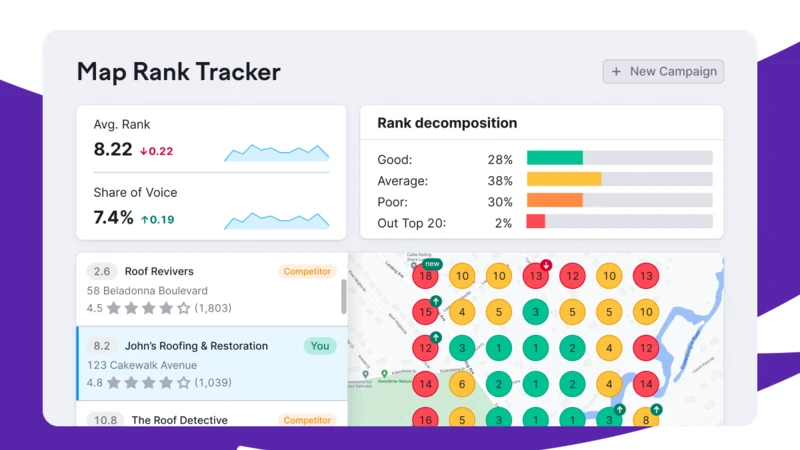
Local SEO success measurement includes tracking local pack rankings for target keywords, monitoring GBP insights (views, actions, direction requests, calls), analyzing local organic traffic growth by geographic segment, tracking citation accuracy scores across directories, measuring review velocity and sentiment trends, and monitoring phone call and message volumes from GBP listings.
Attribution remains a challenge in local SEO — many conversions happen offline (phone calls, store visits) after an online discovery. Google's store visit tracking, call tracking, and UTM-tagged GBP links help bridge the online-to-offline attribution gap, providing a more complete picture of local SEO ROI.