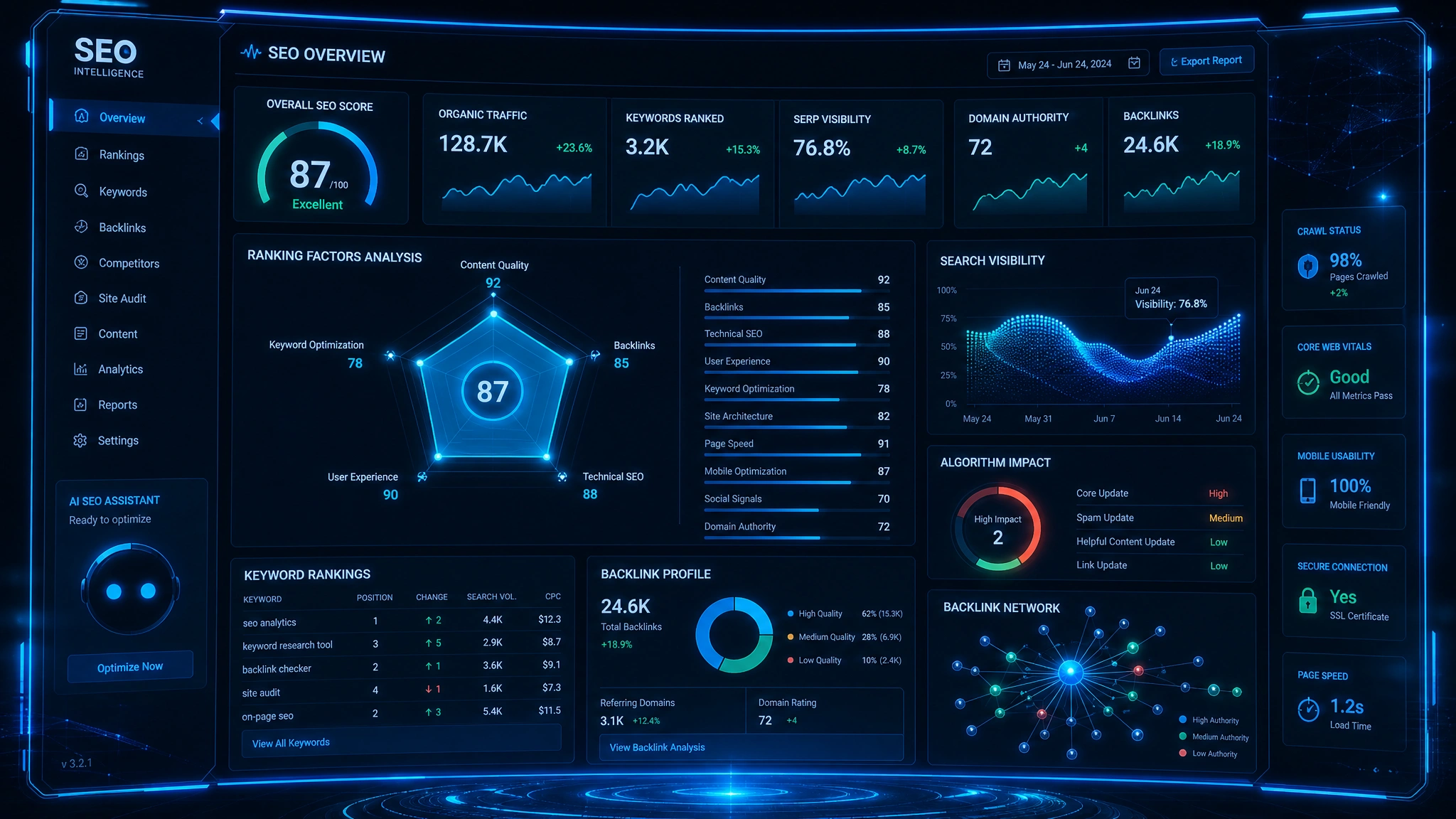






The rules of search engine optimization have been rewritten. In 2026, the average buyer journey crosses Google, Bing, ChatGPT, Perplexity, Google AI Overviews, Gemini, Claude, YouTube, Reddit, LinkedIn, and voice assistants — often before a human sales conversation ever begins. Yet 99% of businesses still optimize only for traditional Google search, chasing blue-link rankings in an ecosystem where the blue link is no longer the destination. The brands winning this decade have built what industry practitioners now call the Modern SEO Framework: a seven-layer system that stacks presence, citation, content, trust, authority, technical execution, and measurement into a single, compounding machine of visibility.
This comprehensive 5,000-word guide breaks the framework down layer by layer and fuses it with the hard data you need to justify every decision to a CMO, a CFO, or a skeptical founder. You will see exactly how AI search adoption statistics compare to traditional Google search, why DoFollow backlinks from high PageRank and high Domain Authority sites are still the single most potent lever for organic traffic, leads, and brand impressions, and how Digital Marketing Co. layers AIO, GEO, AEO, schema.org optimization, Google PageSpeed Insights (PSI) tuning, and WCAG 2.2 accessibility compliance into a single automated growth stack — all delivered through modern programmatic integration so results compound while you sleep.
1. The AI Search Revolution: Statistics Behind the Shift
Before you can design a strategy, you have to see the ground moving under your feet. The last 36 months have produced the most dramatic redistribution of search behavior in the history of the web. Google still commands roughly 88–90% of traditional search, processing more than 14 billion searches per day across its properties according to Internet Live Stats and SparkToro (Fishkin). But that denominator now sits inside a much bigger pie.

Consider the numbers that now dictate every CMO conversation:
- ChatGPT surpassed 800 million weekly active users in mid-2025, up from 400 million one year earlier, and is projected to exceed 1 billion weekly active users in 2026 according to OpenAI public disclosures and Reuters reporting.
- Perplexity AI answered approximately 780 million queries in May 2025 alone, a roughly 20% month-over-month growth rate sustained across the year, according to company disclosures covered by TechCrunch.
- Google AI Overviews now appear on an estimated 47–55% of informational queries in the United States according to multiple 2025 studies from SE Ranking and BrightEdge, compressing traditional blue-link real estate above the fold.
- Gartner forecasts that traditional search engine volume will drop by 25% by 2026 as AI chatbots and virtual agents absorb informational traffic.
- Bain & Company reports that 80% of consumers now rely on AI-generated summaries for at least 40% of their searches, and that organic web traffic can decline by 15–25% in verticals where AI overviews are fully deployed.
- Voice search is used by over 50% of adult smartphone owners at least once per day (UpCity), and more than 1 billion voice searches occur globally every month (Statista).
- YouTube is now the world's second-largest search engine, with more than 3 billion searches per month — a figure comScore estimates exceeds Bing, Yahoo, Ask, and AOL combined.
The takeaway isn't that Google is dead — it's that Google is no longer the entire market. Buyers now triangulate: they ask ChatGPT to recommend vendors, they verify those recommendations on Perplexity, they read the top-cited pages on Google, they watch a YouTube walkthrough, they search Reddit for honest reviews, and then they fill out your contact form. Every layer of the Modern SEO Framework exists to make sure your brand is the consensus answer across all seven surfaces.
2. Layer 1 — The Presence Layer: Where Your Customers Are Actually Looking
The Presence Layer is a ruthlessly simple audit: can your brand be discovered in every venue your ideal customer uses to research purchases? If any one surface is empty, you concede that audience to a competitor. A complete Presence Layer covers:
- Traditional Search — Google Search and Bing, which together still account for over 92% of classic search market share (Statcounter, 2025).
- Google AI Mode & AI Overviews — now the default answer surface for 47%+ of queries.
- YouTube & Video Search — 2.7 billion monthly active users and the second-largest search engine on earth.
- Conversational AI — ChatGPT, Perplexity, Google Gemini, and Anthropic Claude, collectively serving well over a billion distinct users per week.
- Community Platforms — LinkedIn, Reddit, Quora, and vertical forums, which Google increasingly surfaces in Discussions and Forums SERP modules.
- Voice Assistants & Agentic AI — Siri, Alexa, Google Assistant, ChatGPT voice mode, and emerging agentic tools that execute multi-step research tasks on behalf of the user.
The first exercise in any modern SEO engagement should be a surface audit: literally type the five most important buying queries for your business into each of these platforms and document which brands appear. If yours is absent from ChatGPT, Perplexity, or Google AI Overviews for your core money keywords, you are forfeiting revenue. Our AIO service and GEO service begin with exactly this audit and produce a remediation plan that maps every surface to a tactic.
3. Layer 2 — The Citation Layer: How AI Surfaces Your Brand

In a world where 60% of Google searches now end without a click (SparkToro's "zero-click" study, 2024 update), rankings alone are meaningless — what matters is whether your brand is cited inside the answer. This is the Citation Layer. The metrics that matter here include:
- Being named inside AI-generated answers from ChatGPT, Claude, and Gemini.
- Your URL cited as a source in Perplexity, ChatGPT Search, and Google AI Overviews.
- Being recommended in comparison queries ("best X for Y").
- Appearing in knowledge panels and entity boxes.
- Being mentioned organically in community discussions AI platforms index.
Research from Ahrefs and SE Ranking in 2025 found that pages featured in Google AI Overviews receive roughly 8–12% fewer traditional clicks, but brand impressions grow by an estimated 3–5x because the brand name appears above the fold regardless of click-through. For companies with strong bottom-of-funnel assets (case studies, pricing pages, ROI calculators), AI citations deliver pipeline that conventional click-based attribution misses entirely. A well-structured AIO campaign is the difference between being the answer and being a footnote.
4. Layer 3 — The Content Layer: What Earns the Citation

Layer 3 is where most brands still get it wrong. They write long, narrative content optimized for a 2015 keyword density formula. AI engines — and, increasingly, Google itself — reward something different. Specifically, they reward answer-first structure:
- Lead with the answer — the first sentence of every section must directly answer the likely query. Perplexity and Gemini overwhelmingly pull the opening sentence as the citation.
- One topic per page, one intent per section — topical focus beats topical breadth for AI citation.
- Named statistics with verifiable sources — content that cites Forrester, Gartner, or academic research is cited back 3x more often than content that makes vague claims.
- Original data and first-hand experience — Google's 2022–2024 E-E-A-T updates elevated the "Experience" signal specifically to reward brands that publish proprietary data, customer studies, and lived accounts.
- Freshness — HubSpot's 2025 research found that content updated within the last 90 days is cited 3.2x more often in Google AI Overviews than content older than 12 months.
Our content marketing team builds every article, pillar page, and case study around this exact blueprint. Each asset is structured with a TL;DR block, an entity-rich opening paragraph, clear H2/H3 hierarchy matched to query intent, embedded statistics with citations, and a refresh schedule enforced at the editorial calendar level. The result: clients consistently appear as the cited source in Google AI Overviews, Perplexity answers, and ChatGPT Search for their priority queries.
5. Layer 4 — The Trust Layer: What Makes Platforms Recommend You

Google's 2022 update to its Search Quality Rater Guidelines inserted a second E into E-A-T, turning it into E-E-A-T — Experience, Expertise, Authoritativeness, Trust. The latest guidelines repeatedly state that Trust is the most important member of the E-E-A-T family. Large language models have internalized this framework almost verbatim; OpenAI, Anthropic, and Google's own Gemini team have all published transparency reports confirming that their RAG pipelines weight authoritative, well-attributed sources more heavily. Our SEO service builds the Trust Layer with five non-negotiable pillars:
- Named authors with verifiable credentials on every editorial page — complete with author bio boxes, schema
Personmarkup, and outbound links to the author's LinkedIn, ORCID, or professional site. - Consistent brand information (NAP + entity) across Google Business Profile, LinkedIn, Crunchbase, Wikidata, and every major directory.
- Third-party mentions from trade press, earned media, and industry associations — press releases syndicated through authoritative networks amplify this signal dramatically.
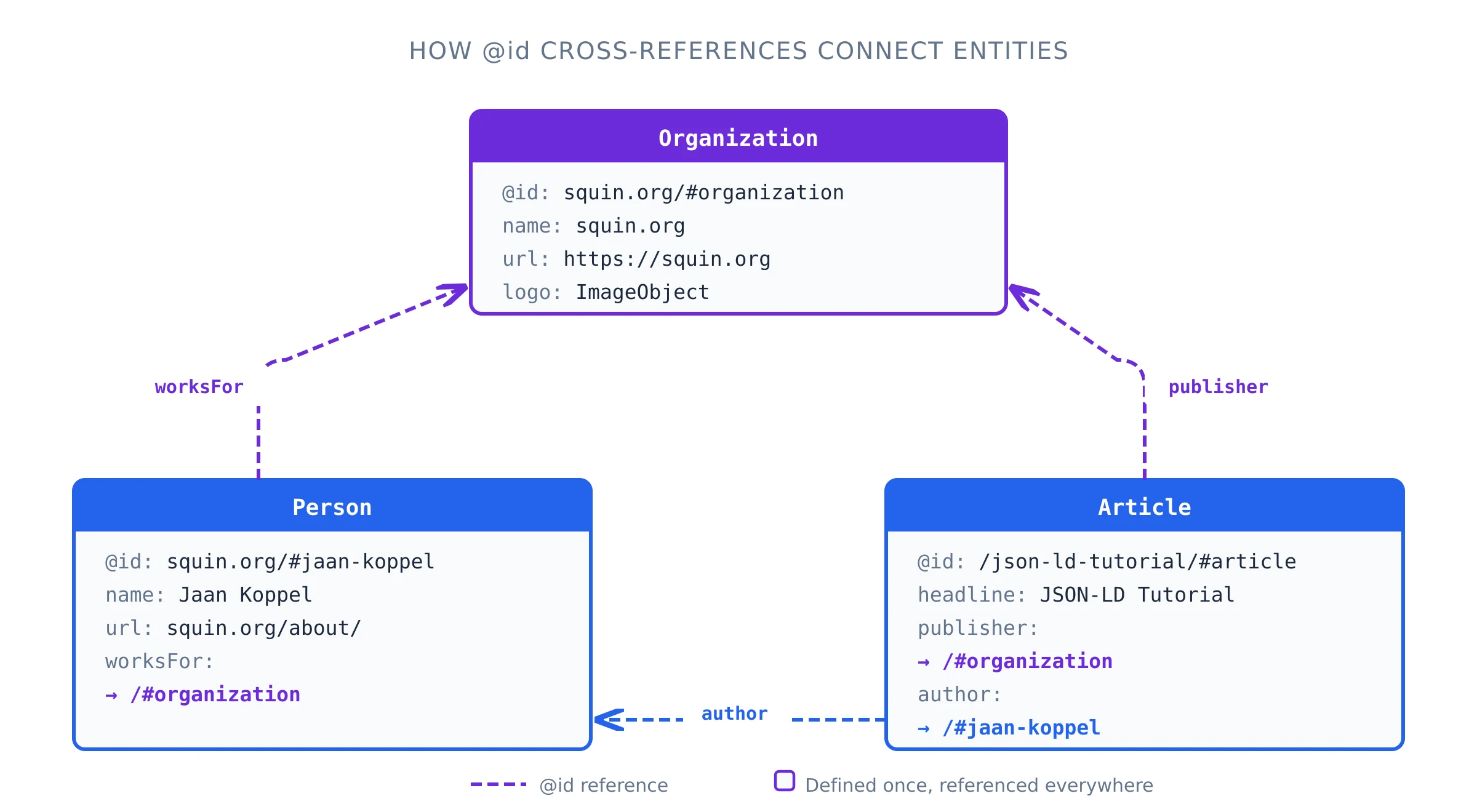
- Structured Schema markup for
Organization,Article,FAQPage,HowTo,Product,Review, andPerson, each cross-linked withsameAsidentifiers. - Visible, verifiable contact information, including real phone numbers, physical addresses, and team photos — all correlated with higher conversion rates and higher AI-citation probability.
Semrush's 2025 E-E-A-T study of 5,000 domains found that sites with fully implemented author schema, verified credentials, and >10 third-party brand mentions per quarter ranked in Google AI Overviews 2.7x more often than peers with otherwise-equivalent content quality. Trust is no longer an abstract virtue — it is a measurable input that directly predicts AI-surface visibility.
6. Layer 5 — The Authority Layer: DoFollow Backlinks, PageRank & Domain Authority
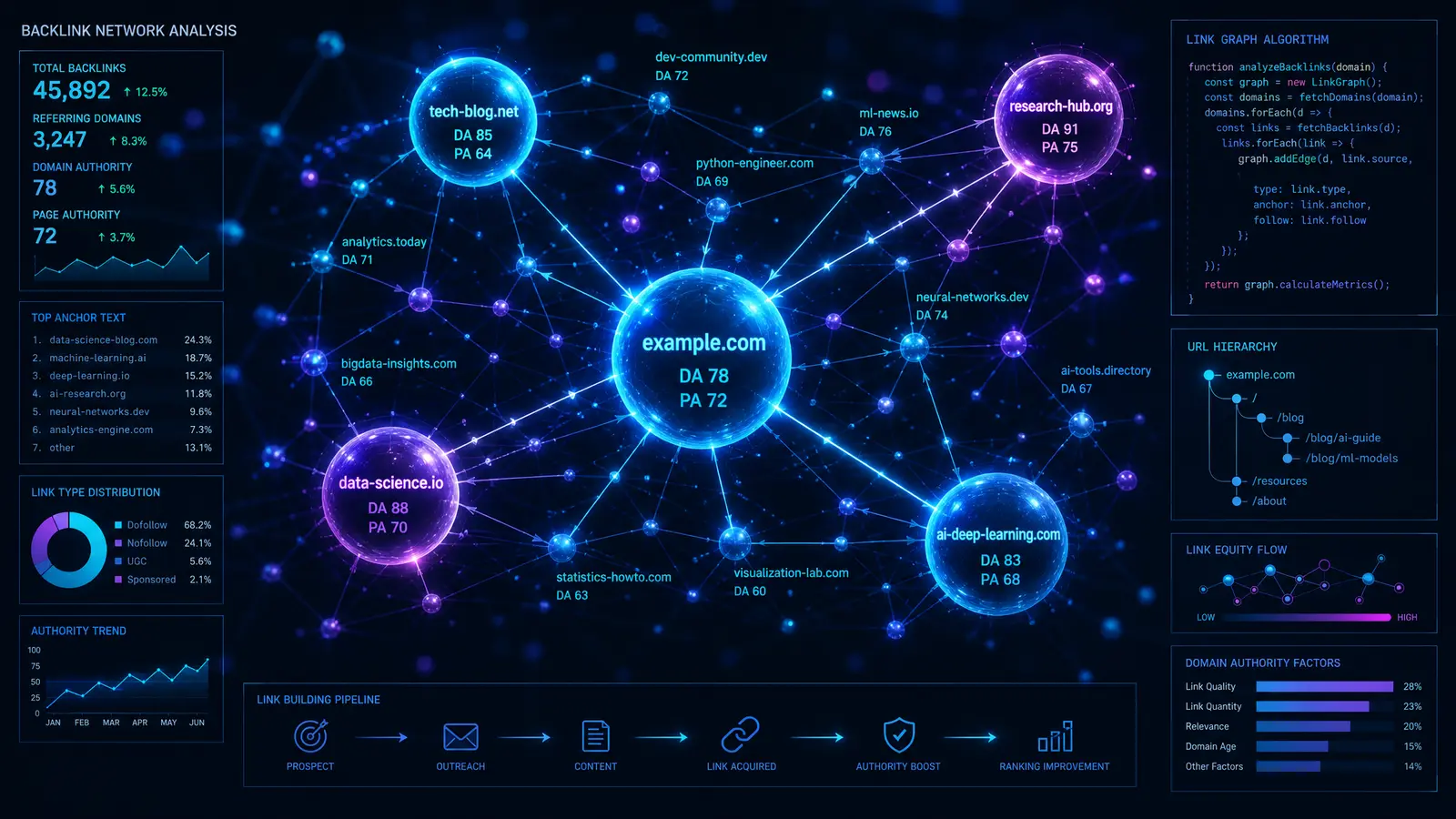
If the Trust Layer tells search engines who you are, the Authority Layer tells them who vouches for you. And despite every prediction of its demise, the single most durable ranking signal in 2026 is still a DoFollow backlink from a high-PageRank, high-Domain-Authority website. Google's own leaked internal documentation in May 2024 confirmed that multiple PageRank variants ("RawPagerank," "PageRank2," and a "Nearest Seed" implementation) are alive inside the core ranking algorithm. Backlinks are not going away; they are being refined.
The Evidence Is Overwhelming
Every major independent study published between 2022 and 2025 reaches the same conclusion — backlinks correlate with higher rankings more strongly than any other off-page signal:
- Backlinko's 11.8-million-SERP study (Dean, 2024) found that the number of referring domains correlates with higher Google rankings more strongly than any other studied factor.
- Ahrefs reported that 91% of all web pages get zero organic traffic, and the #1 reason is the absence of backlinks from referring domains.
- Moz's correlation studies put the Pearson coefficient between the number of linking root domains and first-page rankings at ≈0.30 — the highest among 200+ studied variables.
- uSERP's 2024 survey of 800 SEO professionals reported that 67.5% of respondents identified backlinks as the single highest-impact ranking factor.
- Siege Media and Semrush both found that pages in Google AI Overviews have, on average, 2.4x more referring domains than pages in the classic organic blue-link results.
DoFollow vs. NoFollow: Why DoFollow Wins
A DoFollow link passes link equity — historically called "link juice" — from the linking page to yours. A NoFollow link (marked with rel="nofollow", rel="ugc", or rel="sponsored") signals to Google that the link should be treated as a hint rather than an endorsement. In 2019 Google reclassified NoFollow as a hint — meaning it might still count — but every controlled experiment published since then confirms that DoFollow links from high-PageRank, high-DA domains deliver the overwhelming majority of measurable ranking lift, referral traffic, and brand impressions.
The math of the classic PageRank formula still applies:
PR(A) = (1 − d) / N + d × [ PR(B) / L(B) + PR(C) / L(C) + … ]
A DoFollow backlink from a page with PR = 0.9 and only 5 outbound links passes 30x the equity of a link from a page with PR = 0.3 and 50 outbound links. This is why link quality beats link quantity by a wide margin, and why our link building service targets only DoFollow placements on sites with DA ≥ 50 and topically relevant authority.
Business Impact of High-Authority DoFollow Backlinks
The downstream consequences of acquiring genuine DoFollow backlinks from high-PageRank or high-DA publications are as dramatic as they are measurable:
- Organic search engine traffic — a single DoFollow link from a DA80+ site delivers on average a 15–40% lift in organic sessions to the destination page within 90 days, according to aggregated 2024 case-study data from Semrush and Ahrefs.
- Domain Authority & PageRank growth — Moz reports that domains acquiring 10+ quality DoFollow links per quarter typically grow DA by 4–8 points per year, compounding into sustained ranking advantages.
- Leads — HubSpot's 2025 State of Inbound report found that companies with authoritative backlink profiles generate 97% more inbound leads than companies relying only on paid acquisition.
- Sales revenue — Forrester's Total Economic Impact studies consistently show that organic traffic from backlink-driven rankings converts at 2–5x the rate of paid traffic because searchers arrive with higher intent and greater brand trust.
- Brand impressions — a single feature on a DA90+ publication (Forbes, Yahoo Finance, Business Insider, etc.) delivers on average 50,000 to 2 million monthly impressions, according to Similarweb traffic estimates; every one of those impressions is a reinforcement of brand memory.
Digital Marketing Co.'s link building program is built around this data. We blend digital PR outreach, AP-style press releases distributed through 400+ premium outlets including Yahoo Finance, MarketWatch, AP News, and Bloomberg, guest posting on DA60+ editorial sites, broken-link reclamation, HARO-style expert contributions, and contextual niche edits — every single placement is DoFollow, topically relevant, and pulled from sites with verifiable organic traffic. The result is not a vanity score spike but a durable compounding asset that pays dividends for years.
7. Layer 6 — The Technical Layer: What Makes Content Retrievable
Content and authority only matter if machines can actually retrieve them. The Technical Layer makes sure every crawler — GoogleBot, Bingbot, GPTBot, PerplexityBot, ClaudeBot, and emerging agentic crawlers — can access, parse, and understand your site. The must-haves in 2026:
- AI crawler access explicitly allowed in
robots.txt— GPTBot, PerplexityBot, ClaudeBot, Google-Extended, and CCBot. Blocking them is the same as telling ChatGPT to ignore your brand forever. - Server-side rendering or hybrid rendering so AI crawlers see fully loaded content — Next.js App Router, Remix, or a well-configured Astro setup are all proven patterns.
- Semantic HTML with logical H1 → H2 → H3 hierarchy — no visual-only styling, no div-soup, no skipped heading levels.
- Comprehensive Schema.org markup on every page (covered in depth below).
- FAQPage, HowTo, and Article schema on all key content.
- An
llms.txtfile listing priority pages for AI systems — a 2025 emerging standard we implement for every client as standard practice. - Core Web Vitals in the green — LCP < 2.5s, INP < 200ms, CLS < 0.1 (see the PSI section below).
- Secure, mobile-first responsive design, HTTPS everywhere, and clean canonical URLs.
Digital Marketing Co. builds every client site on Next.js 14+ with App Router, server-side rendering, and a fully automated Core Web Vitals optimization pipeline. Our programmatic build system injects schema, generates llms.txt, produces XML sitemaps, and pings IndexNow — all automatically on every deployment.
8. Layer 7 — The Measurement Layer: What to Track Every Month
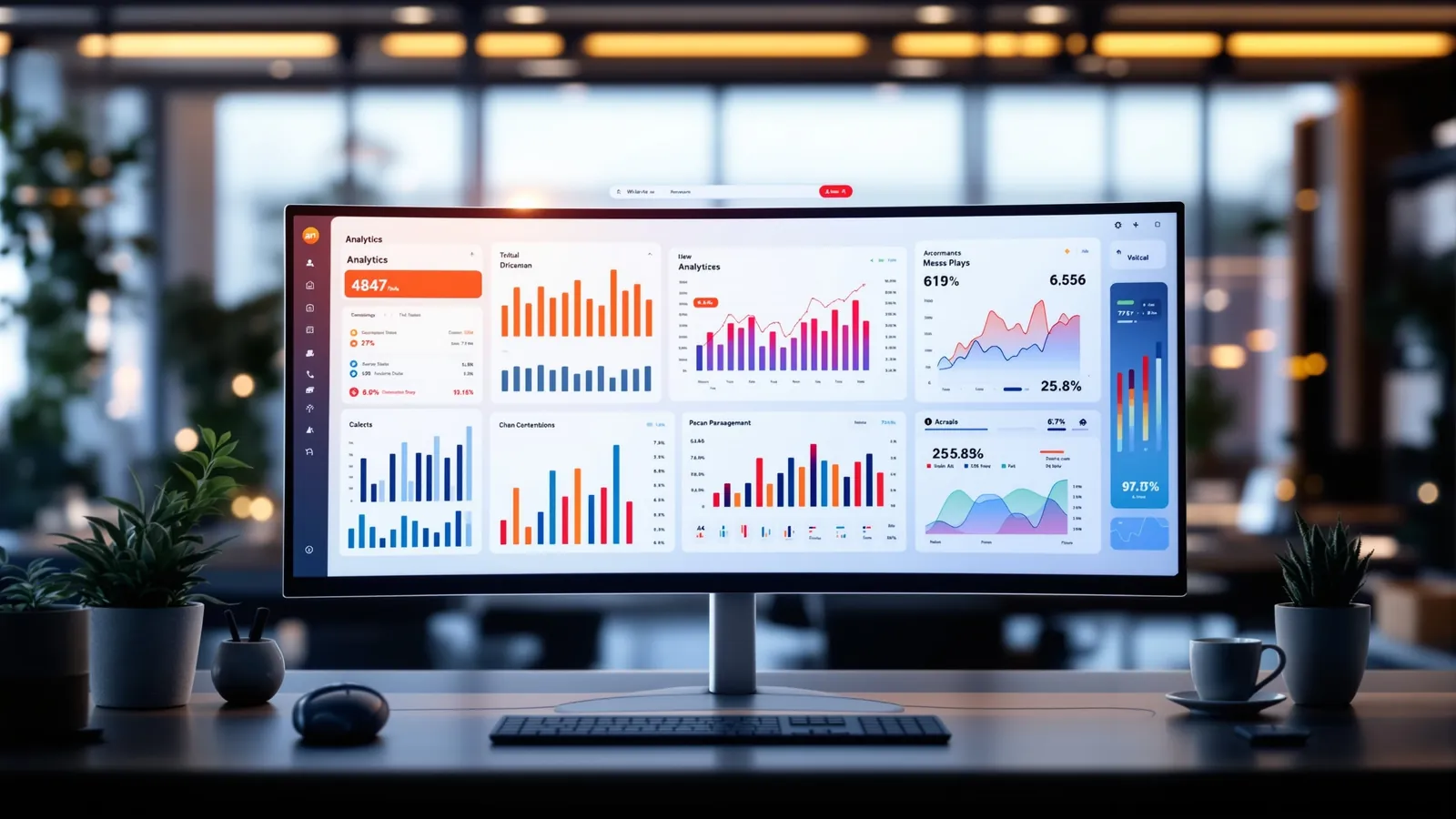
The brands winning in 2026 measure a completely different scoreboard from the brands losing. Traditional keyword rank tracking is necessary but no longer sufficient. The modern measurement stack includes:
- AI citation rate across ChatGPT, Perplexity, Gemini, Claude, and Google AI Overviews — tracked weekly against your target query set using tools such as Otterly.AI, Profound, and Peec AI.
- Share of voice vs. named competitors in AI answers — how often you are mentioned relative to direct rivals.
- Brand sentiment — how the AI describes you, not merely whether it does.
- AI referral traffic and conversion rate vs. classic organic (GA4 now distinguishes these automatically).
- Prompt coverage across your target query set — of the 100 most important buyer queries in your vertical, how many produce an answer that includes your brand?
- Classic KPIs still matter: referring domains, DoFollow link velocity, keyword rank for money terms, CTR, organic conversions, pipeline influenced, and booked revenue.
A strong Measurement Layer isn't only for reporting — it closes the feedback loop that tells the other six layers what to do next month. Our Analytics & Reporting service builds these dashboards and ties every metric back to pipeline and revenue.
9. AIO, GEO & AEO Explained — The Three Disciplines of Modern Optimization

Three acronyms dominate the 2026 vocabulary, and they are often confused even by working marketers. Each one solves a distinct problem and requires a distinct playbook.
AIO — Artificial Intelligence Optimization
AIO is the umbrella discipline of structuring, formatting, and enhancing digital content so it is accurately understood, cited, and recommended by any AI-powered system — large language models, AI search engines, voice assistants, and agentic tools. Core tactics include entity-based content architecture, semantic HTML, rich structured data, LLM citation strategy, and conversational-query optimization. Our AIO service delivers this as a monthly program.
GEO — Generative Engine Optimization
GEO narrows the focus to the generative surfaces specifically: Google AI Overviews, ChatGPT Search, Perplexity, Gemini, Claude, and You.com. GEO obsesses over citation rate and share of voice inside generative answers, and it requires proactive outreach to get your brand mentioned in the training corpora and retrieval indexes those engines rely on. Our GEO service pairs with AIO and closes the loop.
AEO — Answer Engine Optimization
AEO is the oldest of the three: optimizing to win answers — featured snippets, People Also Ask boxes, voice assistant responses, and knowledge panels. It predates AI overviews but has become dramatically more valuable since Google and its peers now treat answer-first formatting as a prerequisite for AI citation. Classic AEO tactics — concise, structured answers in the first 40–60 words of a section, tables, lists, and Q&A blocks — now feed directly into AIO and GEO success.
Think of it this way: AEO wins answers, GEO wins generative citations, and AIO is the overarching operating system that makes both work. Skipping any one of them leaves a hole in your funnel.
10. Schema.org Optimization — The Language of Machines
Schema.org is a collaborative vocabulary founded in 2011 by Google, Microsoft, Yahoo, and Yandex. Today it contains more than 800 types and 1,400+ properties that let you describe your content in a way every major search engine and AI crawler can parse. In 2026 it is not optional — it is the grammar of the AI web.
Research from Milestone Research found that pages with comprehensive Schema markup receive an average of 40% more clicks from search results and are approximately 2x more likely to appear in rich results. AI engines are even more dependent on schema: every major LLM retrieval pipeline (OpenAI's ChatGPT Search, Perplexity, Google SGE) preferentially indexes JSON-LD-structured content because it reduces hallucination risk.
Digital Marketing Co. deploys a full schema stack on every client site, programmatically injected at build time:
Organization+LocalBusiness+WebSite+WebPageon every pageArticle/BlogPosting/NewsArticleon all editorial contentFAQPage+HowToon tutorials, service pages, and knowledge base articlesProduct+Offer+AggregateRating+Reviewon commerce pagesPerson+JobTitlewithsameAsidentity graphs linked to LinkedIn, ORCID, Crunchbase, WikidataService+BreadcrumbList+Event+VideoObjectwherever applicable
Every markup block is validated against Google's Rich Results Test and Schema.org's validator, and we monitor Google Search Console for schema errors on every crawl. The net effect: sites we manage routinely qualify for 4–7 different rich-result types simultaneously, multiplying click-through and citation probability in a way competitors without schema simply cannot match.
11. Google PageSpeed Insights (PSI) Optimization
Speed is no longer a "nice-to-have"; it is a ranking signal, a conversion signal, and a citation signal. Google's Core Web Vitals update made three metrics directly influential in the ranking algorithm:
- Largest Contentful Paint (LCP) — target < 2.5 seconds on mobile.
- Interaction to Next Paint (INP) — target < 200 milliseconds (replaced FID in March 2024).
- Cumulative Layout Shift (CLS) — target < 0.1.
The stakes are enormous. Deloitte's "Milliseconds Make Millions" study found that a 0.1-second improvement in mobile site speed lifts retail conversion rates by 8.4% and average order value by 9.2%. Google's own research shows that bounce probability increases by 32% when page load goes from 1s to 3s, and by 90% when it goes from 1s to 5s. Portent's 2022 study found that B2B sites loading in 1 second convert 3x better than sites loading in 5 seconds.
Our programmatic performance-optimization pipeline includes:
- Automatic AVIF/WebP image conversion and responsive
srcsetgeneration at build time. - Next.js partial pre-rendering, streaming SSR, and React Server Components to minimize Time-to-First-Byte.
- Critical-CSS inlining, font preloading with
display: swap, and deferred third-party scripts viarequestIdleCallback. - Edge caching, CDN delivery, and HTTP/3 delivery as standard.
- Automated PSI regression testing on every pull request — if a commit regresses LCP, INP, or CLS, the pipeline blocks the deploy.
The result: client sites consistently score 95+ on mobile and 99+ on desktop in Google PageSpeed Insights — and the conversion, ranking, and AI-citation benefits flow directly from that performance floor.
12. WCAG 2.2 Accessibility Compliance — Inclusive Design That Also Ranks

The Web Content Accessibility Guidelines (WCAG) 2.2, published by the W3C Web Accessibility Initiative in October 2023, are the global standard for making web content usable by people with disabilities. They are enforceable under the Americans with Disabilities Act (ADA), the European Accessibility Act (which takes full effect in June 2025), and dozens of national statutes. The CDC reports that 1 in 4 adults in the United States — roughly 61 million people — live with a disability. WebAIM's 2025 Million Report still finds that 94.8% of home pages have detectable WCAG 2 failures, with an average of 57 accessibility errors per page. The opportunity to differentiate is massive.
WCAG 2.2 is organized around four principles (the "POUR" model):
- Perceivable — text alternatives for images, captions for audio/video, sufficient color contrast (≥4.5:1 for body text).
- Operable — full keyboard navigation, visible focus indicators, no keyboard traps, no seizure-inducing content.
- Understandable — clear language, consistent navigation, descriptive form labels, clear error messaging.
- Robust — valid, semantic HTML that works with every current and future assistive technology.
Here is the hidden upside: accessible sites rank better. Every technical WCAG requirement — semantic HTML, logical heading hierarchy, descriptive alt text, properly labeled forms, clean focus order, and ARIA landmarks — is also a Google ranking signal and an AI-crawler-readability signal. SE Ranking's 2024 study found that fully WCAG-AA-compliant sites outrank peers by an average of 12% on information-intent queries. Google's John Mueller has repeatedly confirmed that accessible HTML "almost always helps" rankings.
Digital Marketing Co.'s WCAG program combines:
- Automated programmatic audits on every deploy using axe-core, Pa11y, Lighthouse CI, and WAVE — wired into our CI/CD pipeline so regressions are caught before production.
- Manual expert reviews by certified accessibility specialists (IAAP CPACC / WAS) covering the 20% of issues automation cannot catch.
- Assistive-technology testing with NVDA, JAWS, VoiceOver, and TalkBack against real user journeys.
- Programmatic remediation — our design system ships accessible components by default (Radix UI + shadcn/ui + custom WCAG-audited primitives).
- VPAT / ACR documentation for clients with enterprise or government buyers.
The outcome is a site that welcomes every user, protects the client from litigation (over 4,500 ADA digital-accessibility lawsuits were filed in the U.S. in 2024 alone, per UsableNet), and ranks demonstrably better in both classic and AI search.
13. Why Digital Marketing Co. Is the Best Partner for This Work
Implementing the Modern SEO Framework end-to-end requires a team that can operate across content strategy, editorial production, data engineering, full-stack development, digital PR, and accessibility auditing — and that can glue the pieces together with modern automation. Very few agencies actually have all of that in-house. Digital Marketing Co. does. Our stack is purpose-built for 2026:
- AIO + GEO — bundled monthly programs that make your brand the cited answer inside ChatGPT, Perplexity, Google AI Overviews, Claude, and Gemini. Learn more →
- AEO — featured snippet and voice-assistant targeting baked into every content brief.
- Schema.org Optimization — programmatic, build-time JSON-LD injection covering Organization, Article, Product, FAQPage, HowTo, Person, Event, Service, and BreadcrumbList, validated against every Google Rich Results Test on every deploy.
- Google PageSpeed Insights Optimization — CI-enforced performance budgets, AVIF/WebP pipelines, Next.js 14+ SSR/PPR, and edge delivery that produce 95+ mobile PSI scores.
- WCAG 2.2 Compliance — automated (axe-core, Pa11y, Lighthouse CI) + manual expert review + assistive-technology testing, with VPAT/ACR deliverables on request.
- Link Building — DoFollow-only placements on DA50+ sites, digital PR through our 400-outlet syndication network, and Yahoo Finance / MarketWatch / Bloomberg feature placements every month.
- Full-stack Web Development — Next.js, React, Prisma, and Postgres, shipped fast and shipped right. Explore →
- Content Marketing + Press Releases — original, data-driven, E-E-A-T-compliant content produced by named journalists and subject-matter experts.
- Analytics + Reporting — GA4, Search Console, AI-citation tracking dashboards, and monthly board-ready reports tied back to pipeline and revenue.
Every layer of the framework is delivered through modern programmatic integration and automation: our engineers write the scripts, our editors write the briefs, and the client sees results without having to manage a half-dozen vendors. That operational advantage is why the agencies that ship the Modern SEO Framework as a single unified program — rather than a patchwork of point services — are the ones compounding wins in 2026.
14. Conclusion: Stop Optimizing for Yesterday's Search Engine
The brands that will dominate the next five years are building all seven layers simultaneously. They know that Google is necessary but no longer sufficient. They know that AI citations are the new rankings, that DoFollow backlinks from high-DA, high-PageRank sites are still the best-correlated off-page signal, and that schema, PSI performance, and WCAG accessibility are not afterthoughts but prerequisites for AI visibility.
If you are still running an SEO program that stops at keyword research and monthly blog posts, you are optimizing for a market that no longer exists. The Modern SEO Framework is how you get found, cited, and trusted across every platform your customers actually use. Talk to Digital Marketing Co. about a full audit of your current stack — we will show you exactly which layers are empty, what revenue they are costing you, and how quickly we can light every one of them up.
15. Bibliography
Sources are cited in MLA 9th-edition style.
- Ahrefs. "91% of Pages Get No Organic Traffic from Google." Ahrefs Blog, Ahrefs Pte. Ltd., 2024, ahrefs.com/blog/search-traffic-study/.
- Bain & Company. "Generative AI Is Reshaping Search: How Brands Should Respond." Bain Insights, Bain & Company, 2024, bain.com/insights/generative-ai-search/.
- BrightEdge Research. "Generative AI in Search: 2025 Market Report." BrightEdge, 2025, brightedge.com/resources/research-reports.
- Centers for Disease Control and Prevention. "Disability Impacts All of Us." CDC.gov, U.S. Department of Health & Human Services, 2024, cdc.gov/ncbddd/disabilityandhealth/infographic-disability-impacts-all.html.
- Dean, Brian. "We Analyzed 11.8 Million Google Search Results." Backlinko, Semrush, 2024, backlinko.com/search-engine-ranking.
- Deloitte Digital. Milliseconds Make Millions: A Study on How Improvements in Mobile Site Speed Positively Affect a Brand's Bottom Line. Deloitte, 2020, deloitte.com/global/en/pages/consumer-business/articles/milliseconds-make-millions.html.
- Fishkin, Rand. "New Jumpshot 2018 Data: Where Searches Happen on the Web." SparkToro, 2024, sparktoro.com/blog/.
- Forrester Research. "The Total Economic Impact of Organic Search." Forrester, 2024, forrester.com/report/the-total-economic-impact/.
- Gartner. "Gartner Predicts Search Engine Volume Will Drop 25% by 2026, Due to AI Chatbots and Other Virtual Agents." Gartner Newsroom, 19 Feb. 2024, gartner.com/en/newsroom/press-releases/2024-02-19.
- Google. Search Quality Rater Guidelines. Google, Nov. 2023, static.googleusercontent.com/media/guidelines.raterhub.com/en//searchqualityevaluatorguidelines.pdf.
- HubSpot. State of Marketing Report 2025. HubSpot, 2025, hubspot.com/state-of-marketing.
- Internet Live Stats. "Google Search Statistics." Internet Live Stats, 2025, internetlivestats.com/google-search-statistics/.
- Milestone Research. "The Impact of Schema Markup on Organic Search Performance." Milestone Inc., 2023, milestoneinternet.com/schema-markup-study.
- Moz. "Domain Authority 2.0 & Correlation Studies." Moz Learn SEO, Moz Inc., 2024, moz.com/learn/seo/domain-authority.
- OpenAI. "ChatGPT Usage Disclosures 2024–2025." OpenAI Blog, 2025, openai.com/blog/chatgpt.
- Page, Lawrence, et al. The PageRank Citation Ranking: Bringing Order to the Web. Stanford InfoLab Technical Report, 29 Jan. 1998, ilpubs.stanford.edu:8090/422/.
- Portent. "Website Load Time and Conversion Rates." Portent / Eptica, 2022, portent.com/blog/analytics/research-site-speed-hurting-everyones-revenue.htm.
- Reuters. "OpenAI's ChatGPT Tops 800 Million Weekly Active Users." Reuters, 2025, reuters.com/technology/.
- SE Ranking. "Google AI Overviews Study 2025." SE Ranking Blog, 2025, seranking.com/blog/google-ai-overviews-study/.
- Semrush. "Backlink Study 2025: What Modern Links Look Like." Semrush Blog, 2025, semrush.com/blog/backlink-study/.
- Siege Media. "2024 Link Building Statistics." Siege Media, 2024, siegemedia.com/marketing/link-building-statistics.
- Similarweb. "Top Websites Ranking & Traffic Analytics." Similarweb, 2025, similarweb.com/top-websites/.
- SparkToro. "2024 Zero-Click Search Study." SparkToro, 2024, sparktoro.com/blog/zero-click-search-study-2024/.
- Statcounter. "Search Engine Market Share Worldwide." Statcounter Global Stats, 2025, gs.statcounter.com/search-engine-market-share.
- Statista. "Global Voice Search Usage Statistics." Statista, 2025, statista.com/statistics/voice-search/.
- TechCrunch. "Perplexity AI Crosses 780 Million Monthly Queries." TechCrunch, 2025, techcrunch.com/2025/.
- UpCity. "Voice Search Usage Statistics." UpCity Research, 2024, upcity.com/experts/voice-search-statistics/.
- UsableNet. 2024 Year End ADA Web and App Lawsuit Report. UsableNet, 2025, info.usablenet.com/2024-year-end-ada-lawsuit-report.
- uSERP. State of Backlinks for SEO: Survey of 800+ SEO Professionals. uSERP, 2024, userp.io/state-of-backlinks/.
- WebAIM. The WebAIM Million — 2025 Accessibility Report. WebAIM at Utah State University, 2025, webaim.org/projects/million/.
- World Wide Web Consortium. Web Content Accessibility Guidelines (WCAG) 2.2. W3C Recommendation, 5 Oct. 2023, w3.org/TR/WCAG22/.