






Search engine optimization has always been a moving target. But in 2026, the landscape has shifted so dramatically that the old "top 10 ranking factors" blog posts of 2019 feel like relics from another era. Google's Helpful Content System, the 2024 API leak revelations, the rise of AI Overviews, and Bing's aggressive play with social signal integration have all redrawn the map. If you're serious about search engine optimization today, you need a systematic way to study, filter, and internalize the 200-plus signals that actually influence where your pages show up in search results.
That's exactly why we built the Interactive Ranking Factors Database—a searchable, filterable, sortable table of 226 confirmed and suspected Google and Bing ranking factors, each scored by impact weight and categorized by type. Whether you're a beginner trying to understand what "E-E-A-T" means or a seasoned consultant comparing Google-only signals against Bing-specific ones, this tool gives you a structured framework to learn from.
In this article, we'll walk through how to use the database effectively, explain the methodology behind our impact scores, break down the ten ranking-factor categories, and share practical study strategies that will make you a sharper SEO practitioner in 2026.
1. Why Ranking Factors Still Matter in 2026
Every few years, someone declares that "ranking factors are dead" because Google's algorithms are now too complex for simple checklists. And every few years, the data proves them wrong. The 2024 Google API leak—the accidental exposure of thousands of internal ranking attributes from the ContentWarehouse API—confirmed what experienced practitioners had long suspected: Google tracks and scores an enormous number of discrete signals, from NavBoost click data to OriginalContentScore to SiteFocusScore.
Understanding ranking factors isn't about reducing SEO to a checklist. It's about building a mental model of how search engines evaluate content, so you can make informed decisions when you're writing a title tag, architecting a site, or deciding whether to invest in link building vs. content depth. The database we've built is designed to support that kind of structured learning.
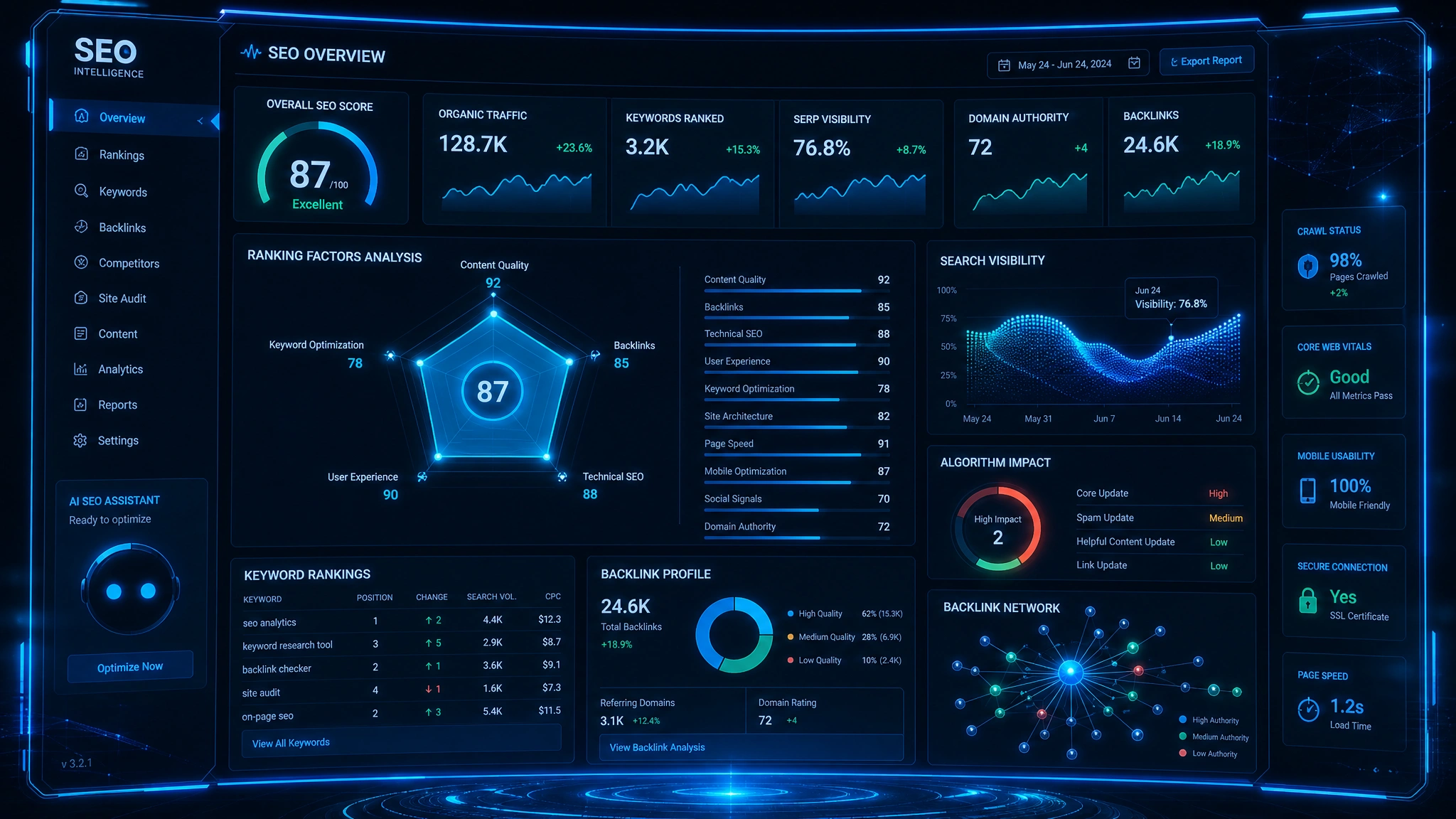
Consider the numbers: of the 226 factors in our database, 152 are classified as Positive (they boost rankings), 58 as Negative (they hurt rankings), and 16 as Context-Dependent (their effect depends on implementation). Having this taxonomy at your fingertips means you can quickly identify opportunities and risks in any SEO audit.
2. Overview of the Interactive Database
Our Interactive Ranking Factors Database is a filterable, sortable table of every major Google and Bing ranking signal we've been able to document. Here's what each column tells you:
- # — A unique identifier for quick reference
- Factor — The name of the ranking signal
- Category — One of ten thematic groups (Content, Technical, Backlinks, etc.)
- Impact — Whether the factor is Positive, Negative, or Context-Dependent
- Weight (1–10) — Our estimated importance score based on patent filings, API leak data, controlled experiments, and industry consensus
- Engine — Whether the factor applies to Google, Bing, or Both
You can search by keyword, filter by category, impact type, or engine, and sort by any column. The stats bar at the top dynamically updates to show how many factors match your current filters, broken down by positive, negative, and context-dependent signals.
This same interactive database is available directly from the "Get a Proposal" button in our navigation bar—open it anytime to explore while browsing our site.
3. How We Score Impact Weight (1–10)
Not all ranking factors are created equal. A weight of 10 means the signal has massive, well-documented influence on rankings, while a weight of 1 or 2 indicates a minor or speculative effect. Our scoring methodology draws on four sources:
- Google Patent Filings: Algorithms like PageRank, NavBoost, and the Helpful Content System are described in detail in public patent applications. Factors directly referenced in patents receive higher scores.
- The 2024 API Leak: The leaked ContentWarehouse API documentation revealed internal attribute names like
OriginalContentScore,ChardScores,SiteFocusScore, andHost NSR. Factors confirmed by the leak were upgraded in our scoring. - Controlled Experiments: Large-scale correlation studies from Ahrefs, Semrush, Moz, and Backlinko, plus our own A/B tests across client campaigns, inform weight adjustments.
- Industry Consensus: When multiple respected sources (Google's own documentation, Search Quality Rater Guidelines, Webmaster Conference presentations) consistently cite a factor, its weight reflects that consensus.
We update these scores quarterly as new data emerges. The last update incorporated signals from Google's March 2026 Core Update and Bing's expanded IndexNow integration.
4. The Ten Ranking-Factor Categories Explained
Understanding the categories is key to using the database effectively. Here's what each group contains and why it matters:
Content (48 factors)
The largest category. Includes quality signals like E-E-A-T, content depth, freshness, readability, topical authority, and AI-specific factors like RankBrain, BERT, and MUM. If you're investing in content marketing, this is where to start.
On-Page (20 factors)
Title tags, heading hierarchy, meta descriptions, keyword placement, internal linking density—the elements you control directly on each page.
Backlinks (28 factors)
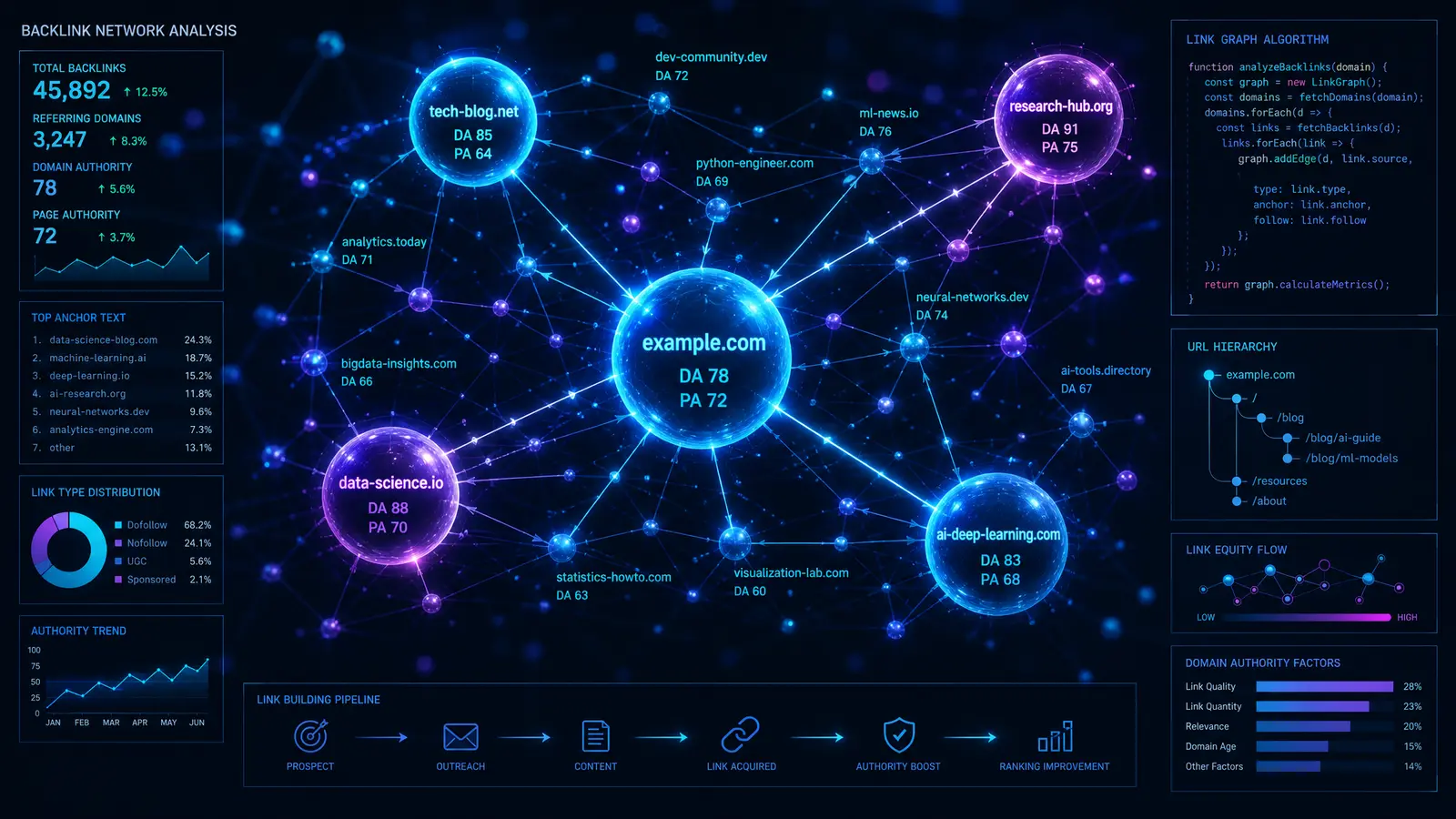
Everything related to inbound links: domain authority of linking sites, anchor text relevance, link diversity, natural link profiles, and more. Our link building service targets the highest-weight factors in this category.
Technical (32 factors)
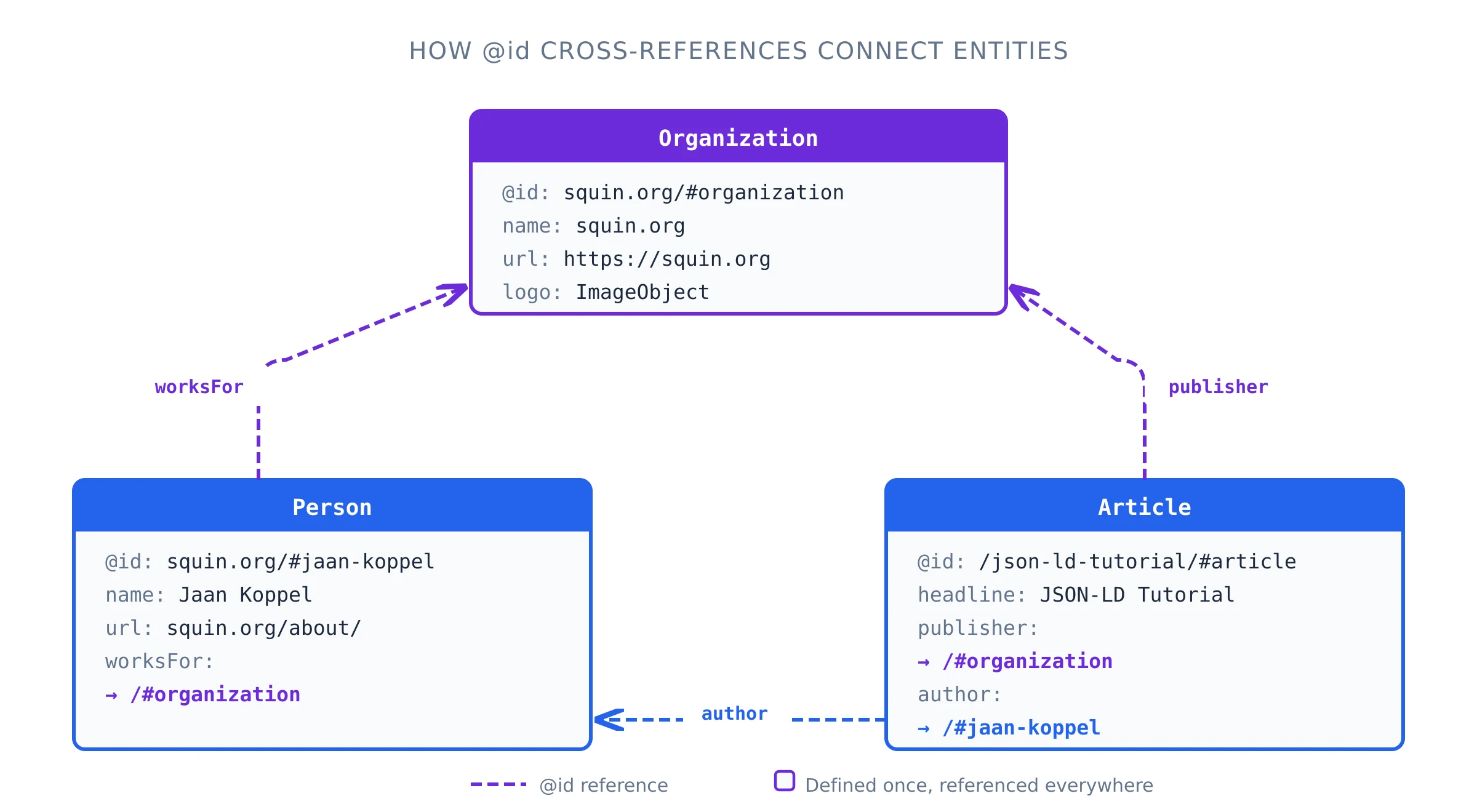
Core Web Vitals, HTTPS, schema markup, crawl budget, sitemap optimization, redirect management, and JavaScript rendering. These are the infrastructure signals that determine whether search engines can efficiently access and understand your content.
Domain (11 factors)
Site-level signals like domain authority, domain history, contact information presence, and the leaked Host NSR (Site-Level Rank) score.
Penalties (22 factors)
The signals that get you demoted: keyword stuffing, cloaking, link schemes, thin content, auto-generated spam, and manual actions. Study these to know what to avoid.
UX (12 factors)
User experience signals including click-through rate, dwell time, bounce rate, pogo-sticking, and the now-confirmed NavBoost system that aggregates click behavior data. These signals represent how real users interact with your pages in search results.
Local (11 factors)
Google Business Profile optimization, NAP consistency, local citations, proximity to searcher, and map pack ranking signals.
Social (10 factors)
Social media signals, brand mentions, and brand search volume. Note that Bing weights social signals far more heavily than Google does—our database makes this difference immediately visible.
Bing-Specific (10 factors)
Signals unique to Microsoft's search engine, including IndexNow protocol usage, domain age preference, and Bing's heavier emphasis on exact-match keywords and multimedia content.
5. Practical Study Strategies for SEO Professionals
Having 226 factors in a database is powerful, but only if you know how to study them. Here are five approaches we recommend:
Strategy 1: Category Deep-Dives
Pick one category per week. Filter the database to show only that category's factors, sort by weight descending, and study the top 10. Research each factor individually—read the Google documentation, find case studies, and look at how your own sites perform on that signal.
Strategy 2: Negative-Factor Audit
Filter for Negative impact factors and sort by weight. These are the things that can actively harm your rankings. Run through the list and audit your site for each one. This defensive approach often yields faster results than trying to add new positive signals.
Strategy 3: Google vs. Bing Comparison
Filter for Google Only factors, then switch to Bing Only. Understanding the differences helps you optimize for both engines. Bing's emphasis on social signals, exact-match keywords, and multimedia is dramatically different from Google's focus on click behavior and E-E-A-T.
Strategy 4: Weight-10 Focus
Sort by weight descending and focus on the factors rated 8, 9, or 10. These are the signals with the most documented impact. If you're limited on time, mastering these high-impact factors will give you the best return on your study investment.
Strategy 5: Competitive Analysis Framework
Use the database as a scoring rubric. For each weight-8+ factor, score your site and your top competitor on a 1–5 scale. The gaps become your prioritized optimization roadmap.
6. Google vs. Bing: Where the Signals Diverge
One of the most underappreciated aspects of SEO is that Google and Bing weight signals very differently. Our database makes this visible at a glance. Here are the most significant divergences:
- Social Signals: Bing openly states that social signals influence rankings. Google has consistently denied this. In our database, social factors score 5–7 for Bing but only 3–5 for Google.
- Exact Match Keywords: Bing places more emphasis on exact-match keywords in content than Google does. Google's BERT and MUM systems understand semantic meaning, making exact matches less critical.
- Domain Age: Bing gives slightly more weight to older, established domains. Google's own John Mueller has repeatedly said domain age is "not a ranking factor," though the API leak suggests otherwise (see Host NSR).
- Click Behavior: Google's NavBoost system (weight: 9) processes aggregated click signals at massive scale. Bing has no publicly known equivalent of this sophistication.
- IndexNow: Bing actively rewards sites that use the IndexNow protocol for instant indexing notifications. Google does not currently support IndexNow.
If you're only optimizing for Google, you're leaving Bing traffic on the table. With Bing powering Microsoft Copilot, DuckDuckGo, and an growing share of AI-powered search, diversifying your SEO strategy across engines has never been more important.
7. What the 2024 API Leak Confirmed
In mid-2024, thousands of internal Google ranking attributes were accidentally exposed through the ContentWarehouse API documentation. This was the most significant data leak in SEO history, confirming many factors that Google had previously denied or downplayed. Our database includes the confirmed leaked signals:
- NavBoost — Google tracks aggregated click signals from Chrome and search results, using them as a direct ranking signal. This was the biggest revelation.
- Last Longest Click — The last search result a user clicks on (and stays on longest) gets a ranking boost for that query.
- OriginalContentScore — Google assigns a score measuring how original a page's content is compared to existing web content.
- ChardScores (Page Quality) — Internal quality scores assigned at the page level.
- SiteFocusScore — A measure of topical authority, rewarding sites that focus on specific subject areas rather than covering everything.
- Host NSR (Site-Level Rank) — A site-wide quality score that influences the ranking of individual pages on that domain.
- OnSiteProminence — How prominently a page is featured within its own site (internal linking depth, homepage proximity).
- TitleMatchScore — A direct score measuring how well a page's title matches the search query.
All eight of these factors are included in our database with weights reflecting their confirmed significance. If you haven't incorporated these signals into your SEO strategy, our SEO services can help you close the gap.
8. New Signals for AI Search (GEO & AIO)
The rise of AI-powered search—Google AI Overviews, Bing Copilot, Perplexity, SearchGPT—has introduced entirely new ranking considerations. Our database includes two emerging categories that traditional SEO databases miss:
GEO Optimization (AI Citations) — Weight: 7
Generative Engine Optimization focuses on getting your content cited by AI systems when they generate answers. This requires structured content, clear factual claims, proper attribution, and answer-engine-optimized formatting that AI models can easily extract and reference.
AIO (AI Search Optimization) — Weight: 7
AI Search Optimization is the broader discipline of ensuring your content performs well across all AI-powered search interfaces, not just traditional blue links. This includes optimizing for Speakable Schema, FAQ structured data, and content formats that AI systems prefer to cite.
These factors scored 7/10 in our database because, while they're rapidly growing in importance, the ranking algorithms for AI search are still evolving. By 2027, we expect these weights to increase to 8 or 9 as AI Overviews become the primary search interface for an increasing share of queries.
9. Building Your Personal Ranking-Factor Action Plan
Here's a practical framework for turning database knowledge into action:
- Audit Your Current State: Use our Free Website Auditor to get a baseline score across 12 dimensions. Cross-reference the results with the database to identify which ranking factors need attention.
- Identify Your Top 20: Filter the database for your primary engine (Google or Bing), sort by weight, and select the 20 highest-impact factors. These are your priority targets.
- Score Each Factor: Rate your current performance on each of your top 20 factors from 1 (poor) to 5 (excellent). Focus your optimization efforts on the factors where you score lowest.
- Create Monthly Sprints: Dedicate each month to 3–5 factors. For example, Month 1 might focus on Core Web Vitals (Technical), E-E-A-T signals (Content), and Internal Linking (On-Page).
- Measure and Iterate: Track your rankings and organic traffic monthly. Use analytics to correlate your optimization work with measurable improvements.
If you'd prefer expert guidance, request a proposal from our team. We use this exact database to build custom SEO strategies for our clients, targeting the highest-impact factors for each industry and competitive landscape.
10. Further Reading and Resources
To continue your education on search engine ranking factors, we recommend these resources:
- The Complete Guide to Search Engine Ranking Factors: 210+ Google & Bing Signals — Our comprehensive reference article with the full interactive database
- How SEO Actually Works: A Modern Framework — Understanding the broader SEO ecosystem
- Schema.org Structured Data: The Complete SEO Guide — Deep dive into Technical ranking factors
- How to Attract Backlinks: Link Building & Domain Authority — Comprehensive backlink strategy guide
- Answer Engine Optimization (AEO) Services — Our service for optimizing for AI search
- Free Website Auditor — Get a free audit covering 12 dimensions of your website
The search engine ranking factors landscape will continue to evolve, but the fundamental practice of understanding what signals matter and systematically optimizing for them will remain the core of effective SEO. Our interactive database gives you the structured framework to do exactly that—explore it, study it, and let it guide your optimization strategy in 2026 and beyond.